Using equity to buy investment property is how most Australian investors build wealth without saving another massive deposit. Equity is the difference between your property's value and what you owe, and lenders typically let you access up to 80% of your home's value to use as a deposit for your next purchase.
If you're sitting on a property that's grown in value, you're sitting on opportunity.
The problem is most investors don't know how to tap into it. They wait years, saving for another deposit, when the equity in their current property could fund the next purchase right now.
This guide walks you through exactly how to turn one property into a small portfolio using equity. We'll cover how equity works, how to calculate what you can access, the step-by-step process to purchase your next property, and the risks you need to manage along the way. By the end, you'll have a clear roadmap to build long-term wealth through property without waiting another decade.
What Is Property Equity and How Does It Work
Understanding Home Equity in Simple Terms
Equity is the portion of your property that you actually own outright.
If your home is worth $800,000 and you owe $500,000 on your mortgage, your equity is $300,000. That $300,000 is yours, built up through loan repayments and capital growth.
As you pay down your mortgage and as property values rise, your equity grows. According to Propertyology's 2026 outlook, a house purchased in 2026 for $750,000 could be worth $2.4 million in 20 years.
Total Equity vs Usable Equity
Not all equity is available to borrow against.
Most Australian lenders cap usable equity at 80% of your property's value to avoid Lenders Mortgage Insurance and reduce default risk. This is called your usable equity.
Here's the formula: Usable equity = (Property value × 80%) – Outstanding loan balance.
Using the example above, if your home is worth $800,000 and you owe $500,000, your usable equity is $140,000. That's ($800,000 × 0.80) – $500,000.
How Property Growth Builds Equity Faster
Capital growth is the silent wealth builder.
Perth home values increased 13% in 2025, Brisbane 12%, and Adelaide 9%, according to Propertyology data. If you bought a $600,000 property in Brisbane in early 2025, it could be worth $672,000 by the end of the year.
That's $72,000 in equity you didn't save. You just owned the right property in the right market.
Buyers Agency Australia helps investors identify high-growth markets before the boom hits, positioning clients to capture maximum equity gains in the shortest time.
How to Calculate Your Usable Equity
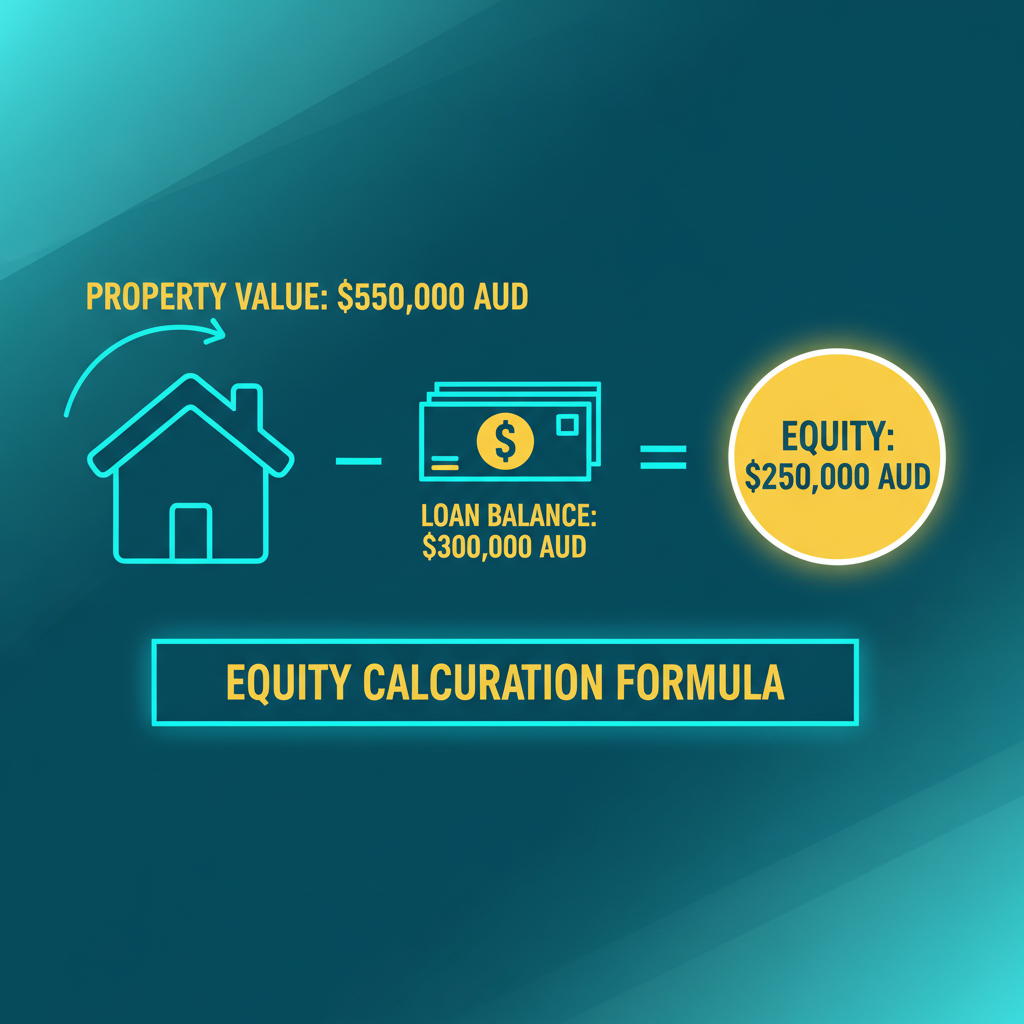
Step One Get a Current Property Valuation
You can't calculate equity without knowing what your property is worth today.
Lenders use bank valuations, not real estate agent appraisals. A bank valuation is conservative and reflects what the lender could recover if you defaulted.
You can request a desktop valuation from your lender or use online tools from CoreLogic or RP Data. If you're refinancing or applying for a new loan, the lender will organise this automatically.
Step Two Calculate Your Usable Equity
Once you have your valuation, the math is straightforward.
Let's say your property is valued at $1,000,000 and your outstanding loan is $650,000.
- 80% of property value = $800,000
- Minus outstanding loan = $800,000 – $650,000
- Usable equity = $150,000
That $150,000 can be used as a deposit for your next property, covering stamp duty, conveyancing, and building inspections.
Step Three Apply the Rule of Four
A quick way to estimate your buying power is to multiply your usable equity by four.
If you have $150,000 in usable equity, you could potentially purchase a property worth $600,000. That's because lenders typically lend up to 80% of a property's value, meaning your equity covers the 20% deposit.
This is a rough guide. Your actual borrowing capacity depends on income, expenses, credit history, and serviceability.
The Step by Step Process to Buy Your Second Property
Review Your Current Loan and Serviceability
Before you borrow against equity, check your existing loan structure.
Are you on a competitive interest rate? If not, refinancing to a lower rate can free up cash flow and improve your borrowing capacity. According to Finder, investment loan rates in March 2026 start from 5.20% p.a.
Lenders will assess your ability to service both loans. They apply a buffer, typically 3% above your actual interest rate, to ensure you can afford repayments if rates rise.
Choose Between Refinancing or a Second Loan
You have two main options to access equity.
Refinancing your existing loan means increasing the loan amount and withdrawing the difference as cash. Most investors choose this because it's simpler to manage one loan.
A home equity loan or line of credit is a separate loan secured against your property. It gives you flexibility to draw funds as needed, but interest rates are often higher.
Identify Your Next Investment Property
This is where strategy matters more than speed.
Don't buy the first property you see. Focus on markets with strong fundamentals like population growth, infrastructure investment, and employment diversity.
Perth, Brisbane, and Adelaide are forecast to outperform Sydney and Melbourne in 2026, according to LJ Hooker's market outlook. Regional hubs are also delivering consistent growth.
Buyers Agency Australia specialises in identifying investment-grade properties in high-growth corridors before the market catches on. Their team conducts suburb-level due diligence, analysing rental yields, vacancy rates, and 10-year growth forecasts.
Submit Your Loan Application
Once you've found a property, submit your loan application.
You'll need to provide income documentation, tax returns, bank statements, and details of your existing loans. Lenders will assess your debt-to-income ratio and ensure your total borrowings don't exceed safe levels.
Pre-approval gives you buying power at auction or during negotiation. It also speeds up settlement.
Settle and Manage Your Portfolio
After settlement, you'll be servicing two loans.
Set up your repayments on autopay and monitor your cash flow closely. If you've purchased an investment property, rental income should cover most or all of your repayment costs.
Keep detailed records of all expenses for tax time. Interest on investment loans is tax-deductible, as are property management fees, council rates, and maintenance costs.
Real World Example Turning One Property Into Two
Starting Position One Property Owned
Let's say you bought a property in Brisbane in 2020 for $500,000 with a 20% deposit.
You borrowed $400,000. Fast forward to 2026, Brisbane property values have grown significantly. Your property is now worth $650,000, and you've paid your loan down to $370,000.
Your total equity is $280,000. Your usable equity is ($650,000 × 0.80) – $370,000 = $150,000.
Using Equity to Purchase Property Two
You want to buy a $600,000 investment property in a high-yield suburb.
You need a 20% deposit ($120,000), plus $30,000 for stamp duty and costs. Total upfront cost: $150,000.
You refinance your existing loan, increasing it to $520,000 to release the $150,000 equity. You use that to cover the deposit and costs for property two.
You then take out a new loan of $480,000 for the remaining 80% of the purchase price. The new property is rented for $550 per week, generating $28,600 per year before expenses.
Portfolio Position After Two Properties
You now own two properties worth a combined $1,250,000.
Your total debt is $1,000,000 ($520,000 + $480,000). Your equity across the portfolio is $250,000.
If both properties grow at 6% per year, your combined equity will increase by $75,000 annually through capital growth alone, not including loan repayments.
Repeating the Process to Build a Five Property Portfolio
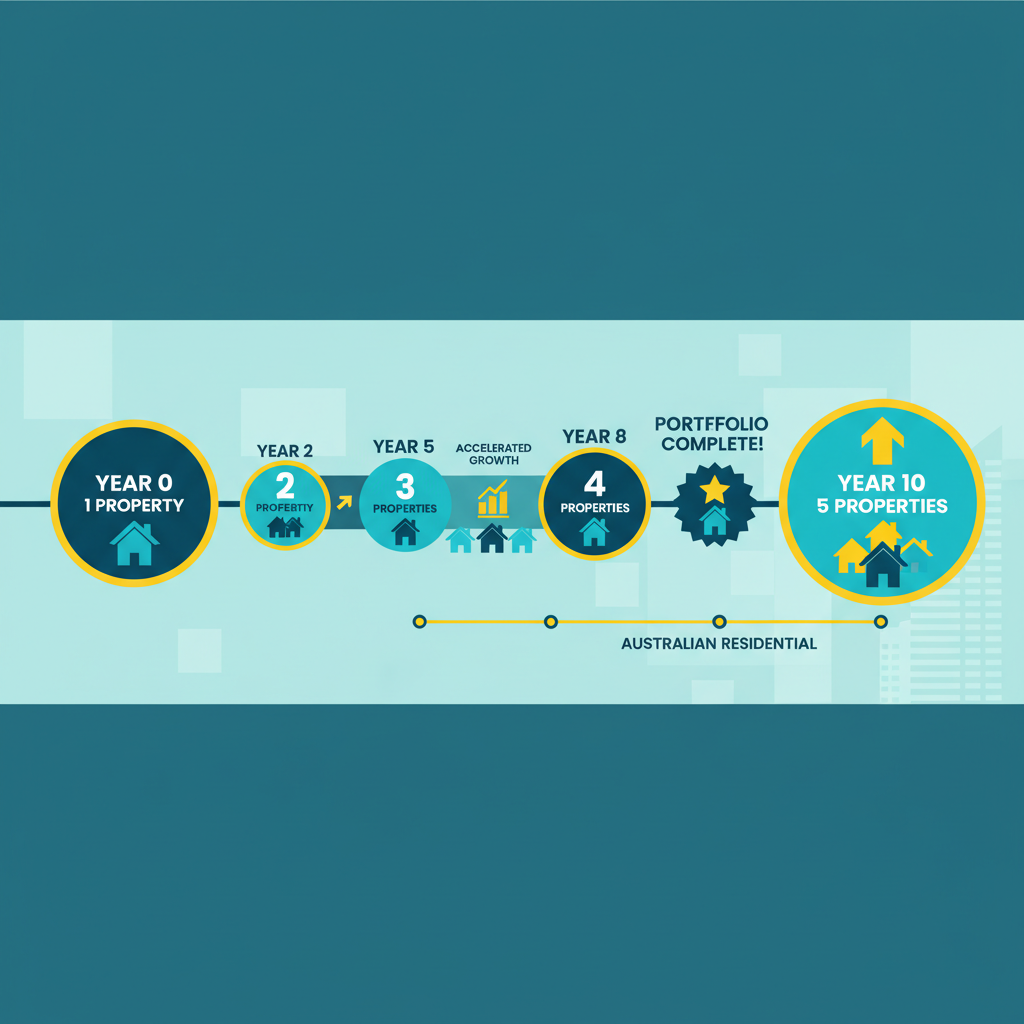
Property Three The Equity Snowball Effect
After owning property two for three years, it's now worth $715,000 and your loan is down to $460,000.
Usable equity on property two = ($715,000 × 0.80) – $460,000 = $112,000.
Meanwhile, property one has grown to $750,000 with a loan balance of $500,000. Usable equity = $100,000.
Combined usable equity across both properties = $212,000. That's enough to fund the deposit and costs for a $700,000 property.
Property Four and Five Timing and Market Selection
You don't need to buy every year.
Smart investors wait for the right market conditions and focus on serviceability. Each new loan increases your debt, so cash flow management is critical.
By year seven, if you've purchased strategically in high-growth markets, you could own five properties with a combined value of $3.5 million and total debt of $2.8 million.
Your equity position is $700,000. Rental income covers most or all of your loan repayments, and you're building wealth passively through capital growth.
How Dragan Dimovski Structures Multi Property Portfolios
Dragan Dimovski, founder of Buyers Agency Australia, has over 20 years of property investment experience and a personal portfolio exceeding $10 million.
His approach prioritises cash flow positive properties, long-term capital growth, and conservative debt levels. He models every acquisition over a 10-year horizon, factoring in interest rate rises, vacancy periods, and maintenance costs.
Clients who work with Buyers Agency Australia receive a personalised equity roadmap, showing exactly when to purchase, which markets to target, and how to structure loans for maximum tax efficiency.
Risks to Manage When Using Equity
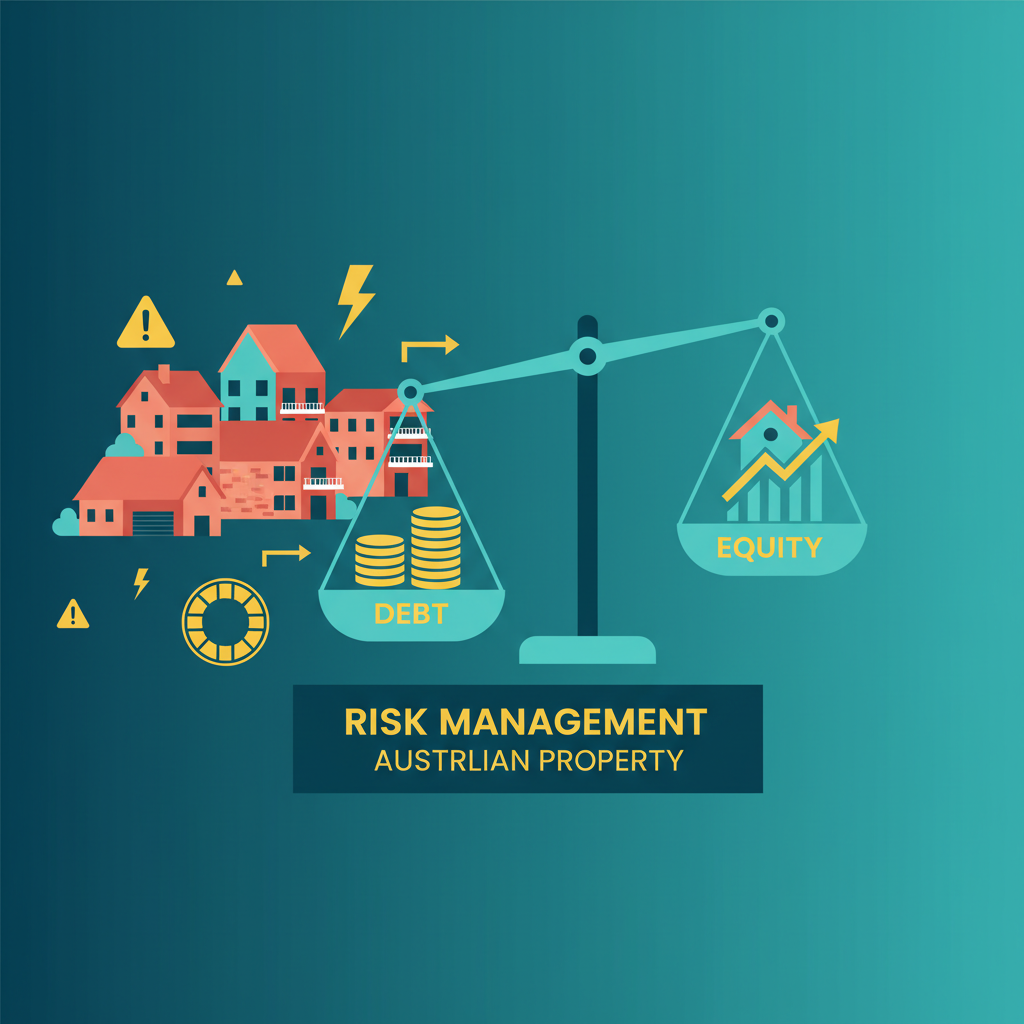
Over Leveraging and Cash Flow Pressure
The biggest mistake investors make is borrowing too much too fast.
If you max out your usable equity on every property, you leave no buffer for interest rate rises, vacancy periods, or unexpected repairs.
A good rule of thumb is to keep your loan-to-value ratio below 70% across your portfolio. This gives you breathing room and protects you from forced sales if the market softens.
Interest Rate Rises and Repayment Shock
In February 2026, the RBA increased the cash rate, and many economists expect further rises.
Variable investment loan rates currently sit between 5.20% and 6.00% p.a. A 1% rate rise on a $500,000 loan increases repayments by roughly $400 per month.
Stress-test your portfolio. Can you afford repayments if rates rise 2%? If not, reduce debt or increase your income buffer.
Negative Equity and Market Downturns
If property values fall and your loan balance exceeds your property value, you're in negative equity.
This limits your ability to refinance or sell without bringing cash to settlement. To avoid this, buy quality properties in supply-constrained markets with strong long-term fundamentals.
Buyers Agency Australia focuses on assets with proven resilience, avoiding oversupplied apartment markets and speculative fringe suburbs.
Cross Securitisation and Exit Flexibility
Cross-securitisation means using multiple properties as security for one loan.
While it can simplify lending, it locks your properties together. If you want to sell one property, the lender may refuse unless you reduce the loan or offer alternative security.
Where possible, structure loans so each property secures its own loan. This gives you maximum flexibility.
Tax Implications and Deductions
Interest Deductibility on Investment Loans
Interest paid on loans used to purchase investment properties is tax-deductible.
If you borrow $150,000 in equity to buy an investment property, the interest on that $150,000 is deductible. However, if you use equity for personal expenses, it's not.
Keep clear records and separate loan splits for investment and personal use. The ATO is strict on this.
Negative Gearing and Cash Flow Benefits
Negative gearing occurs when your property expenses exceed rental income.
The loss can be offset against your taxable income, reducing your overall tax bill. For high-income earners, this can provide significant cash flow relief.
However, negative gearing only makes sense if you're confident in long-term capital growth. Don't buy a poor asset just for the tax benefits.
Capital Gains Tax When You Sell
When you sell an investment property, you'll pay capital gains tax on the profit.
If you've held the property for more than 12 months, you receive a 50% CGT discount. For example, if you make a $200,000 profit, only $100,000 is added to your taxable income.
Timing your sale strategically, such as in a lower-income year, can reduce your tax liability.
Why Investors Choose Buyers Agency Australia for Equity Strategies
Building a multi-property portfolio isn't about luck. It's about strategy, timing, and execution.
Buyers Agency Australia takes the guesswork out of equity planning. They work with clients to map out a personalised acquisition timeline, showing exactly when to purchase, which markets to target, and how to structure loans for maximum growth and tax efficiency.
With Dragan Dimovski's 20+ years of experience and a $10M+ personal portfolio, the team knows what works and what doesn't. They've helped hundreds of investors build wealth through property, avoiding common mistakes and positioning clients in high-growth markets before the boom.
Whether you're buying your second property or your fifth, Buyers Agency Australia provides end-to-end support, from market research and property selection to negotiation and settlement.
Ready to turn your equity into a portfolio? Book a free strategy session and get your personalised equity roadmap.
Frequently Asked Questions
How much equity do I need to buy a second property in Australia?
You typically need at least $100,000 in usable equity to cover a 20% deposit and costs on a $400,000 property, though this varies based on the purchase price and your borrowing capacity.
Can I use equity from my home to buy an investment property?
Yes, you can refinance your owner-occupied home to release equity and use it as a deposit for an investment property, provided you meet the lender's serviceability requirements.
What is the 80% loan-to-value rule in Australia?
Lenders typically lend up to 80% of a property's value without requiring Lenders Mortgage Insurance, meaning you need at least 20% equity or deposit to avoid LMI.
How do I calculate my usable equity?
Multiply your property value by 80%, then subtract your outstanding loan balance. For example, a $1M property with a $600,000 loan has $200,000 usable equity.
What are the risks of using equity to buy investment property?
The main risks include over-leveraging, interest rate rises, cash flow pressure, and negative equity if property values fall. Always stress-test your portfolio before borrowing.
 General
Learn how Australian property investors use equity to build multi-property portfolios. Step-by-step guide with real numbers and strategies.
Property equity is the difference between your property's market value and what you owe on your mortgage. Australian investors use this equity as a deposit to purchase additional investment properties without saving cash again, allowing them to build wealth through multiple properties over time.
If you're like most Australians who've owned a property for a few years, you've likely built up equity without even realising it. Property values across Brisbane, Perth, and Adelaide have increased by roughly 90 percent over the last five years.
That growth isn't just a number on paper. It's usable capital that can fund your next investment property.
Understanding how to access and deploy equity is one of the most powerful wealth-building tools available to Australian property investors. For time-poor professionals and first-time investors, working with specialists like Buyers Agency Australia can help you identify high-growth opportunities and structure your equity strategy correctly from the start.
What Is Property Equity and Why Does It Matter
Equity represents the portion of your property that you truly own. It's calculated by subtracting your outstanding mortgage balance from your property's current market value.
For example, if your home is valued at $750,000 and you owe $450,000 on your mortgage, you have $300,000 in total equity.
How Equity Grows Over Time
Equity increases in two primary ways. First, every mortgage repayment reduces your loan balance, automatically increasing your ownership stake.
Second, capital growth adds to your equity when property values rise. In markets like Brisbane and Perth, which recorded 12 percent and 13 percent growth respectively in 2025, equity can accumulate rapidly without any extra effort from the owner.
For investors, this compounding effect becomes the foundation of portfolio expansion. Unlike cash savings that sit idle, equity continues working for you through market appreciation.
Why Equity Matters for Investors
Equity is more than a financial metric. It's a strategic asset that determines your capacity to scale your property portfolio.
Most Australian lenders will allow you to borrow against your equity to fund additional investments. This means you can purchase a second or third property without starting from scratch with deposit savings.
The longer you hold investment-grade properties in strong locations, the more equity you accumulate. Over a 20-year period, assuming an average annual growth rate of 6 percent, a property purchased today for $750,000 could be worth $2.4 million.
Understanding Usable Equity vs Total Equity
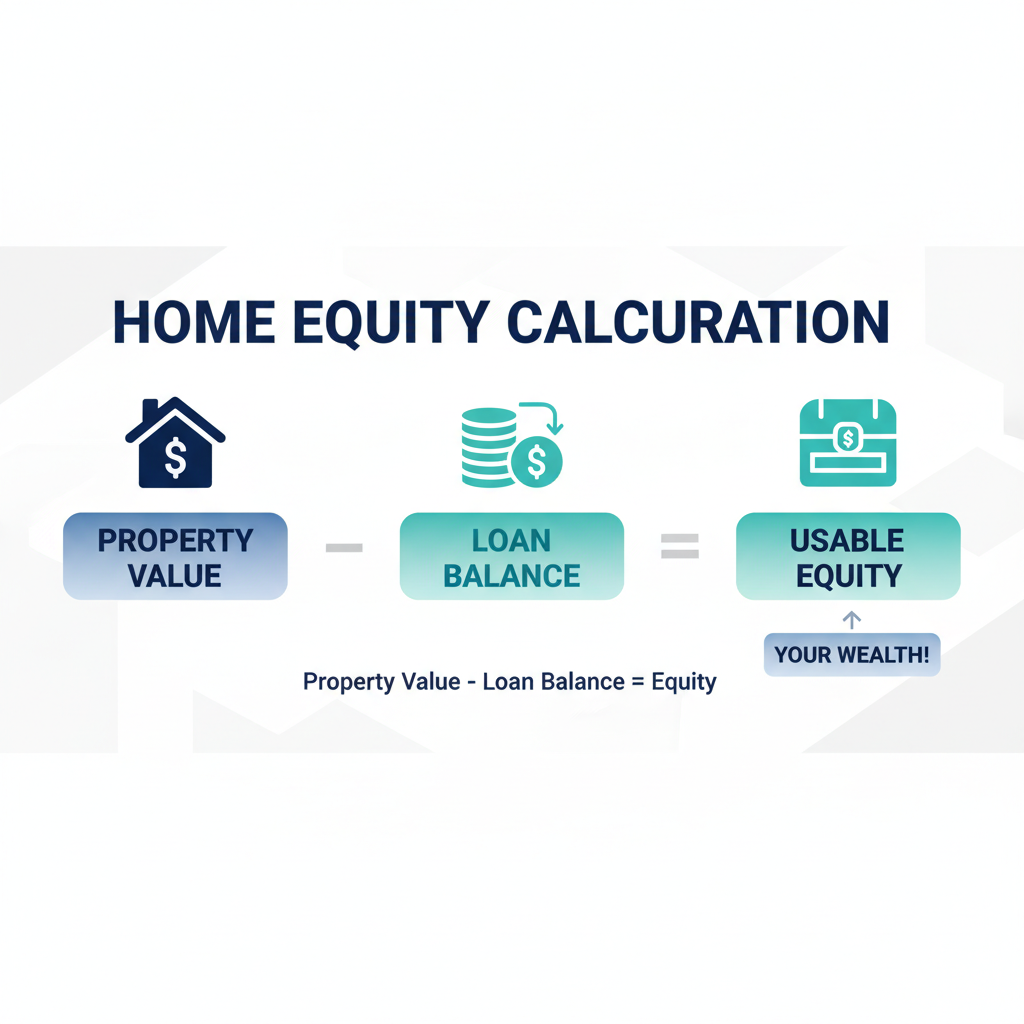
Not all equity is accessible. While you might have substantial equity on paper, lenders will only allow you to borrow a portion of it.
This accessible amount is known as usable equity, and it's governed by strict lending rules designed to protect both you and the bank.
The 80 Percent LVR Threshold
Australian lenders typically cap borrowing at 80 percent of a property's value. This ratio is called the Loan-to-Value Ratio, or LVR.
Staying at or below 80 percent LVR allows you to avoid Lenders Mortgage Insurance (LMI), which can cost tens of thousands of dollars. It also signals to lenders that you're a lower-risk borrower.
The formula for usable equity is straightforward: multiply your property's current value by 0.80, then subtract your outstanding loan balance.
Calculating Your Usable Equity
Let's break this down with a real example. Assume your Brisbane investment property is now valued at $800,000, and you owe $500,000 on the mortgage.
First, calculate 80 percent of the property's value: $800,000 x 0.80 = $640,000.
Next, subtract your outstanding loan: $640,000 – $500,000 = $140,000.
In this scenario, you have $140,000 in usable equity that you could potentially access to fund your next investment.
What Happens Above 80 Percent LVR
Borrowing above the 80 percent threshold is possible, but it triggers additional requirements. You'll likely need to pay LMI, which protects the lender if you default.
Interest rates may also be higher for loans with LVRs above 80 percent. Lenders view these applications as higher risk, and pricing reflects that.
For most investors, staying within the 80 percent LVR range is the smarter long-term strategy. It preserves cash flow, avoids unnecessary insurance costs, and maintains flexibility for future purchases.
How Investors Use Equity as a Deposit for Another Property
Once you've calculated your usable equity, the next step is understanding how to deploy it. Most investors use equity to cover the deposit and purchasing costs of their next investment property.
This approach allows you to grow your portfolio without waiting years to save another 20 percent deposit.
The Rule of Four
A quick estimation tool used by investors is the Rule of Four. Simply multiply your usable equity by four to estimate the maximum purchase price of your next property.
For example, if you have $100,000 in usable equity, you could potentially target properties up to $400,000. This calculation assumes a 20 percent deposit, leaving room for stamp duty and other upfront costs.
While this rule provides a helpful starting point, your actual borrowing capacity depends on income, expenses, existing debts, and lender serviceability requirements.
Accessing Your Equity
There are several methods to access equity. The most common is refinancing your existing loan to release funds.
With a cash-out refinance, your lender increases your loan limit based on your property's current value. The released equity is deposited into your account and can be used as a deposit for the next property.
Another option is a home loan top-up, where you increase your current mortgage limit without switching lenders. This is often faster and involves less paperwork.
Some investors use a line of credit secured against their property. This functions like a revolving credit facility, allowing you to draw funds as needed. Interest is charged only on the amount drawn, not the full limit.
Structuring Multiple Loans
As your portfolio grows, loan structure becomes critical. Many investors separate their loans by property to maintain clarity and flexibility.
For example, you might have one loan for your primary residence and separate loans for each investment property. This approach makes it easier to track deductions, manage cash flow, and refinance individual properties without affecting others.
Cross-collateralisation, where multiple properties secure a single loan, can simplify administration but limits your flexibility. If you need to sell one property, the lender may require you to refinance the entire structure.
Working with a mortgage broker or buyer's agent can help you design a loan structure that aligns with your long-term goals.
Real Example of Equity Release in Action
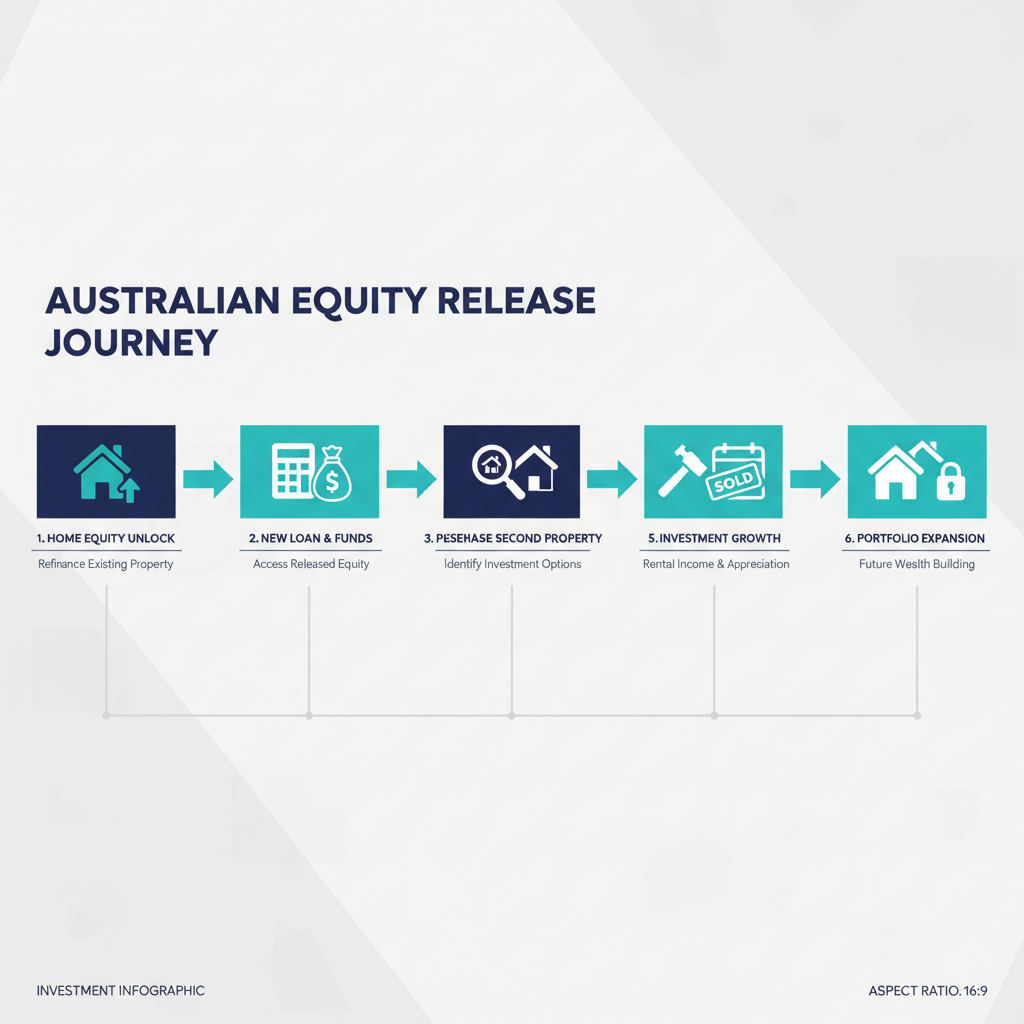
Let's walk through a realistic scenario that shows how equity release works in practice.
Imagine you purchased an investment property in Brisbane in 2021 for $600,000. You borrowed $480,000 at an 80 percent LVR, contributing a $120,000 deposit.
Fast forward to 2026. Brisbane property values have increased by approximately 12 percent annually over this period. Your property is now valued at $750,000.
Calculating the New Equity Position
Your original loan was $480,000. Assuming you've made principal and interest repayments over five years, your loan balance might now be around $450,000.
Your total equity is $750,000 (current value) minus $450,000 (loan balance) = $300,000.
To calculate usable equity, multiply the current value by 0.80: $750,000 x 0.80 = $600,000.
Subtract your outstanding loan: $600,000 – $450,000 = $150,000 in usable equity.
You now have $150,000 available to use as a deposit for another investment property.
Buying the Second Property
Using the Rule of Four, you could target properties up to $600,000 ($150,000 x 4).
You refinance your Brisbane property, releasing $120,000 in equity. This covers a 20 percent deposit on a $600,000 property, plus around $30,000 for stamp duty, legal fees, and building inspections.
You secure a new loan of $480,000 for the second property. You now own two properties with a combined value of $1,350,000, supported by two separate loans totalling $930,000.
Your total equity across both properties is $420,000, and both properties continue to generate rental income and capital growth.
How Investors Repeat This Process to Build a Portfolio
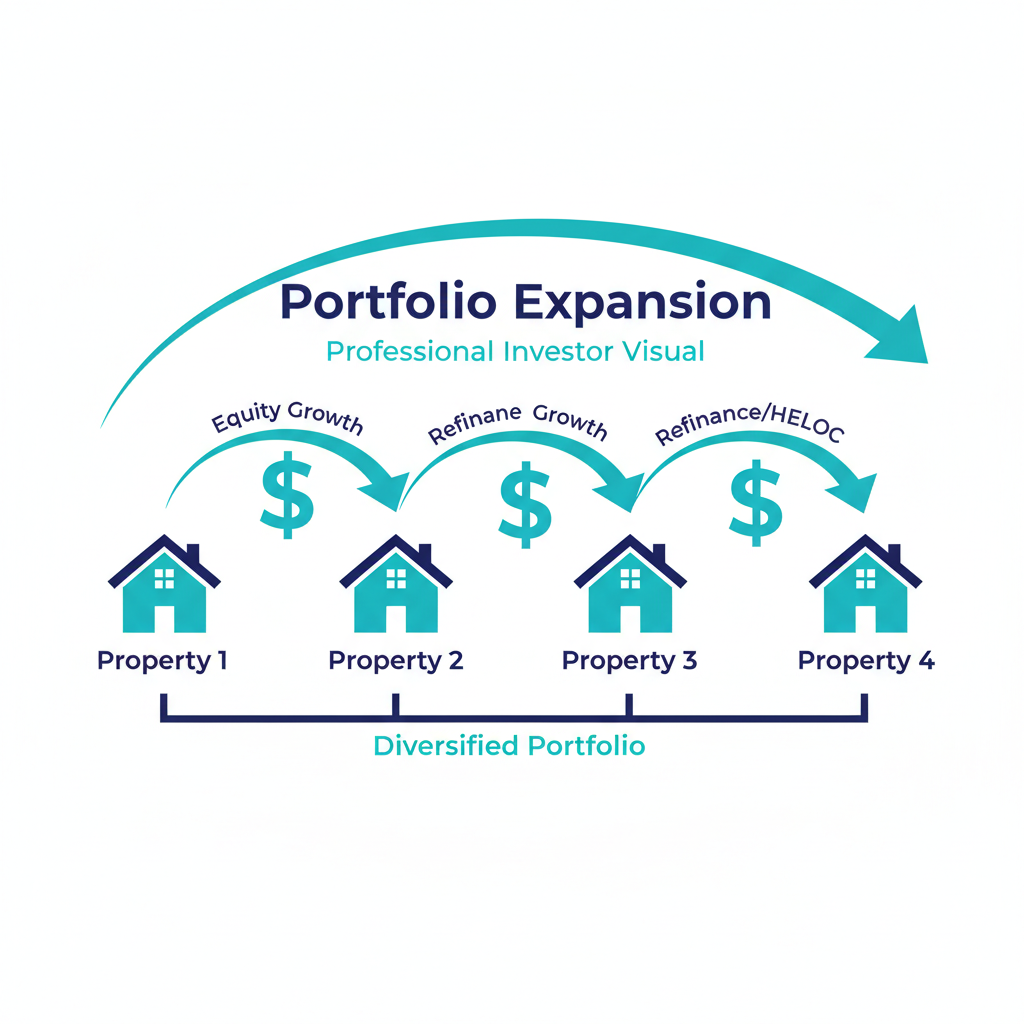
The real power of equity becomes apparent when you repeat this process over time. As your properties appreciate in value and your loans are paid down, your equity continues to grow.
Many successful investors use a systematic approach, purchasing one property every two to three years. This cadence allows each property to accumulate sufficient equity before leveraging it for the next purchase.
Compounding Equity Across Multiple Properties
Let's assume you own two properties, each valued at $750,000, with loan balances of $450,000 each.
Your combined equity is $600,000 ($300,000 per property). Using the 80 percent LVR rule, your usable equity across both properties is $300,000.
This amount could fund the deposit and costs for a third property worth up to $1.2 million, significantly accelerating your portfolio growth.
As each property continues to appreciate, your equity pool expands exponentially. This compounding effect is why long-term investors often own five, ten, or even twenty properties.
The Importance of Serviceability
While equity is essential, it's not the only factor lenders consider. Serviceability refers to your ability to meet loan repayments based on your income, expenses, and existing debts.
Even if you have substantial equity, lenders will stress-test your application by adding a buffer of 2 to 3 percent above current interest rates. This ensures you can still afford repayments if rates rise.
Maintaining strong employment, minimising unnecessary debts, and ensuring positive or neutral cash flow on your investment properties all improve your serviceability.
Timing and Market Selection
Not all properties are created equal. Successful portfolio builders focus on investment-grade properties in high-demand locations with strong long-term fundamentals.
Buying at the right point in the property cycle is crucial. Markets like Perth, Brisbane, and Adelaide have shown strong growth in recent years, but timing and location within those cities still matter.
Working with a buyer's agent who understands market cycles, rental demand, and infrastructure planning can significantly improve your investment outcomes. Buyers Agency Australia offers free strategy sessions to help investors identify the right markets and properties for their goals.
Risks and Considerations When Using Equity
While leveraging equity is a powerful strategy, it's not without risks. Understanding these risks and planning accordingly is essential for long-term success.
Increased Debt and Cash Flow Pressure
Using equity means taking on additional debt. You'll be responsible for repayments on multiple loans, even during periods of vacancy or when interest rates rise.
Maintaining a cash buffer of at least three to six months' worth of repayments is critical. This buffer protects you against unexpected costs like repairs, vacancies, or income disruptions.
Many investors structure their loans with interest-only repayments during the growth phase to improve cash flow. This approach frees up capital for further investments but requires disciplined financial management.
Market Volatility and Negative Equity
If property values decline, you could find yourself in a negative equity position, where your outstanding loan exceeds the property's current value.
This scenario is rare in Australia's major capital cities over the long term, but it can occur during short-term market corrections. Buying investment-grade properties in established, high-demand locations reduces this risk.
Diversifying your portfolio across different cities and property types also helps mitigate market volatility. If one market stagnates, growth in another can offset the impact.
Serviceability Limits
As you acquire more properties, lenders will scrutinise your income and expenses more closely. At some point, you may hit a serviceability ceiling where lenders are unwilling to approve further loans.
Strategies to improve serviceability include increasing your income, reducing non-investment debts, restructuring existing loans, and using interest-only periods strategically.
Some investors also structure loans across multiple lenders to maximise borrowing capacity. Each lender has different assessment criteria, so spreading your portfolio can unlock additional capacity.
Tax and Legal Considerations
Investment properties come with tax obligations and benefits. Interest on investment loans is generally tax-deductible, as are property management fees, maintenance costs, and depreciation.
However, capital gains tax applies when you sell an investment property. Planning your exit strategy and holding properties for at least 12 months can reduce your CGT liability through the 50 percent discount.
Consulting with a qualified accountant and property lawyer ensures your structure is tax-efficient and legally sound.
How Buyers Agency Australia Helps Investors Maximise Equity

Building a multi-property portfolio requires more than just equity. It demands strategic planning, market knowledge, and disciplined execution.
Buyers Agency Australia specialises in helping investors identify high-growth, cash-flow-positive properties that accelerate equity accumulation. With over 20 years of experience and a $10M+ personal portfolio, founder Dragan Dimovski understands the practical realities of portfolio building.
Data-Driven Property Selection
Buyers Agency Australia uses a transparent, fixed-fee model and relies heavily on 10-year portfolio modeling. This approach ensures every property purchase aligns with your long-term wealth creation goals.
Rather than chasing short-term hotspots, the agency focuses on suburbs with strong rental demand, infrastructure investment, and sustainable growth drivers. These properties generate equity faster and hold their value through market cycles.
End-to-End Support
From initial strategy sessions to property search, due diligence, negotiation, and settlement, Buyers Agency Australia manages the entire process. This is particularly valuable for time-poor professionals who lack the bandwidth to research markets and attend inspections.
The agency also provides ongoing support after settlement, helping clients monitor performance, review loan structures, and identify the right time to leverage equity for their next purchase.
Proven Results
Clients of Buyers Agency Australia have successfully built portfolios of five, ten, or more properties using equity strategies. By focusing on investment-grade assets and timing purchases strategically, these investors have compounded their equity and created substantial passive income streams.
If you're ready to start or scale your property portfolio, book a free strategy session to discuss your goals and map out a personalised equity-release plan.
Frequently Asked Questions
How much equity do I need to buy another investment property?
You typically need at least $100,000 in usable equity to cover a 20 percent deposit and purchasing costs on a median-priced property.
Can I access equity without refinancing my loan?
Yes, through a home loan top-up or a line of credit secured against your property, though refinancing often offers better rates.
What is the 80 percent LVR rule?
Lenders generally allow borrowing up to 80 percent of your property's value to avoid Lenders Mortgage Insurance and reduce risk.
How long should I wait between buying properties?
Most investors wait two to four years to allow sufficient equity to accumulate and ensure serviceability remains strong.
Is using equity risky?
Using equity increases debt and requires strong cash flow management, but it's a proven long-term strategy when combined with quality property selection and financial discipline.
Why Understanding Equity Is Key to Long-Term Wealth
Property equity is one of the most powerful tools available to Australian investors. It allows you to scale your portfolio without saving multiple deposits, accelerates wealth creation through compounding growth, and provides flexibility to respond to market opportunities.
Successful investors treat equity as a strategic resource, not just a financial metric. They understand the difference between total and usable equity, respect the 80 percent LVR threshold, and structure their loans to maximise flexibility and tax efficiency.
Building a property portfolio is a long-term game. It requires patience, discipline, and expert guidance. By partnering with specialists like Buyers Agency Australia, you can avoid costly mistakes, identify high-performing properties, and build a portfolio that delivers genuine financial freedom.
Whether you're buying your first investment property or scaling to your fifth, understanding how to unlock and deploy equity is the difference between average returns and life-changing wealth.
Ready to take the next step? Contact Buyers Agency Australia today to discuss your equity position and create a personalised investment roadmap.
 General
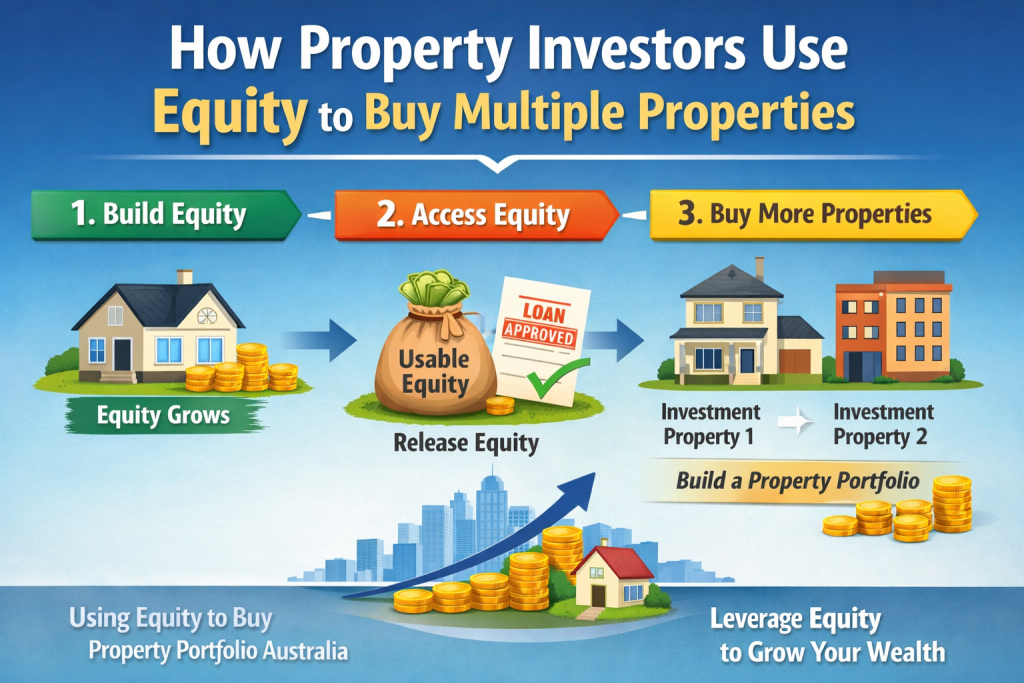
Learn how savvy property investors use equity to buy multiple investment properties without saving a full deposit again....
Property prices in Australia are not crashing in 2026. Leading forecasters predict continued growth of 4-10% nationally, driven by a structural housing shortage of 200,000-300,000 homes, strong population demand, and limited new supply—despite rising interest rates and worsening affordability.
We've all heard the predictions. Every few years, someone declares that property prices are about to collapse. In 2026, the chorus has grown louder.
Some point to the infamous "18-year cycle" and warn that a crash is overdue. Others cite rising interest rates, stretched affordability, and an economy under pressure. If you're a first-home buyer priced out of the market or an investor watching your equity grow, the question feels urgent: will property prices crash?
Let's be honest. The property conversation in Australia has shifted from excitement to anxiety. This article cuts through the noise with data from CoreLogic, SQM Research, the Reserve Bank of Australia, and leading economists to answer the question definitively. If you're deciding whether to buy now or wait for a crash, Buyers Agency Australia can help you make the right move at the right time.
What Leading Forecasters Are Saying About 2026 Property Prices
National Price Growth Projections Remain Positive
Despite headlines warning of doom, every major forecaster expects property prices to rise in 2026. The range varies, but growth is the consensus.
AMP forecasts national home prices will rise 5-7% in 2026, slowing from 2025's 8.6% but still firmly positive. Domain predicts combined capital city house prices will climb 6% by year's end. KPMG's forecast is even stronger at 7.7% growth nationally.
The Reserve Bank lifted the cash rate to 3.85% in February 2026, and economists are divided on whether further hikes will follow. Yet even with higher-for-longer interest rates, prices are expected to keep climbing.
There's no uniform market. Perth, Brisbane, Adelaide, and Darwin continue to surge with double-digit growth in some cases. Perth alone saw dwelling values jump 2.3% in February 2026, adding $22,500 to the median in one month, according to CoreLogic data. Sydney and Melbourne have cooled, with values flat or slightly negative in recent months, but forecasters expect them to rebound later in 2026.
Why the "Crash" Narrative Keeps Resurging
The myth of the 18-year property cycle has gained traction again. Some commentators count forward from the 2008 global financial crisis and declare 2026 is "due" for a crash.
Here's the problem: the 18-year cycle is pattern recognition, not a forecasting tool. As Property Update notes, "counting years is not a mechanism" for a crash. The 2008 crash was caused by a global credit crisis, not a calendar date.
A property market crash requires specific conditions: widespread forced selling, evaporating buyers, rising unemployment, or a credit event. Australia has none of these in 2026. Unemployment remains around 4.1%, mortgage arrears are below 1%, and lending standards remain strict following post-GFC reforms by APRA.
Affordability is terrible, and that's causing pain—but affordability stress alone doesn't trigger a crash. It slows growth. And that's exactly what we're seeing: growth moderating from 8-9% to 4-7%, not collapsing.
Regional Variations: Where Growth Is Strongest
Australia's property market moves in fragments. While some markets surge, others stall.
Perth, Brisbane, Adelaide, and Darwin are leading. KPMG predicts Perth house prices will soar 13% in 2026, Brisbane 11%, and Adelaide 8.2%. These cities benefit from strong interstate migration, rental yields above 5%, and listings 40-50% below five-year averages.
Sydney and Melbourne are cooling. Affordability has hit a ceiling. Sydney's median house price is forecast to reach $1.92 million by year-end, but monthly growth has stalled. Melbourne, which saw negative monthly growth in late 2025, is expected to recover as interstate migration returns and Victoria's price base remains lower than Sydney's.
Regional areas continue to attract buyers priced out of capitals, but CoreLogic warns some regional markets are at risk of correction as affordability constraints hit less liquid markets. Investors who chased yield into Darwin or smaller regional towns may face volatility.
Buyers Agency Australia specializes in identifying markets with strong fundamentals—jobs growth, infrastructure investment, and sustainable demand—to help investors avoid speculative bubbles.
The Real Drivers of Property Prices in 2026
Housing Shortage: The Structural Elephant in the Room
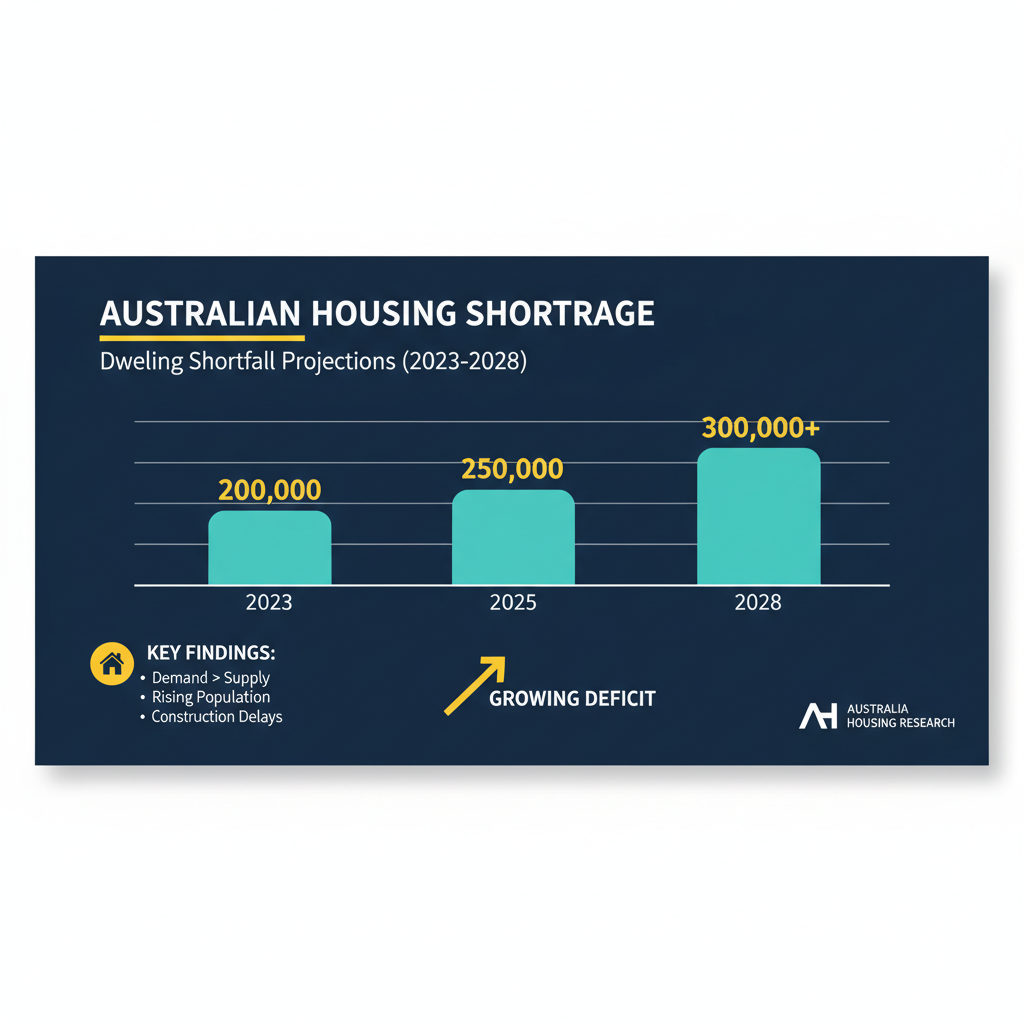
Australia's property market isn't driven by speculation. It's driven by a chronic, decade-long housing shortage.
AMP estimates the accumulated housing shortfall is 200,000-300,000 dwellings. The National Housing Supply and Affordability Council forecasts Australia will build 938,000 new dwellings over the Housing Accord period (2024-2029), leaving a shortfall of 262,000 homes against the 1.2 million target.
To meet demand, Australia needs to build 240,000 homes per year. In December 2025, dwelling approvals ran at just 16,500 per month—well short of the 20,000 monthly run rate required. Over the first 18 months of the Housing Accord, approvals were 20% below target.
The problem isn't lack of demand. It's lack of supply. And supply isn't coming fast enough to cool prices.
Construction productivity has fallen 12% over 30 years, according to the Housing Construction study. Labour shortages, material costs, and lengthy approval processes continue to constrain completions. The average time from approval to completion for a new house is now 12 months, up from 9 months in 2019-20.
Rental vacancy rates sit at 1% nationally, near all-time lows. In Brisbane, vacancies are 0.8%; in Hobart, just 0.3%. When supply is this tight, prices rise. It's economics 101.
Interest Rates: Higher for Longer, But Not a Crash Trigger
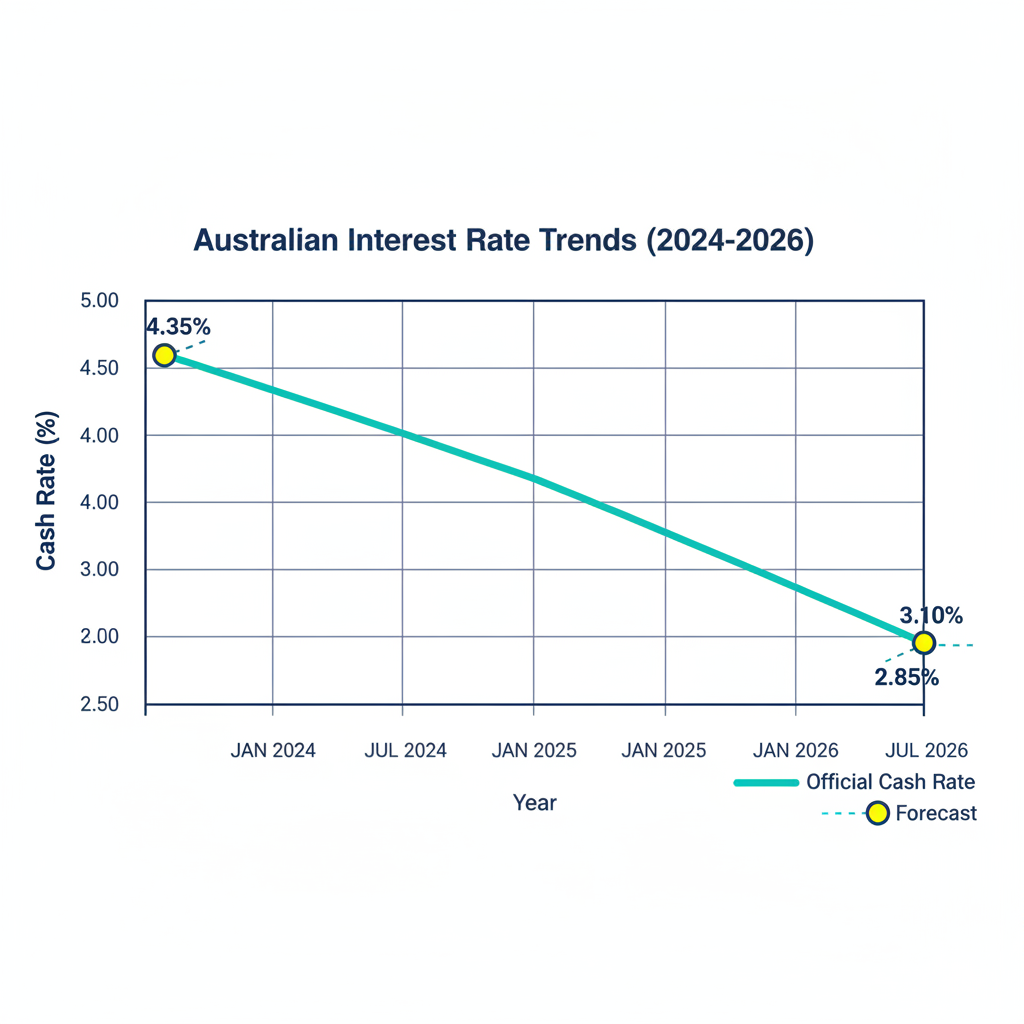
The Reserve Bank's February 2026 rate hike to 3.85% surprised no one. Inflation remains above the RBA's 2-3% target band, driven by persistent services inflation—rent, insurance, healthcare, and education.
Half of leading economists now expect at least one more rate hike in 2026, with some forecasting the cash rate could reach 4.35% by mid-year. Commonwealth Bank and NAB have revised forecasts upward, pricing in a higher-for-longer scenario.
Higher rates reduce borrowing capacity. Each 0.25% rate hike cuts borrowing power by roughly $11,000-12,000 for the average buyer. For a household already stretched, that's significant.
But here's what matters: higher rates slow growth, they don't reverse it. Property prices rose 8.6% in 2025 even as rates sat at 3.6%. The lagged effect of 2025's three rate cuts is still working through the economy, supporting buyer confidence and borrowing capacity.
Mortgage stress is real, but arrears remain below 1%. Australian banks apply strict serviceability buffers, requiring borrowers to prove they can service loans at rates 3% higher than the actual rate. This makes the system more resilient to rate hikes than in past cycles.
Unless unemployment spikes or a credit crisis emerges, higher rates will moderate growth, not trigger a crash. And with the labour market still tight, unemployment rising sharply is unlikely in 2026.
Population Growth and Migration: Demand Stays Strong
Australia's population is forecast to grow from 27.6 million to over 30 million by 2030. That's 3 million more people who need housing.
Net overseas migration has slowed from its 2023 peak of 662,000 to around 423,000 over the year to March 2025, with the government targeting further reductions to 365,000 in 2025-26. But even at these lower levels, migration remains a powerful driver of housing demand.
Interstate migration is reshaping markets. Perth, Brisbane, and Adelaide are attracting movers from Sydney and Melbourne, driven by affordability and lifestyle. Domain reports Melbourne has returned to positive interstate migration for the first time in years, signalling renewed confidence.
First-home buyers are also re-entering the market, supported by the expanded 5% Deposit Scheme and Help to Buy shared equity program. These demand-side policies bring forward purchases and add to competition, particularly at the affordable end of the market.
The combination of population growth, tight rental markets, and government incentives means buyer demand isn't disappearing. It's just shifting to where affordability allows.
Government Policy: Helping or Hurting?
The Albanese government has made housing supply a priority, but progress on the ground is slow. The Housing Australia Future Fund has supported 18,650 homes across two funding rounds, but only 889 had been completed as of late 2025.
First Home Guarantee and Help to Buy schemes are stimulating demand, but critics argue they're driving prices higher without addressing supply. Domain forecasts the 5% Deposit Scheme could lift house prices by up to 6.6% in the first year by enabling purchases with lower deposits and no mortgage insurance.
State-level policies add complexity. Victoria's ban on rental bidding and land tax changes are cooling investor activity in Melbourne. New South Wales has introduced pattern plans and smaller lot sizes to speed approvals, but it's too early to see results.
The policy puzzle won't be solved in 2026. What matters for buyers and investors is navigating the system as it exists today—not waiting for reform that may take years.
What a Real Property Crash Would Require
Forced Selling and Credit Events
A property crash doesn't happen because prices are high. It happens when sellers are forced to sell and buyers disappear.
Forced selling occurs during recessions, when unemployment spikes and borrowers default en masse. It requires a credit event—banks tightening lending, widespread mortgage stress, or a financial crisis.
Australia had none of these in 2026. Unemployment remains low. Banks are well-capitalised. Lending standards are strict. Household savings buffers built during the pandemic are still providing a cushion.
Mortgage arrears sit at just 1%, well below levels that would trigger distressed selling. Even with higher rates, most borrowers are managing repayments. The "mortgage cliff" predicted in 2023 never materialised.
For prices to crash, you'd need a sharp rise in unemployment, a wave of defaults, and a collapse in buyer confidence. None of these are forecast for 2026.
Oversupply: The Missing Ingredient
Every property crash in history has been accompanied by oversupply. Too many homes chasing too few buyers.
Australia has the opposite problem. We have too few homes chasing too many buyers.
Listings remain 40-50% below five-year averages in Perth, Brisbane, and Adelaide. Rental vacancies are at record lows. New dwelling completions are running below demand. The accumulated shortfall is growing, not shrinking.
Until supply catches up with demand—and that's years away—prices have a floor. They may grow more slowly, but they won't collapse.
What Would Derail the Market?
Three scenarios could derail the 2026 outlook: a sharp rise in interest rates to 4.5% or higher, crushing affordability; a spike in unemployment to 6% or above, forcing distressed selling; or a sharp drop in population growth, reducing underlying demand.
None of these are base-case scenarios. But they're risks to monitor. AMP's Shane Oliver notes that "a return to rate hikes could result in a resumption of property price falls," but only if hikes are sustained and severe.
For now, the most likely scenario is slower growth, not a crash.
How Buyers Agency Australia Helps You Navigate 2026
Data-Driven Investment Strategies
Dragan Dimovski and the team at Buyers Agency Australia don't rely on headlines or hype. They use 10-year portfolio modelling, suburb-level data, and boots-on-the-ground market intelligence to identify properties with strong fundamentals.
In a market where Perth is surging and Sydney is cooling, location selection matters more than ever. Buyers Agency Australia helps investors avoid speculative bubbles and focus on markets with sustainable demand drivers: jobs growth, infrastructure investment, and rental yield.
With over 20 years of experience and a $10M+ personal portfolio, Dragan understands what works—and what doesn't—across different market cycles.
Transparent, Fixed-Fee Model
Buyers Agency Australia operates on a transparent, fixed-fee model, so there's no incentive to overpay or rush a purchase. You get unbiased advice focused on long-term wealth creation, not commissions.
Whether you're a first-home buyer trying to get into the market or an investor scaling to 5+ properties, the team provides end-to-end support—from suburb selection and due diligence to negotiation and settlement.
Access to Off-Market Opportunities
In a low-supply market, off-market properties offer a competitive edge. Buyers Agency Australia's network provides access to deals that never hit the public market, reducing competition and improving negotiation outcomes.
With auction clearance rates still strong in most capitals, buyers who rely solely on listed properties face intense competition. Off-market access changes the game.
If you're serious about building wealth through property in 2026, book a free strategy session to discuss your goals and explore opportunities tailored to your budget and risk profile.
Frequently Asked Questions
Will property prices crash in Australia in 2026?
No. Leading forecasters predict 4-10% growth nationally, driven by housing shortages, strong demand, and limited supply despite affordability pressures.
What would cause a property crash in Australia?
A crash requires widespread forced selling (unemployment spike), evaporating buyers (credit crisis), or oversupply. None are present in 2026.
Is now a good time to buy property in Australia?
Yes, for buyers with strong finances and long-term horizons. Supply shortages and population growth support continued price growth, particularly in high-yield markets.
Which cities will see the strongest property growth in 2026?
Perth, Brisbane, Adelaide, and Darwin are forecast for double-digit or high single-digit growth, while Sydney and Melbourne growth will be more modest.
How do interest rate rises affect property prices?
Higher rates reduce borrowing capacity and slow growth, but they don't trigger crashes unless accompanied by unemployment spikes or credit crises.
Final Takeaway: No Crash, But Strategic Thinking Required
Property prices in Australia are not crashing in 2026. The fundamentals—housing shortage, population growth, low unemployment, and strict lending standards—support continued price growth.
Affordability is a real constraint. Growth will be slower and more uneven than in past cycles. But waiting for a crash that isn't coming means missing opportunities in a market where time in beats timing.
If you're ready to invest, focus on markets with strong fundamentals and work with experts who understand the data. Contact Buyers Agency Australia today to explore your options and make 2026 the year you build long-term wealth through property.
 General
Property prices in Australia aren't crashing in 2026. Forecasters predict 4-10% growth driven by housing shortages, strong demand,...
The best suburbs to invest in Australia for 2026 combine strong population growth, infrastructure spending, tight rental markets, and employment diversity. Locations like Clyde North in Victoria, Austral in Sydney, and Alkimos in Perth are attracting investors due to low vacancy rates below 1%, major transport projects, and affordability relative to established markets.
If you're searching for where to invest in property Australia in 2026, you're not alone. With national dwelling values rising 9.4% annually and rental vacancy rates sitting at just 1.1% nationally, the pressure to choose wisely has never been higher.
The wrong suburb can mean stagnant capital growth, prolonged vacancies, and missed opportunities. The right one can set you up for decades of wealth creation. That's why understanding the data-driven factors that make a suburb investment-grade is critical for both first-time buyers and seasoned portfolio builders.
This guide reveals the best suburbs to invest in Australia based on 2026 market forecasts, infrastructure pipelines, and rental demand fundamentals. We'll also show you the common mistakes investors make and how Buyers Agency Australia helps clients identify high-growth locations before the crowd catches on.
Why Choosing the Right Suburb Matters for Property Investors
Suburb selection is the single most important decision you'll make as a property investor. It determines your rental yield, capital growth trajectory, tenant quality, and exit strategy.
Capital Growth vs Cash Flow
The best suburbs to invest in Australia balance both capital appreciation and rental income. Growth suburbs like Clyde North in Victoria delivered 4.21% average annual growth with median house prices at $737,500, while yielding solid rental returns due to high tenant demand from young families.
Cash flow suburbs like Port Lincoln in South Australia offer rental yields above 5% with a median house price of $500,000 and 10-year average annual growth of 11.36%.
Most beginner investors chase price growth alone. Smart investors understand that yield keeps you solvent during slow markets, while capital growth builds long-term equity.
Risk Mitigation Through Diversification
Investing in the right suburb also means avoiding over-concentration in a single market cycle. Perth recorded 13% growth in 2025 and 2.3% monthly growth in February 2026, but history shows it's one of Australia's most volatile markets.
Diversifying across Brisbane, Adelaide, and regional growth corridors spreads risk while capturing different phases of the property cycle.
Tenant Demand and Vacancy Rates
Low vacancy rates signal strong tenant demand. Brisbane, Perth, and Darwin all recorded vacancy rates below 1% in early 2026, meaning properties are being filled within days of listing.
High vacancy rates above 2% indicate oversupply or weak rental demand, which can leave your property sitting empty for weeks or months.
Key Factors That Make a Suburb a Good Investment
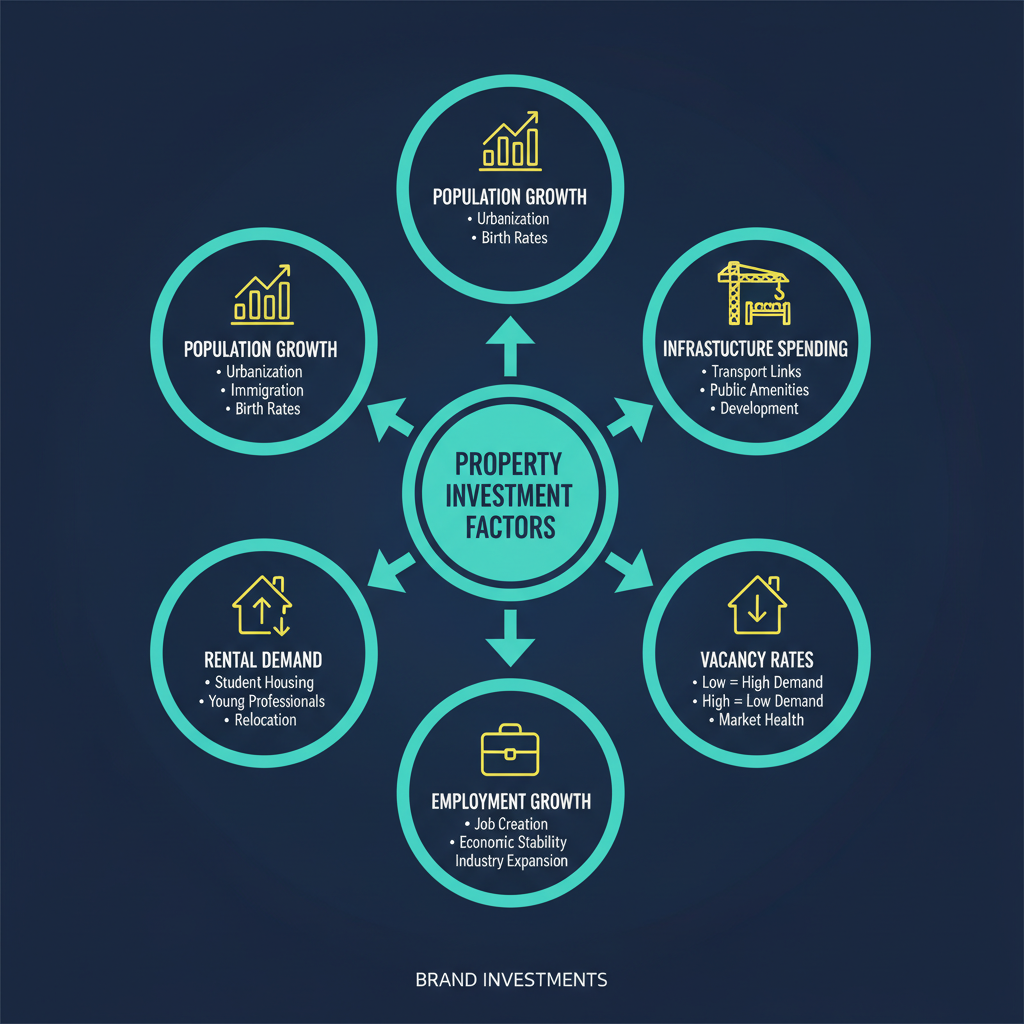
Not all suburbs are created equal. The best property investment suburbs Australia share specific characteristics that drive demand and deliver returns.
Population Growth
Population growth fuels housing demand. Australia's population is forecast to rise to over 30 million by 2030, with Sydney welcoming 184,619 overseas migrants in the latest year.
Suburbs experiencing rapid population expansion like Austral in NSW, which grew from 3,000 people in 2016 to almost 7,000 in 2021 and is set to accommodate 55,000 residents, are positioned for long-term capital appreciation.
Look for suburbs in growth corridors with master-planned estates, new schools, and expanding retail precincts.
Infrastructure Spending
Major infrastructure projects unlock value. The 2026 Infrastructure Priority List identifies over 60 nationally significant transport, energy, and water projects.
Key projects include Sydney Metro West linking Parramatta to the CBD, Brisbane's Cross River Rail, Melbourne's Suburban Rail Loop, and Western Sydney International Airport opening in 2026.
Suburbs within 5-10km of new transport nodes or employment hubs typically see accelerated price growth. Westmead, Five Dock, and Woolloongabba are all benefiting from metro station proximity.
According to Infrastructure Australia, targeted investment in city-shaping transport will unlock priority growth areas for housing and development.
Rental Demand and Low Vacancy Rates
Australia's national rental vacancy rate fell to 1.1% in February 2026, down from 1.3% a year earlier. Cities like Brisbane (0.6%), Perth (0.6%), and Hobart (0.5%) have some of the tightest rental markets in the country.
Low vacancy rates mean landlords can command higher rents and experience minimal downtime between tenants. Suburbs with vacancy rates below 2% are considered landlord-favourable markets.
Data from SQM Research shows rental markets remain constrained due to population growth exceeding housing completions.
Employment Growth and Economic Diversity
Suburbs near major employment hubs attract stable, high-income tenants. Parramatta, known as Sydney's second CBD, is undergoing a massive transformation with billions invested in infrastructure and strong capital growth of 8% annually.
Regional centres like Townsville are booming due to growth in defence, healthcare, and renewable energy sectors, delivering strong rental yields and low vacancy rates.
Avoid single-industry towns where employment is tied to one sector like mining, which can experience boom-bust cycles.
Affordability Relative to Income
Affordability drives first-home buyer and investor demand. Suburbs with median prices between $600,000 and $850,000 offer entry points for a broader pool of buyers.
Werribee in Melbourne has a median house price of $630,000 with 4.40% average annual growth, making it accessible for investors with lower budgets while still delivering solid returns.
Affordability constraints are pushing demand toward outer-growth corridors and regional centres, where buyers can secure larger homes and better yields.
Best Suburbs to Invest in Australia by State
Let's break down the standout property investment suburbs Australia across each state based on 2026 forecasts, infrastructure, and market fundamentals.
New South Wales: Sydney and Regional Hotspots
Austral and Leppington (Western Sydney)
Austral and Leppington are reshaping Sydney's investment landscape due to Western Sydney International Airport proximity and large-scale rezoning.
Austral is set to accommodate more than 17,000 homes and 55,000 residents, up from just 3,000 in 2016. Leppington offers direct access to major motorways and is positioned for rapid price appreciation.
Bankstown recorded 26.3% growth in recent data, making it one of the best suburbs to invest in Sydney 2026.
Parramatta
Parramatta is a major employment hub with billions invested in the Parramatta Light Rail and Metro West projects. Median house prices saw 8% annual growth, and the suburb attracts professionals, families, and students.
The area benefits from strong connectivity, retail options, and renovation potential while remaining cheaper than inner-city counterparts.
Regional NSW: Tamworth
Tamworth, known as the country music capital, is quietly becoming a property hotspot with strong underlying demand, tight rental conditions, and infrastructure investment.
It offers lower-risk, long-term growth according to property experts at Hotspotting.
Victoria: Growth Corridors and Regional Centres
Clyde North and Cranbourne East
Clyde North offers exceptional affordability and long-term growth potential in Melbourne's south-east growth corridor. It's one of Australia's fastest-growing population areas with median house prices at $737,500 and 4.21% average annual growth.
Cranbourne East is underpinned by large master-planned estates, new schools, and emerging retail hubs, making it ideal for families and investors.
Werribee and Tarneit
Werribee and Tarneit are showing strong potential due to new infrastructure and amenities. Werribee has a median house price of $630,000 with 4.40% average annual growth.
These suburbs attract first-home buyers and investors seeking larger family homes within commuting distance of Melbourne and Geelong.
Regional Victoria: Ballarat and Geelong
Ballarat and Geelong offer space, affordability, and lifestyle appeal. Regional Victoria experienced 6% growth in 2025, and these centres provide diversification away from Melbourne's inner suburbs.
Queensland: Brisbane, Gold Coast, and Regional Markets
Coorparoo and Redcliffe (Brisbane)
Coorparoo offers a vibrant village atmosphere, connectivity, and proximity to Brisbane CBD, with strong potential for capital growth. The median house price sits at $1.8 million, with units at $725,000.
Redcliffe combines coastal lifestyle appeal with accessibility, making it attractive for owner-occupiers and investors.
Pimpama, Coomera, and Arundel (Gold Coast)
Pimpama, Coomera, and Arundel are high-growth suburbs on the Gold Coast. They combine affordability, infrastructure development, and strong rental demand.
Arundel's proximity to schools, shopping centres, and transport hubs ensures a strong tenant pool, making it attractive for both families and professionals.
Regional Queensland: Townsville and Mackay
Townsville is a prime spot for property investors due to strong rental yields, low vacancy rates, and booming infrastructure driven by defence, healthcare, and renewable energy sectors.
Mackay offers a relaxed coastal lifestyle, new infrastructure, and strong demand from investors and homebuyers, with mining, agriculture, and tourism supporting the local economy.
South Australia: Adelaide Suburbs and Regional Centres
Brooklyn Park, Brompton, and Port Adelaide
Inner and near-city suburbs Brooklyn Park, Brompton, and Port Adelaide benefit from proximity to Adelaide CBD and major renewal projects.
Eyre, located north of Adelaide CBD, achieves rental yields upwards of 5% with a median house price of $600,000 and 12-month growth of 15.77%.
Regional SA: Port Lincoln
Port Lincoln has shown strong growth with an affordable median house price of $500,000, a 10.86% increase from the prior year, and rental yields upwards of 5%.
Its 10-year average annual growth rate of 11.36% shows long-term capital growth potential, according to ABS data.
Western Australia: Perth and Regional WA
Alkimos, Baldivis, and Ellenbrook (Perth)
All nine WA nominations on the 2026 Hot 100 list recorded double-digit annual gains. Alkimos, Baldivis, and Ellenbrook combine transport upgrades, coastal lifestyle, and relative value compared to inner-Perth stock.
Perth's rental vacancy rates remain tight at 0.6%, supporting rental yields and investor interest.
Maddington and Spalding (Regional WA)
Maddington has affordability, good yields, and growth momentum, making it one of WA's best suburbs to invest in 2026.
Spalding in the City of Greater Geraldton recorded 38.6% 12-month growth with median house prices at $395,000 and rental yields over 5.5%.
Tasmania: Hobart and Regional Markets
Acton (Burnie)
Acton, just 3km from Burnie's city centre, offers a median rental yield of 5.4% and median home price increases of 94.9% over five years.
The suburb is drawing investor interest amid strong rental demand fuelled by infrastructure upgrades and clean energy investment.
West Launceston
West Launceston is becoming popular among buyers seeking a premium lifestyle without the premium price tag. Its $630,000 median home price is $270,000 cheaper than neighbouring East Launceston.
How Dragan Dimovski Identifies High-Growth Investment Suburbs
Dragan Dimovski, founder of Buyers Agency Australia, has over 20 years of experience identifying investment-grade properties before they hit the mainstream.
His approach combines on-the-ground market intelligence with rigorous data analysis, ensuring clients secure properties in suburbs poised for long-term growth.
10-Year Portfolio Modelling
Unlike agencies that chase quarterly headlines, Dragan focuses on 10-year portfolio modelling to ensure sustainable wealth creation. He evaluates suburbs based on infrastructure pipelines, demographic shifts, and employment diversity.
This forward-looking strategy has helped clients build portfolios exceeding $10 million in equity.
Transparent Fixed-Fee Model
Buyers Agency Australia operates on a transparent fixed-fee model, not commission-based structures. This means recommendations are driven by client outcomes, not vendor incentives.
For investors seeking unbiased suburb selection and negotiation expertise, this model ensures alignment of interests.
Access to Off-Market Deals
Dragan's network provides access to off-market properties in high-demand suburbs before they're publicly listed. This gives clients a competitive edge in tight markets like Brisbane and Perth.
If you're serious about investing in the best suburbs to invest in Australia, book a free strategy session to discuss your goals.
Common Mistakes Investors Make When Choosing Suburbs
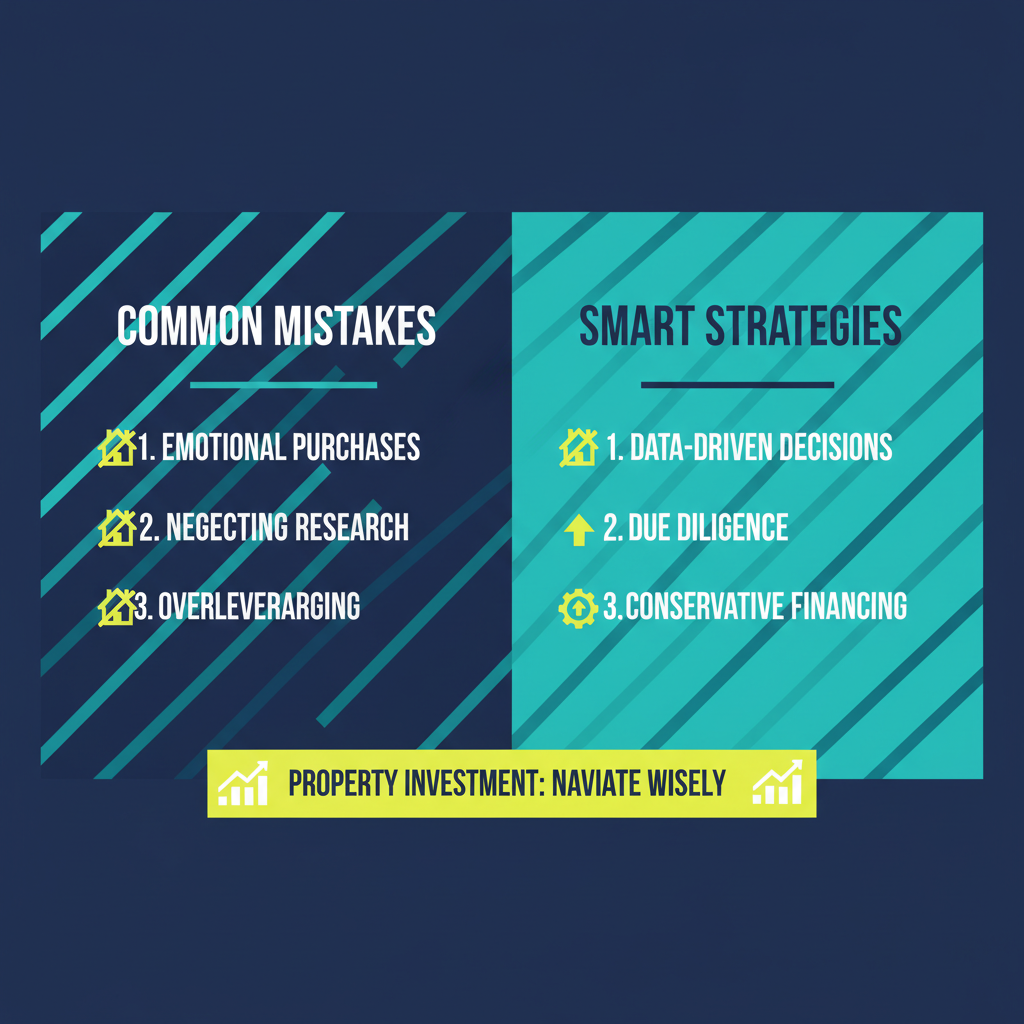
Even experienced investors fall into traps that cost them tens of thousands in missed growth or negative cash flow.
Chasing Last Year's Winners
Investing in suburbs that already experienced rapid growth often means you've missed the upside. Perth surged 13% in 2025, but experts warn the market may moderate to 5-8% growth in 2026 as affordability limits temper demand.
Instead, look for suburbs in the early stages of infrastructure development or demographic shifts.
Ignoring Vacancy Rates
High vacancy rates above 2% signal oversupply or weak rental demand. Investors who ignore this metric can face prolonged periods without rental income.
Always check SQM Research or CoreLogic data before committing.
Overlooking Economic Diversity
Single-industry towns like mining centres can deliver high yields but carry significant risk if the industry declines. Spalding in WA, for example, offers 38% growth but is tied to mining cycles.
Diversify across suburbs with mixed employment bases like healthcare, education, and government services.
Buying Based on Emotion, Not Data
Many first-home buyers and investors purchase properties based on personal lifestyle preferences rather than investment fundamentals.
The best suburbs to invest in Australia aren't necessarily where you'd want to live. They're where the numbers, tenant demand, and growth drivers align.
Underestimating Holding Costs
Investors often overlook body corporate fees, land tax, maintenance, and vacancy periods. These holding costs can erode cash flow and turn a positive-yield property into a loss-maker.
Before buying, model your holding costs using conservative rental assumptions and vacancy buffers.
How Experienced Investors Identify High-Growth Locations
Successful investors follow a disciplined, data-driven process to identify where to invest in property Australia.
Analysing Infrastructure Pipelines
They study the 2026 Infrastructure Priority List and state government capital programs to identify suburbs benefiting from transport, healthcare, and education projects.
Suburbs within 5km of new metro stations or motorway upgrades typically see accelerated capital growth.
Monitoring Demographic Shifts
Population growth, household formation, and migration patterns signal rising demand. Suburbs with net overseas migration, young families, and employment hubs attract stable, long-term tenants.
Data from the Australian Bureau of Statistics provides insights into migration and population trends.
Evaluating Supply Constraints
Tight supply due to zoning restrictions, geographic limitations, or slow construction pipelines supports price growth. Suburbs with advertised stock 40% below the 5-year average, like Perth, maintain upward pressure on values.
New dwelling commencements and completions are also well below decade averages due to construction costs and scarce labour supply.
Partnering with Specialist Buyers Agents
Experienced investors work with buyers agents who provide market intelligence, off-market access, and negotiation expertise.
Buyers Agency Australia specialises in data-driven investment strategies and end-to-end purchasing solutions for time-poor professionals and portfolio builders.
For personalised suburb analysis and acquisition support, contact the team today.
Frequently Asked Questions
What makes a suburb a good property investment in Australia?
A good investment suburb has strong population growth, low vacancy rates below 2%, infrastructure projects, employment diversity, and affordability relative to income.
Which Australian suburbs have the highest rental yields in 2026?
Suburbs like Port Lincoln (5%), Spalding (5.7%), Acton (5.4%), and regional Darwin (7.5%) offer the highest rental yields in 2026.
Are regional suburbs better than capital cities for investment?
Regional suburbs often offer higher yields and affordability, but capital cities provide greater liquidity, tenant pools, and long-term capital growth. Diversification across both is ideal.
How do I avoid buying in an oversupplied suburb?
Check vacancy rates via SQM Research, monitor new dwelling approvals, and avoid suburbs with high-rise apartment clusters or off-the-plan saturation.
Should I use a buyers agent to find investment suburbs?
Yes, buyers agents provide market intelligence, off-market access, and negotiation expertise, saving time and increasing returns. Buyers Agency Australia offers free strategy sessions.
 General
Discover the best suburbs to invest in Australia for 2026 with data-backed insights on population growth, infrastructure spending,...
Negative gearing occurs when the expenses of owning an investment property, including mortgage interest, maintenance, and council rates, exceed the rental income it generates. Under Australian tax law, investors can deduct this net loss against their wage or business income, reducing their overall tax liability and creating short-term cash flow relief while banking on long-term capital growth.
If you're an investor trying to build a property portfolio in 2026, you've probably heard the phrase "negative gearing" thrown around at dinner parties and in headlines. But here's the thing: with the Federal Government reviewing negative gearing ahead of the May 2026 budget, the strategy that once seemed bulletproof is now under scrutiny.
For decades, negative gearing has been a cornerstone of Australian property investment. Yet rising interest rates, proposed policy caps, and affordability debates mean investors need to understand not just what negative gearing is, but how to use it strategically without getting burned. That's where Buyers Agency Australia comes in, guiding investors through the noise to build portfolios that stand the test of time.
What Is Negative Gearing and How Does It Work in Australia?
The Basic Mechanics of Negative Gearing
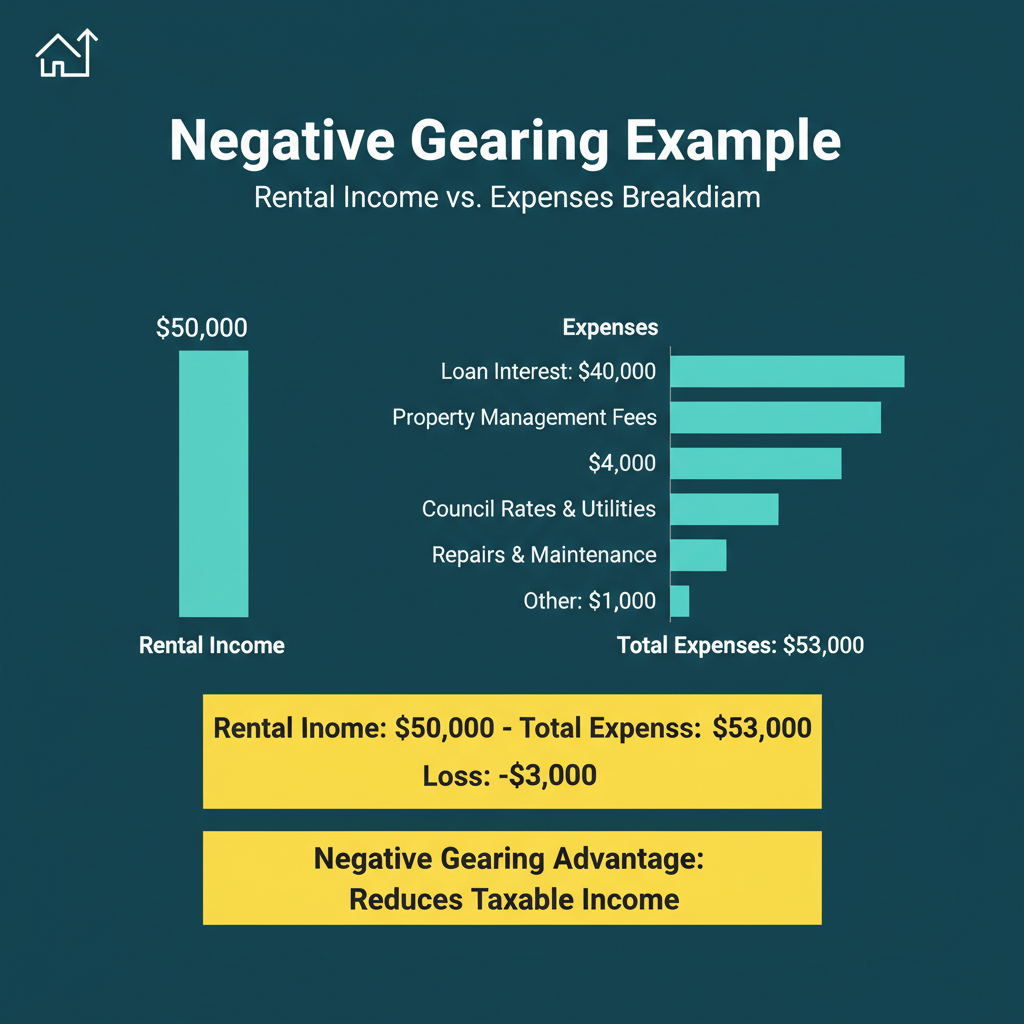
Negative gearing happens when you borrow money to buy an investment property and the cost of owning it outweighs the rental income it produces. Think mortgage interest, insurance, property management fees, repairs, and council rates.
When your deductible expenses exceed your rental income, you're left with a net rental loss. The Australian tax system allows you to offset this loss against other income sources like your salary, effectively lowering your taxable income.
Here's a simple example. You purchase a $600,000 investment property with a $480,000 loan at 6.5% interest. Your annual interest bill is $31,200. Add another $8,000 for rates, insurance, maintenance, and property management, and your total annual expenses hit $39,200. But your rental income is only $28,000.
You're losing $11,200 per year. If you're in the 37% tax bracket (including the Medicare Levy), that $11,200 loss saves you roughly $4,144 in tax. You're still out of pocket $7,056, but the tax relief softens the blow while you wait for the property to appreciate.
Why Investors Choose Negative Gearing
Investors don't chase losses for fun. Negative gearing is a calculated bet on future capital growth. The strategy assumes that over 7 to 10 years, the property's value will rise enough to offset the accumulated cash flow losses.
According to CoreLogic, national median dwelling values grew 6.3% in the 12 months to March 2026, with Brisbane and Perth leading at 8.1% and 7.4% respectively. That kind of compounding growth can turn a negatively geared asset into a profitable exit.
But here's the catch: negative gearing only works if three conditions hold. First, property values must appreciate. Second, you need stable income to cover the shortfall. Third, tax laws must remain favorable. In 2026, all three are under pressure.
The Australian Tax Treatment of Negative Gearing
Australia's tax system treats negative gearing generously compared to most OECD countries. According to the Australian Treasury, investors can deduct rental losses against any form of income, not just property income.
This is different from the UK, where rental losses can only offset future rental profits. It's also more generous than the US, where loss deductions are capped based on income and active participation.
The Australian Taxation Office (ATO) confirms that eligible deductions include loan interest, repairs and maintenance, property management fees, insurance, and depreciation. Capital expenses like renovations must be depreciated over time, not claimed immediately.
For high-income earners in the top tax bracket (47% including Medicare Levy), every dollar of rental loss generates 47 cents in tax savings. For doctors, IT professionals, and business owners, this makes negative gearing a powerful tool for wealth accumulation.
The 2026 Policy Debate: What's Changing?
Proposed Caps on Negative Gearing
Treasurer Jim Chalmers confirmed in early 2026 that the government is modelling targeted reforms to negative gearing ahead of the May budget. Rather than scrapping the policy entirely, Treasury is considering a cap that would limit negative gearing deductions to a maximum of two investment properties per person.
The Grattan Institute estimates that reducing the capital gains tax discount from 50% to 33% and capping negative gearing could save the federal budget billions annually. The Parliamentary Budget Office confirms this revenue windfall could exceed $10 billion over the next decade.
Supporters argue the current system favors wealthy multi-property investors over first-home buyers. Critics, including the Property Council of Australia, warn that reducing tax incentives could push investors to raise rents or exit the market, worsening rental supply.
How the Proposed Changes Could Impact Investors
If the two-property cap becomes law, investors with three or more properties would lose the ability to offset losses from properties three, four, and beyond. This doesn't mean you can't own more than two properties. It means you can't claim tax deductions on rental losses beyond your first two.
For portfolio builders, this changes the math. Suddenly, positive cash flow and capital growth take priority over tax minimization. Investors will need to target high-yield suburbs, renovate for better rents, or shift strategies entirely.
At Buyers Agency Australia, founder Dragan Dimovski has spent 20+ years helping investors navigate policy shifts like this. His advice? Don't rely on tax breaks alone. Build portfolios that work with or without negative gearing, focusing on long-term fundamentals like location, infrastructure, and rental demand.
Capital Gains Tax Discount Under Review
The second reform under consideration is a reduction in the capital gains tax (CGT) discount. Currently, if you hold an investment property for more than 12 months, you pay CGT on only 50% of the capital gain. The government is exploring a reduction to 33%.
This matters because capital growth is the endgame for negative gearing. If you sell a property for a $200,000 profit after 10 years, today you'd pay CGT on $100,000. Under the proposed 33% discount, you'd pay CGT on $134,000, a significant hit.
For investors in the 47% tax bracket, that's an extra $15,980 in tax on a $200,000 gain. It doesn't kill the strategy, but it tightens margins and makes property selection even more critical.
The Real Risks of Negative Gearing in 2026
Cash Flow Pressure and Interest Rate Risk
Negative gearing demands stable income. If you lose your job, face unexpected repairs, or can't find a tenant, the shortfall becomes a serious problem. In 2026, with interest rates sitting around 3.85% (down from a 2023 peak of 4.35%), many investors are still carrying loans at elevated rates.
A 1% rate increase on a $500,000 loan adds $5,000 per year in interest. That's an extra $416 per month you need to cover. If your property is already negatively geared by $10,000 annually, a rate hike pushes your out-of-pocket loss to $15,000.
According to Westpac, negatively geared properties carry additional cash flow risk because investors must regularly cover the shortfall. Unexpected vacancies, maintenance costs, or market downturns can quickly turn a manageable loss into financial stress.
Property Value Stagnation and Market Volatility
Negative gearing only works if the property appreciates. If values stagnate or fall, you're left holding a loss-making asset with no exit strategy. Between 2017 and 2019, when Labor floated similar reforms, property prices in Sydney and Melbourne fell by 11.5%, according to the Grattan Institute.
That kind of correction can wipe out years of capital growth. If you bought at the peak in 2022 and values haven't recovered, you're underwater. Selling means crystallizing a loss. Holding means bleeding cash.
This is why Buyers Agency Australia focuses on buying below market value in high-growth corridors. Dragan's team uses data from CoreLogic, SQM Research, and boots-on-the-ground intel to identify suburbs with strong fundamentals, infrastructure investment, and supply constraints.
Tax Law Changes and Policy Uncertainty
Governments can and do change tax rules. If the two-property cap becomes law, investors with larger portfolios face a sudden reduction in deductions. If negative gearing is abolished entirely (as New Zealand did in 2021 before reversing it in 2023), the entire strategy collapses.
Policy risk is real. Smart investors don't build portfolios that depend on a single tax break. They diversify income sources, target high-yield assets, and structure ownership (trusts, companies, personal names) to maximize flexibility.
Who Benefits Most from Negative Gearing?
High-Income Earners in Top Tax Brackets
Negative gearing delivers the biggest tax savings to high-income earners. If you're in the 47% tax bracket, every dollar of rental loss saves you 47 cents. If you're in the 32.5% bracket, the same loss saves only 32.5 cents.
According to ATO data, approximately 1.3 million Australian taxpayers claimed a net rental loss in 2022-23, collectively deducting over $10.2 billion. However, nearly 70% of negatively geared investors earn less than $80,000 per year, according to the Australian Treasury.
This challenges the narrative that negative gearing only benefits the wealthy. Teachers, nurses, and tradespeople use the strategy to enter the market and build retirement wealth. But the largest dollar benefits still accrue to top earners who can absorb cash flow losses and hold assets long-term.
Investors with Stable, Predictable Income
Negative gearing suits investors with reliable salaries, low debt, and financial buffers. Doctors, IT professionals, and business owners with consistent income can weather short-term losses while waiting for capital growth.
It's a terrible strategy for those with irregular income, high debt, or tight cash flow. If you can't cover the shortfall for 5 to 10 years, don't negatively gear.
Portfolio Builders Targeting Long-Term Wealth
Negative gearing is a long game. You're trading short-term cash flow for long-term equity. Over 10 years, a $600,000 property growing at 6% per year becomes a $1.07 million asset. That $470,000 gain (minus CGT) can more than offset a decade of $10,000 annual losses.
But you need patience, discipline, and the right property. Buyers Agency Australia helps investors build 5 to 10-year roadmaps, modeling tax benefits, cash flow, and exit strategies to ensure every purchase aligns with long-term goals.
Alternatives to Negative Gearing: Positive and Neutral Gearing Explained
Positive Gearing: Immediate Cash Flow
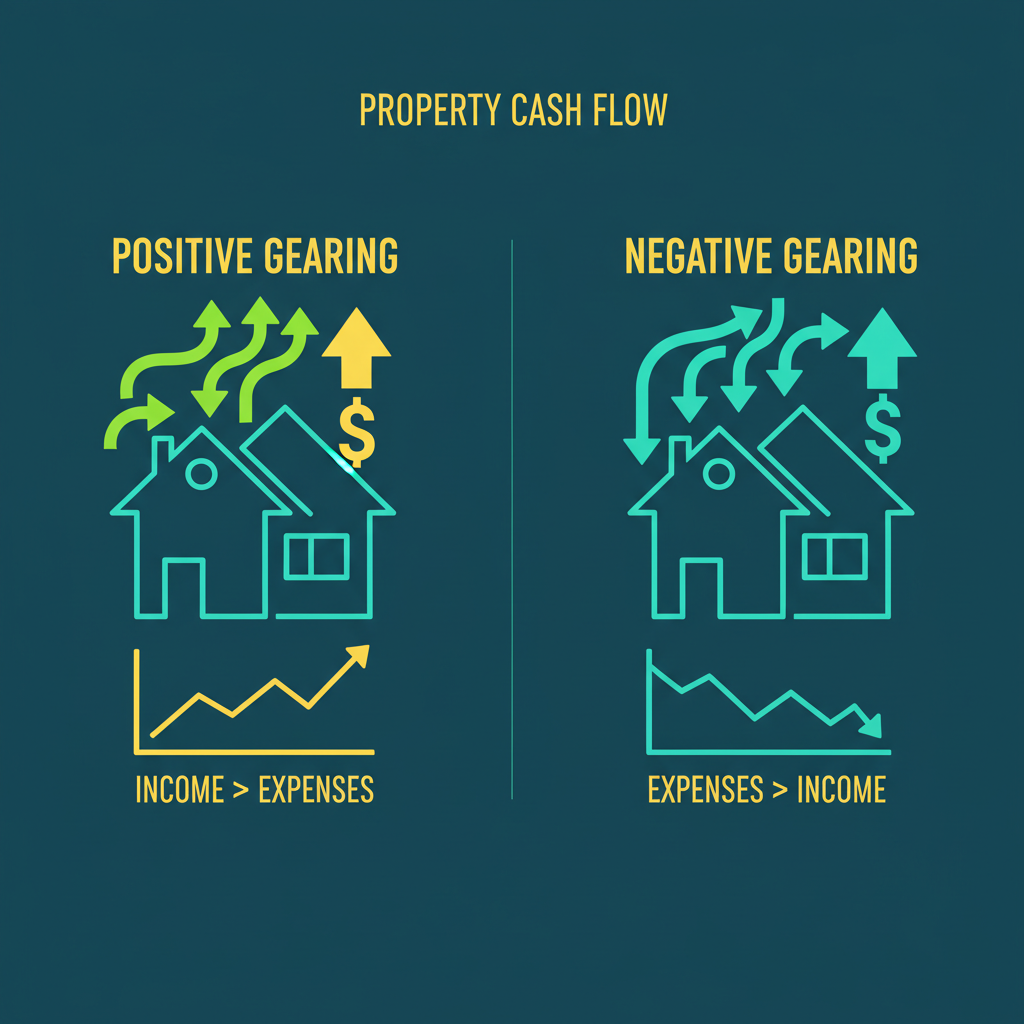
Positive gearing occurs when rental income exceeds all property expenses, including loan interest. You're making money from day one. The downside? You pay tax on the surplus income, and positively geared properties often sit in lower-growth regional areas.
For retirees or investors seeking passive income, positive gearing is ideal. For wealth-builders chasing capital growth, it's less attractive.
Neutral Gearing: Breaking Even
Neutral gearing is the sweet spot where rental income exactly matches expenses. You're not losing money, but you're not making money either. The property holds itself while appreciating.
Neutral gearing is rare in 2026 due to high interest rates. But as rates fall and rents rise, many negatively geared properties naturally transition to neutral or positive over time.
Blended Portfolio Strategies
Smart investors don't put all their eggs in one basket. They blend negatively geared growth assets (Sydney, Melbourne) with positively geared cash flow properties (regional Queensland, Perth). This balances tax benefits, cash flow, and capital growth.
Dragan Dimovski's 10-year portfolio modeling at Buyers Agency Australia helps investors map out these blended strategies, ensuring financial sustainability and long-term wealth creation.
How Buyers Agency Australia Helps Investors Navigate Negative Gearing
Data-Driven Property Selection for Tax Efficiency
Not all negatively geared properties are created equal. Buying a high-maintenance apartment in an oversupplied market is a recipe for disaster. Buying a well-located house in a gentrifying suburb with infrastructure investment is a wealth-building machine.
Buyers Agency Australia uses CoreLogic, SQM Research, and 20+ years of market intel to identify properties with strong rental demand, low vacancy rates, and capital growth potential. The goal isn't just to negatively gear. It's to negatively gear the right asset in the right market at the right price.
Fixed-Fee Transparency in a Commission-Driven Industry
Traditional buyers agents charge 2% to 3% of the purchase price. On a $600,000 property, that's $12,000 to $18,000. Buyers Agency Australia operates on a fixed-fee model, eliminating conflicts of interest and ensuring every recommendation is about your outcome, not their commission.
This matters when buying negatively geared properties. You need an advocate who'll walk away from a bad deal, not someone incentivized to close at any cost.
10-Year Portfolio Modeling and Tax Strategy
Buyers Agency Australia doesn't just find properties. They build portfolios. Using 10-year modeling, they forecast rental income, capital growth, tax deductions, and exit strategies. This lets you see exactly how negative gearing fits into your wealth plan.
For investors worried about 2026 policy changes, this modeling is critical. It shows how your portfolio performs with or without negative gearing, giving you confidence to buy now or wait.
Practical Tips for Using Negative Gearing Strategically in 2026
Only Negatively Gear If You Can Cover the Shortfall
This sounds obvious, but it's the most common mistake. If a $10,000 annual loss will strain your budget, don't do it. Build a 12-month cash buffer before buying.
Target High-Growth Locations with Strong Fundamentals
Negative gearing only works if the property appreciates. Focus on suburbs with infrastructure investment, population growth, and constrained supply. Avoid oversupplied apartment markets and speculative regional towns.
Claim Every Eligible Deduction
The ATO allows deductions for loan interest, repairs, property management, insurance, council rates, and depreciation. Miss one, and you're leaving money on the table. Work with a property-savvy accountant to maximize claims.
Structure Ownership for Flexibility
Buying in personal names, trusts, or companies each have tax implications. Trusts can distribute income to lower-earning family members. Personal names qualify for the 50% CGT discount. Companies pay flat 30% tax but don't get the CGT discount. Structure matters.
Review Your Portfolio Annually
Markets change. Interest rates move. Policy shifts. Review your portfolio every 12 months to ensure negative gearing still makes sense. If cash flow pressure is mounting, consider selling underperforming assets or refinancing to lower rates.
Don't Rely on Negative Gearing Alone
Build portfolios that work with or without tax breaks. Focus on rental yield, capital growth, and asset quality. If negative gearing is abolished tomorrow, your investments should still make sense.
Frequently Asked Questions About Negative Gearing
What is negative gearing in simple terms?
Negative gearing means your investment property costs more to own than it earns in rent, and you can deduct that loss against your taxable income.
Is negative gearing still worth it in 2026?
Yes, if you're a high-income earner with stable cash flow, buying in high-growth locations, and prepared to hold long-term. Policy changes may tighten benefits.
Can I claim negative gearing on my first investment property?
Yes. There's no minimum number of properties required. If your first property is negatively geared, you can claim the loss against your income.
What happens if negative gearing is abolished?
You'd lose the ability to offset rental losses against other income. Properties would need to be positively or neutrally geared to remain viable for most investors.
How do I calculate negative gearing?
Subtract all deductible expenses (interest, rates, insurance, management, repairs) from rental income. If the result is negative, that's your deductible loss.
Final Thoughts: Making Negative Gearing Work in 2026
Negative gearing isn't dead, but it's evolving. With 2026 policy reforms looming, investors need to be smarter, more strategic, and more disciplined than ever. The days of buying any property and banking on tax breaks are over.
The winners in 2026 will be investors who focus on fundamentals: location, rental demand, capital growth, and asset quality. They'll work with experts like Buyers Agency Australia to build portfolios that deliver long-term wealth, with or without negative gearing.
If you're ready to build a tax-efficient, future-proof property portfolio, book a free strategy session with Buyers Agency Australia today. Let's turn market uncertainty into opportunity.
 General
Negative gearing lets property investors offset rental losses against taxable income. With 2026 policy reforms looming, understanding the...
Most Australian investors can purchase investment property with as little as 10% deposit (plus Lenders Mortgage Insurance), though 20% is the standard to avoid additional costs. Alternatively, you can use equity from existing property instead of cash, allowing you to enter the market sooner without needing to save for years.
If you're like most aspiring property investors, you've probably been told you need a massive cash pile before you can even think about buying. The truth is more flexible than you might expect.
While saving 20% of a $700,000 property ($140,000) feels overwhelming, many investors successfully enter the market with half that amount by understanding Lender's Mortgage Insurance and leveraging equity in existing properties. At Buyers Agency Australia, we've helped hundreds of investors structure their deposits strategically to build long-term wealth through property.
Understanding Investment Property Deposit Requirements in Australia
The deposit you need depends on your financial position, lender policies, and whether you're willing to pay Lenders Mortgage Insurance.
Lenders assess investment property loans differently from owner-occupier mortgages. They view investment purchases as higher risk, which means stricter serviceability requirements and different deposit thresholds.
The Standard 20% Deposit Path
A 20% deposit remains the gold standard for investment property purchases in 2026. This approach keeps your Loan-to-Value Ratio (LVR) at 80%, which means you avoid paying LMI and typically secure better interest rates.
Let's break down what 20% looks like across different price points:
- $600,000 property: $120,000 deposit
- 700,000 property: $140,000 deposit
- $800,000 property: $160,000 deposit
Beyond the deposit itself, you'll need additional cash reserves for stamp duty, legal fees, building inspections, and other upfront costs. For a $700,000 property in Queensland, you're looking at roughly $175,000 in total upfront capital when you factor in all acquisition costs.
The benefit of this approach is financial resilience. Lower borrowing amounts mean smaller repayments, better cash flow, and reduced exposure if property values temporarily decline or vacancy periods occur.
The 10% Deposit Option with LMI
If accumulating 20% feels unrealistic or would delay your entry into a rising market, the 10% deposit route offers an alternative.
Some lenders approve investment loans with 10% deposits, though you'll need exceptional serviceability and a clean credit history. This route requires paying Lenders Mortgage Insurance, which protects the lender (not you) if you default on repayments.
For a $700,000 investment property with 10% deposit:
- Deposit required: $70,000
- Loan amount: $630,000
- Estimated LMI: $13,000–$18,000
- Total upfront cash: $105,000–$110,000 (including stamp duty and fees)
LMI is a one-off premium that can be paid upfront or capitalised into your loan. According to CommBank, "LMI can range from 1% to 5% of your loan amount."
Here's what matters: while your deposit is smaller, LMI adds substantial cost. However, if property prices are rising faster than you can save, entering the market sooner with LMI might deliver better long-term returns than waiting years to save a full 20%.
The Australian Taxation Office confirms that LMI is tax-deductible when borrowing for investment property, which improves the real cost when you factor in tax benefits over time.
Using Equity Instead of Cash Deposits
This is where experienced investors separate themselves from first-timers. If you already own property, you can access equity instead of saving cash.
Equity is the difference between your property's current market value and what you still owe on the mortgage. For example, if your home is worth $800,000 and you owe $450,000, you have $350,000 in total equity.
How Usable Equity Works
Lenders typically let you borrow up to 80% of your property's value. Your usable equity is calculated as:
80% of property value – remaining loan balance = usable equity
Using the example above:
- Property value: $800,000
- 80% of value: $640,000
- Remaining loan: $450,000
- Usable equity: $190,000
That $190,000 can serve as your deposit for an investment property purchase. According to NAB, "lenders usually let you borrow up to 80 percent of your home's value, less your current loan."
The Rule of Four for Investment Property
A common guideline suggests you can borrow up to four times your usable equity for an investment property purchase.
If you have $100,000 in usable equity:
- Target purchase price: ~$400,000
- 20% deposit: $80,000
- Additional costs: ~$20,000
- Total: $100,000 (matches your usable equity)
This strategy lets you enter the investment market without depleting your savings, though you'll need to demonstrate you can service both loans comfortably.
Accessing Your Equity
You can access equity through:
- Loan top-up: Increase your existing mortgage with the same lender
- Refinancing: Switch to a new lender and access equity in the process
- Separate investment loan: Take out a new loan using your existing property as security
Most investors prefer keeping loans separate rather than cross-collateralising. This protects you if one property needs to be sold or if you want to refinance individual loans down the track.
The risk with equity-based investing is that you're increasing your overall debt without increasing cash reserves. Always maintain an emergency buffer and ensure both properties can be serviced if vacancy periods occur.
Real-World Investment Property Deposit Examples

Let's walk through three realistic scenarios using properties in the $600,000–$800,000 range, which represents entry-level investment property in many Australian markets in 2026.
Scenario 1: $600,000 Property with 20% Cash Deposit (Brisbane)
Property Details:
- Purchase price: $600,000
- Location: Logan Central, QLD
- Property type: 3-bedroom house
- Estimated rental yield: 5.2%
Upfront Costs:
- Deposit (20%): $120,000
- Stamp duty (QLD investor): $17,325
- Legal/conveyancing fees: $1,800
- Building & pest inspection: $600
- Loan application fee: $600
- Total upfront capital: $140,325
Monthly Holding Costs (Year 1):
- Loan repayment (P&I, 6.5% interest): $3,036
- Council rates: $300
- Landlord insurance: $100
- Property management (7% of rent): $182
- Maintenance buffer: $200
- Total monthly cost: $3,818
- Expected monthly rent: $2,600
- Net monthly shortfall: $1,218 (negatively geared)
This investor benefits from no LMI, better interest rates, and solid rental yield. The negative gearing provides tax deductions on the shortfall, improving after-tax cash flow.
Scenario 2: $700,000 Property with 10% Cash Deposit + LMI (Melbourne)
Property Details:
- Purchase price: $700,000
- Location: Melton, VIC
- Property type: 3-bedroom townhouse
- Estimated rental yield: 4.3%
Upfront Costs:
- Deposit (10%): $70,000
- Lenders Mortgage Insurance: $15,500
- Stamp duty (VIC investor): $37,070
- Legal/conveyancing fees: $1,900
- Building & pest inspection: $650
- Loan application fee: $600
- Total upfront capital: $125,720
Monthly Holding Costs (Year 1):
- Loan repayment (P&I, 6.8% interest): $4,190
- Council rates: $250
- Landlord insurance: $110
- Strata fees: $300
- Property management (7% of rent): $176
- Maintenance buffer: $150
- Total monthly cost: $5,176
- Expected monthly rent: $2,520
- Net monthly shortfall: $2,656 (negatively geared)
This investor entered the market sooner but faces higher interest rates, LMI cost, and larger monthly shortfall. However, if Melbourne property values grow 6% annually, the capital growth may justify the higher holding costs.
Scenario 3: $800,000 Property Using $150,000 Equity (Sydney)
Property Details:
- Purchase price: $800,000
- Location: Campbelltown, NSW
- Property type: 2-bedroom unit
- Estimated rental yield: 4.0%
Upfront Costs:
- Deposit (equity): $160,000
- Stamp duty (NSW investor): $32,034
- Legal/conveyancing fees: $2,000
- Building & pest inspection: $700
- Loan application fee: $600
- Total equity/cash required: $195,334
Monthly Holding Costs (Year 1):
- Loan repayment on investment property: $4,070
- Additional interest on equity drawdown: $650
- Council rates: $280
- Landlord insurance: $105
- Strata fees: $450
- Property management (7% of rent): $187
- Maintenance buffer: $150
- Total monthly cost: $5,892
- Expected monthly rent: $2,670
- Net monthly shortfall: $3,222 (negatively geared)
This investor preserved cash savings but now services two loans. The strategy works if rental income covers most holding costs and both properties deliver capital growth. Sydney's historically strong capital growth (averaging 6-7% annually according to CoreLogic) makes this approach attractive for long-term wealth building.
At Buyers Agency Australia, we model these scenarios with clients during our free strategy sessions to determine which deposit structure aligns with their financial position and investment goals.
Additional Costs Beyond Your Deposit

The deposit is just one piece of the financial puzzle. Many first-time investors underestimate the total upfront capital required.
Stamp Duty Across Australian States
Stamp duty (also called transfer duty) is a state government tax on property purchases. Rates vary significantly by state, and investors pay higher rates than owner-occupiers in most jurisdictions.
Here's what stamp duty looks like for investment properties in 2026:
| Property Value |
NSW |
VIC |
QLD |
WA |
SA |
| $600,000 |
$24,034 |
$31,070 |
$17,325 |
$21,290 |
$26,955 |
| $700,000 |
$29,034 |
$37,070 |
$21,125 |
$25,790 |
$32,830 |
| $800,000 |
$32,034 |
$43,070 |
$25,225 |
$30,290 |
$38,705 |
Data compiled from Revenue NSW and state revenue office calculators for 2026.
Stamp duty is typically due within 30-90 days of contract exchange (settlement for most purchases). Queensland offers the most competitive investor rates, while Victoria and South Australia impose the highest burdens.
Importantly, stamp duty on investment property is not immediately tax-deductible. According to the Australian Taxation Office, stamp duty is added to your property's cost base and reduces capital gains tax when you eventually sell.
Legal and Conveyancing Fees
You'll need a solicitor or conveyancer to handle the legal transfer of property ownership. This includes reviewing contracts, conducting title searches, liaising with the seller's legal team, and managing settlement.
Typical costs in 2026:
- Basic conveyancing: $1,200–$1,800
- Complex transactions: $2,000–$2,500
- Additional disbursements: $200–$400
Legal fees vary by state and property complexity. Interstate purchases, properties with easements, or strata title units typically cost more due to additional searches and complexity.
Always engage your own legal representation rather than using a conveyancer recommended by the selling agent. Independent advice protects your interests and flags potential issues before exchange.
Building and Pest Inspections
Never skip building and pest inspections, even on newer properties. According to NSW Fair Trading, "properties with hidden defects can require repairs costing between $5,000 and $50,000."
Investment property inspections typically cost:
- Combined building & pest: $500–$800
- Detailed structural report: $800–$1,200
- Strata inspection report: $200–$400 (apartments/townhouses)
Inspections must be completed during the cooling-off period (or as a contract condition) so you can renegotiate or withdraw if serious defects are discovered.
For older properties or those in high-termite areas, invest in comprehensive reports. Spending $800 on inspections is cheap insurance against buying a property with $40,000 in structural repairs.
Lender and Loan Establishment Fees
Most lenders charge application and establishment fees when setting up your investment loan:
- Application fee: $0–$600
- Valuation fee: $0–$300 (lender's property valuation)
- Settlement fee: $0–$400
- Mortgage registration fee: $150–$200 (government charge)
Some lenders waive application fees during promotional periods, but factor in $600–$1,500 total for loan-related costs.
If you're using a mortgage broker (which most investors do), broker fees are typically paid by the lender, not you. However, specialist lending situations may involve broker fees ranging from $1,000–$3,000.
Property Management Setup Costs
If you're purchasing interstate or prefer hands-off management, you'll engage a property manager. Initial setup typically includes:
- Letting fee: 1-2 weeks' rent (one-off)
- Tenant advertising: $200–$400
- Lease preparation: Usually included
- Routine inspections: Included in ongoing management
Ongoing property management fees typically range from 5-8% of collected rent, with 7% being the most common rate in capital cities in 2026.
Strategic Deposit Planning for Investment Success
How much deposit you need isn't just a mathematical question—it's a strategic decision that impacts your investment timeline, borrowing capacity, and portfolio growth potential.
Should You Save More or Buy Sooner?
This is the most common dilemma investors face. Waiting to save 20% deposit provides financial security and avoids LMI, but if you're saving $2,000 per month, reaching a $140,000 deposit takes nearly 6 years.
If property values grow 6% annually during those 6 years, a $700,000 property today will cost roughly $990,000 by the time you've saved your deposit. You've saved $70,000 but missed out on $290,000 in capital growth.
The alternative: buy with 10% deposit plus LMI today. You'll pay $15,000 LMI, but you capture the capital growth from day one. Over 10 years, the compounding effect of earlier entry typically outweighs the LMI cost.
This doesn't mean everyone should rush in with minimum deposits. The decision depends on:
- Market timing: Rising markets favour earlier entry; flat or declining markets favour waiting
- Serviceability: Can you comfortably afford repayments on both properties?
- Risk tolerance: Lower deposits mean higher debt and less buffer if values decline
- Cash reserves: Never deploy 100% of savings; maintain 6-12 months emergency fund
Maximising Borrowing Capacity
Lenders assess your ability to service investment loans using complex serviceability calculations. They consider:
- Your income (PAYG or self-employed)
- Existing debts (personal loans, car loans, credit cards)
- Living expenses (based on Household Expenditure Measure)
- Expected rental income (typically discounted 20% for vacancy/expenses)
- Interest rate buffers (lenders assess at 8-9% even if actual rate is 6.5%)
To maximise borrowing capacity before applying:
- Pay down consumer debt: Credit cards and personal loans hurt serviceability disproportionately
- Reduce credit limits: Even unused credit limits count against you
- Increase savings history: 3-6 months genuine savings demonstrates financial discipline
- Minimise expenses: Lenders scrutinise bank statements for gambling, frequent cash withdrawals, or excessive discretionary spending
- Stabilise employment: 12+ months in current role improves assessment (less critical for PAYG employees)
For self-employed investors, lenders typically require 2 years of tax returns and financials. This can limit borrowing capacity compared to PAYG employees with equivalent income.
Portfolio Building Strategies
Experienced investors think beyond the first property. Your deposit strategy should facilitate portfolio growth over time.
Strategy 1: Equity Recycling
Buy property 1 with cash deposit → Hold 3-5 years → Property appreciates → Access equity to fund property 2 deposit → Repeat
This approach requires minimal ongoing cash contribution but depends on consistent capital growth to fuel the next purchase.
Strategy 2: Cash Flow First
Buy high-yield properties (5-6% rental yields) that generate positive or neutral cash flow → Use rental surplus to save for next deposit → Scale more slowly but with greater financial security
This suits risk-averse investors or those with limited borrowing capacity.
Strategy 3: Hybrid Approach
Alternate between capital growth properties (major capitals) and cash flow properties (regional areas) → Balance portfolio risk and income generation
This is the approach most sophisticated investors use to build diversified portfolios generating both income and wealth.
At Buyers Agency Australia, we help investors model 10-year portfolio scenarios during strategy sessions, showing exactly how different deposit strategies affect long-term wealth outcomes.
Understanding Lenders Mortgage Insurance (LMI)
Since LMI significantly affects investors buying with less than 20% deposit, understanding how it works is critical.
How LMI is Calculated
LMI premiums are calculated based on:
- Loan-to-Value Ratio (LVR): Higher LVR = higher premium
- Loan amount: Larger loans attract higher premiums
- Property type: Investment properties cost more than owner-occupier
- Location: Some areas attract premium loading
- Lender's insurer: Genworth and QBE dominate, with different rate cards
According to Canstar, "LMI is calculated as a percentage of your loan amount" with costs typically ranging from 1-5% of the loan value.
Here's how LMI scales with LVR on a $630,000 loan (90% LVR on $700,000 property):
- 85% LVR: ~$8,500 LMI
- 90% LVR: ~$15,500 LMI
- 95% LVR: ~$28,000 LMI
The premium jumps sharply above 90% LVR, which is why most investors target 80% LVR (no LMI) or 90% LVR (moderate LMI) rather than stretching to 95%.
Paying LMI: Upfront vs Capitalised
You have two options for paying LMI:
- Upfront payment: Pay the premium in cash at settlement
- Capitalise into loan: Add LMI to your loan amount
Most investors capitalise LMI to preserve cash for other costs. However, this means you're borrowing more and paying interest on the LMI amount over the life of your loan.
For a $15,500 LMI capitalised at 6.5% interest over 30 years:
- Total interest paid on LMI portion: ~$20,000
- Total cost of capitalising LMI: $35,500
Compare this to paying upfront ($15,500 cash), and the difference is substantial. However, if that $15,500 cash is invested elsewhere earning similar returns, or allows you to enter the market sooner in a rising market, capitalising may still be the better choice.
Who Pays for LMI?
This confuses many investors: you (the borrower) pay for LMI, but the insurance protects the lender, not you.
If you default and the property sells for less than the outstanding loan, LMI covers the lender's shortfall. The LMI provider then pursues you for that amount. You're not protected from this debt.
According to Moneysmart, "LMI does not benefit the borrower, it only protects the lender."
The benefit to you is access to finance with a smaller deposit, allowing earlier market entry or portfolio expansion.
LMI Tax Deductibility
The one silver lining: LMI on investment property loans is tax-deductible as a borrowing expense. You can:
- Deduct fully in first year: If LMI is under $100 (never happens)
- Deduct over 5 years: For LMI under loan period
- Amortise over loan life: Most conservative approach
The ATO confirms "LMI is tax deductible as a 'borrowing expense' when taking out an investment home loan."
For a $15,500 LMI premium deducted over 5 years, that's $3,100 annual deduction. At a 37% marginal tax rate, you save $1,147 per year, or $5,735 total—reducing the real cost of LMI to ~$9,765.
How Buyers Agency Australia Helps Investors Structure Deposits
Deposit strategy sits at the foundation of successful property investment, yet most investors approach it backwards—they ask "how much do I need?" before asking "what am I trying to achieve?"
Our Deposit Structuring Process
When clients engage Buyers Agency Australia, we start with comprehensive financial and goal mapping:
- Financial Position Assessment: Current equity, cash savings, borrowing capacity, and serviceability
- Investment Timeline: 1-property buyer vs 5-property portfolio builder over 10 years
- Risk Tolerance: Conservative (20% deposits) vs aggressive (equity leverage)
- Market Selection: Capital growth markets vs cash flow markets affect deposit requirements
- Tax Position: Negative gearing benefits vary based on marginal tax rate
With 20+ years of market experience, Dragan Dimovski and the Buyers Agency Australia team model multiple scenarios showing how different deposit structures affect your 10-year wealth outcome.
For a client with $100,000 cash and $150,000 accessible equity, we might model:
- Option A: Use $100k cash to buy $500k property (20% deposit)
- Option B: Use $60k cash + $90k equity to buy $750k property (20% combined deposit)
- Option C: Use $70k cash + LMI to buy $700k property, preserving equity for property 2 in 2 years
Each option delivers different cash flow, tax outcomes, and portfolio growth trajectories. There's no universal "best" answer—only the optimal strategy for your specific situation.
Access to Off-Market Opportunities
One often-overlooked benefit of working with a buyer's agency: access to off-market properties can reduce competition and purchase prices, effectively reducing your deposit requirement.
If we negotiate a $680,000 purchase on a property worth $720,000, you've created $40,000 instant equity. That's equivalent to the deposit savings between a 10% and 15% deposit on a $700,000 property—without paying LMI.
Our fixed-fee structure means you're not paying percentage-based commission, making professional representation affordable even for entry-level investors.
Post-Purchase Portfolio Planning
We don't disappear after settlement. Buyers Agency Australia provides ongoing portfolio review to help you time your next purchase, structure equity access, and scale efficiently.
Many investors buy their first property then wait 5-7 years before attempting property 2. We show clients how to compress that timeline to 2-3 years through strategic deposit planning and market selection.
Want to see how different deposit strategies affect your investment timeline? Book a free strategy session with our team to model your specific situation.
Common Deposit Mistakes Australian Investors Make
After working with hundreds of investors, we've identified recurring deposit planning mistakes that hurt portfolio growth and financial outcomes.
Mistake 1: Waiting Too Long to Save the "Perfect" Deposit
Perfectionism kills momentum. Investors who insist on 25-30% deposits to create maximum safety buffer often save for 8-10 years while property prices double.
The market doesn't wait for you to feel comfortable. Strategic use of 10-15% deposits with LMI often delivers better 10-year outcomes than waiting years to save 20%+.
Mistake 2: Deploying 100% of Available Cash
Never use your last dollar for a deposit. Unexpected repairs, extended vacancies, or personal emergencies require cash reserves.
We recommend maintaining 3-6 months holding costs in cash reserves separate from your deposit. For a negatively geared property costing $2,000/month to hold, that's $6,000-$12,000 emergency buffer.
Mistake 3: Ignoring Total Acquisition Costs
Focusing only on the deposit while underestimating stamp duty, legal fees, and inspections creates cash flow stress at settlement.
Always budget total upfront capital as: Deposit + Stamp duty + 3-4% additional costs. For a $700,000 property in NSW, that's $140,000 + $29,034 + $21,000 = $190,000 total upfront requirement.
Mistake 4: Not Comparing LMI Across Lenders
LMI premiums vary significantly between lenders. According to Home Loan Experts, "For a $400,000 home loan at 90% LVR with a mainstream lender, your LMI premium may be around $5,840. With a smaller non-bank lender… your LMI premium may be around $7,800."
That's a $2,000 difference for identical loans. Always obtain multiple LMI quotes before committing to a lender.
Mistake 5: Using Equity Without Understanding Cross-Collateralisation
Some lenders push cross-collateralisation where one property secures multiple loans. This limits future flexibility and gives the lender control over all properties if you default on one loan.
Always structure loans separately, even if it means slightly higher interest rates or LMI. Future you will thank present you for this flexibility.
Frequently Asked Questions
Can I buy investment property with a 5% deposit?
Some specialist lenders offer 95% LVR investment loans, but they're rare, expensive (high LMI and interest rates), and require exceptional financial position. Most investors should target 10-20% deposits for realistic serviceability and reasonable costs.
Is LMI on investment property tax-deductible?
Yes, LMI is tax-deductible as a borrowing expense when purchasing investment property. You can claim it over 5 years or the loan term, reducing the real after-tax cost significantly for investors in higher tax brackets.
How much cash should I have after paying the deposit?
Maintain 3-6 months of holding costs in cash reserves after settlement. For a property costing $2,000/month to hold after rent, keep $6,000-$12,000 separate from your deposit funds to handle vacancies, repairs, or personal emergencies.
Can I use equity and cash together?
Yes, combining equity and cash deposits is common and often optimal. For example, using $60,000 cash + $90,000 equity provides a $150,000 deposit (20% on a $750,000 property) without depleting cash reserves entirely.
Do I need a bigger deposit if I already own investment property?
Lenders assess serviceability more strictly for second and subsequent investment properties. While the deposit percentage may remain the same (10-20%), your borrowing capacity decreases, potentially requiring larger deposits to stay within what lenders will approve.
Key Takeaways
The deposit you need for Australian investment property in 2026 isn't a fixed number—it's a strategic decision based on your financial position, investment goals, and market timing.
Standard deposit options include:
- 20% cash deposit: No LMI, best rates, $120,000-$160,000 for $600k-$800k properties
- 10% cash deposit: Requires LMI ($13,000-$18,000), faster market entry, higher ongoing costs
- Equity strategy: No cash required if you have $150,000+ accessible equity, but increases total debt
Beyond your deposit, budget an additional 3-5% for stamp duty, legal fees, inspections, and lender costs. Total upfront capital for a $700,000 investment property typically ranges from $125,000 (10% deposit with LMI) to $175,000 (20% deposit with all costs).
The decision between waiting to save a larger deposit versus entering the market sooner with LMI depends on property market conditions, your borrowing capacity, and long-term portfolio goals. In rising markets, earlier entry with strategic use of LMI often delivers better 10-year wealth outcomes than waiting years to avoid LMI.
Ready to build your investment property portfolio with expert guidance? Contact Buyers Agency Australia to discuss your deposit strategy and explore current investment opportunities across Australia. Our team structures deposit plans that balance risk, cash flow, and long-term growth to help you achieve financial freedom through property.
 General
Australian investors can purchase investment property with 10% deposit plus LMI, 20% deposit without LMI, or use existing...
As geopolitical tensions escalate in 2026, the recent U.S.-Israeli strikes on Iran have reignited global uncertainty and market volatility. History shows that during major crises, wars, financial shocks, and pandemics, investors consistently move capital into tangible assets like Australian property, viewing it as a safer, more stable store of wealth compared to volatile equities or currency markets.
We've all seen the headlines. On 28 February 2026, U.S. and Israeli forces launched coordinated strikes across Iran, triggering a new military conflict that sent oil prices soaring more than 40 percent in 10 days and disrupted global markets. The immediate response from capital markets was predictable: investors fled to defensive positions, gold surged, and government bonds rallied.
But here's the thing. Australian property has historically been one of the most resilient safe-haven assets during global disruptions. From the oil shocks of the 1970s to the post-GFC recovery and the COVID property boom, Australian real estate has repeatedly demonstrated an ability to absorb global uncertainty and emerge stronger on the other side.
For property investors, understanding this pattern is critical. While share markets panic and currencies swing wildly, Buyers Agency Australia focuses on long-term fundamentals that have consistently underpinned Australian property values through every major global event of the past 50 years.
Why Global Crises Drive Capital Into Property
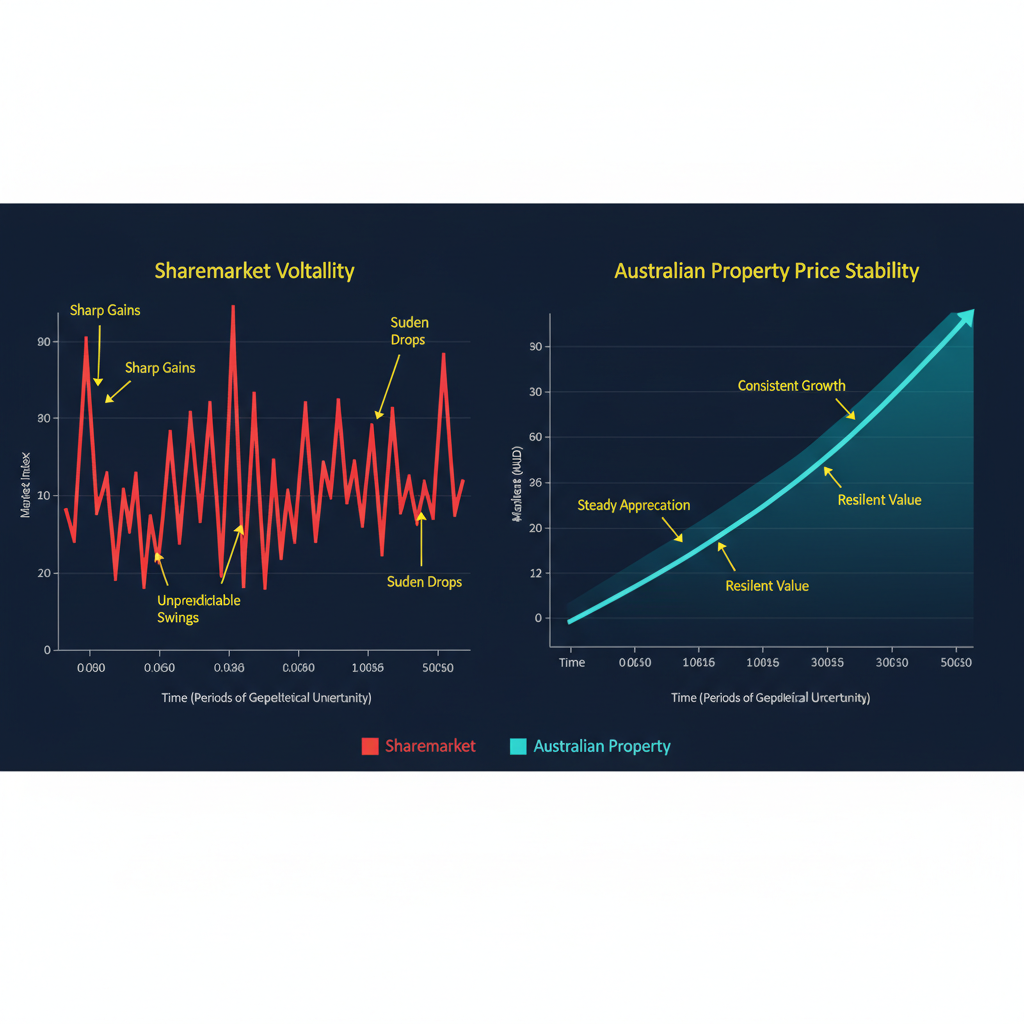
The Safe Haven Phenomenon Explained
When global tensions rise, investors don't just sit still. They actively redeploy capital away from high-risk, liquid assets into tangible stores of value.
Property fits this profile perfectly. Unlike shares or bonds, property is a physical asset with intrinsic utility. People need housing regardless of whether oil prices are at $73 or $107 per barrel.
According to recent analysis from George James Consulting, Australia and New Zealand are increasingly viewed as safe-haven destinations during geopolitical instability due to strong democratic institutions, transparent legal systems, and well-regulated financial sectors.
Three Drivers of Capital Flight to Real Estate
First, inflation fears push investors toward hard assets. Wars disrupt energy supplies, as we're seeing with oil prices rising from $73 to over $107 per barrel during the Iran conflict. This inflationary pressure erodes cash holdings and makes property more attractive as a hedge.
Second, currency volatility makes investors nervous. When geopolitical tensions escalate, currencies can swing wildly based on policy decisions, sanctions, or capital controls. Property denominated in Australian dollars offers stability in a country with consistent monetary policy and strong rule of law.
Third, housing shortages create persistent upward price pressure regardless of external shocks. Australia's chronic undersupply means that even during uncertain times, fundamental demand-supply imbalances support prices.
Historical Precedent: Oil Crises and Property Booms
The 1970s provide a clear template. Driven by global oil crises and surging inflation, Australians turned to property as a safe investment when cash was losing value rapidly.
As Credit Mediation notes, property prices soared during this time, especially in Sydney and Melbourne. The idea that property could make you rich in just a few years took hold, and speculation became rampant.
Fast forward to 2026, and we're seeing similar dynamics. Oil markets disrupted. Inflation concerns rising. Geopolitical uncertainty at multi-decade highs. History suggests capital will again flow toward the stability of bricks and mortar.
The Global Financial Crisis How Australia Defied Expectations
The 2008 GFC and Australian Property Resilience
Many expected Australian property to crash during the Global Financial Crisis. The U.S., UK, and Ireland all saw devastating housing market collapses that triggered broader financial crises.
But Australia was different. While house prices fell briefly in 2009, the market quickly recovered as interest rates dropped and government stimulus kicked in.
The Reserve Bank of Australia confirms that Australia did not experience a large economic downturn or financial crisis during the GFC, though economic growth slowed and unemployment rose temporarily.
Why Australia Avoided the Housing Crash
Tighter lending standards mattered. Australia didn't experience the same subprime lending excesses that devastated the U.S. market.
Government intervention was swift and effective. Stimulus packages supported household income and confidence, preventing panic selling.
Most importantly, fundamental demand remained strong. Population growth, limited supply, and relatively affordable mortgage rates kept the market supported even as global markets collapsed.
By 2010, national dwelling price growth had returned strongly, with house prices reaching new records by 2011 according to Australian Property Update.
Lessons for the 2026 Iran Conflict
The GFC teaches us that external global shocks don't automatically translate to Australian property crashes. In fact, they often do the opposite: they drive capital toward Australia as a safe, stable, transparent market with strong rule of law.
Investors fleeing volatility in Europe, the Middle East, or Asia have historically looked to Australian property as a destination for capital preservation.
This pattern is unlikely to change in 2026. If anything, escalating tensions in the Middle East could accelerate capital flows into Australian real estate from investors seeking stability.
The Post COVID Property Boom Proof That Crises Drive Prices Higher
Unprecedented Growth During a Global Pandemic
COVID-19 was supposed to crash property markets. Economists predicted 30 percent price declines. Borders were closed. Unemployment spiked. Yet Australian property values surged.
According to PropTrack data, national home values surged 39.9 percent from March 2020 to March 2024. Regional areas soared nearly 54 percent, outpacing capital cities across most states.
This wasn't a small blip. It was one of the most powerful property booms in Australian history, occurring during one of the worst global health crises in a century.
Why COVID Drove Property Prices Higher Not Lower
Record-low interest rates made borrowing cheap. Mortgage rates dropped below 2 percent in mid-2022, allowing buyers to take out larger loans.
Government stimulus flooded the market. Programs like HomeBuilder injected billions into the property sector, driving demand for new construction and renovations.
Remote work shifted preferences. Lockdowns and work-from-home arrangements increased demand for larger homes with dedicated office space, pushing up prices in regional areas and suburban markets.
Supply constraints worsened. Building delays, supply chain disruptions, and labour shortages meant new housing completions fell even as demand surged.
CoreLogic's Tim Lawless notes that the big 38.4 percent lift in dwelling values since March 2020 has been a mixed blessing: welcomed by homeowners but worsening affordability metrics as wages rose by less than half the increase in housing prices.
The Iran War and Capital Flight Dynamics
The 2026 Iran conflict shares key characteristics with COVID. It's a global shock creating uncertainty, disrupting supply chains, and pushing up inflation expectations.
Oil prices rising 40 percent in 10 days will feed into broader inflation across food, transport, and energy costs. This makes cash holdings less attractive and real assets like property more appealing.
Capital is already moving. According to HedgeCo analysis, investors have poured tens of billions into money-market funds and defensive assets as geopolitical tensions intensify. Property in stable jurisdictions like Australia is a natural next destination for this capital.
Iran War 2026 Oil Prices Inflation and Property Demand
The Oil Shock Connection
Brent crude oil rose from $73 per barrel on 27 February to $107 on 8 March 2026, a more than 40 percent increase in 10 days according to Al Jazeera.
This isn't just a short-term spike. Iran controls the Strait of Hormuz, which handles approximately 20 percent of global oil exports. Continued disruption could keep prices elevated for months or years.
Higher oil prices feed directly into inflation. Transport costs rise. Manufacturing becomes more expensive. Consumer prices increase across the board.
How Inflation Drives Property Investment
Inflation erodes the value of cash and fixed-income investments. A 5 percent inflation rate means $100,000 in the bank loses $5,000 in real purchasing power annually.
Property, by contrast, tends to appreciate during inflationary periods. Construction costs rise, making new builds more expensive and supporting existing property values.
Rental income also rises with inflation. Landlords can adjust rents upward to match cost-of-living increases, providing an inflation-protected income stream.
This pattern played out in the 1970s when oil crises drove inflation and property investors sought protection in real assets. It's playing out again in 2026.
Population Growth and Housing Shortages Amplify the Effect
Australia faces a chronic housing shortage. Building approvals remain well below levels needed to match population growth according to Cotality data.
Net overseas migration hit record levels post-COVID, adding approximately 518,000 people in the year ending 30 June 2023 according to ABS data.
When you combine persistent housing shortages with capital flight from volatile regions, you create strong upward pressure on prices regardless of short-term interest rate movements.
How Dragan Dimovski Identifies War Proof Property Investments
The 10 Year Portfolio Modeling Approach
Dragan Dimovski, founder of Buyers Agency Australia, has over 20 years of experience navigating property markets through multiple global crises including the GFC, European debt crisis, and COVID pandemic.
His approach focuses on 10-year portfolio modeling that identifies properties likely to perform strongly regardless of external shocks. This means targeting assets in high-demand areas with structural supply constraints, strong employment growth, and improving infrastructure.
Rather than chasing short-term gains, Dragan prioritises fundamentals: population growth, rental yields, capital growth potential, and downside protection.
Focused on Data Driven Investment Strategies
Buyers Agency Australia uses detailed market analysis to identify suburbs and property types that have historically outperformed during periods of global uncertainty.
This includes targeting markets with:
- Strong local employment bases that aren't dependent on volatile global commodity prices
- Infrastructure investment that will continue regardless of geopolitical events
- Demographic tailwinds from internal migration patterns
- Rental markets with low vacancy rates and rising yields
The transparent, fixed-fee model means clients know exactly what they're paying upfront, with no commission-based incentives that might encourage unsuitable purchases.
Why Investors Choose Buyers Agency Australia During Uncertainty
Time-poor professionals don't have the bandwidth to monitor global oil markets, geopolitical tensions, and their impact on local property fundamentals. That's where expert guidance becomes invaluable.
Buyers Agency Australia provides end-to-end purchasing solutions: identifying opportunities, conducting due diligence, negotiating deals, and securing properties that align with long-term wealth creation goals.
Dragan's personal portfolio of over $10 million demonstrates his commitment to the strategies he recommends to clients. He doesn't just talk about buying during uncertainty; he actively does it.
For investors seeking clarity during chaotic global markets, this boots-on-the-ground expertise provides a competitive edge that DIY approaches simply cannot match.
Historical Patterns Every Major Crisis Followed by Property Growth

The 40 Year Resilience Record
Australian housing has shown remarkable long-term resilience. According to Cotality analysis, there have been only six periods of price decline in the past 40 years.
More striking still, strong property growth often occurred when least expected. In 1988, with interest rates near 15 percent and rising, Australian home values skyrocketed 31 percent. In 2021, amid a global pandemic and closed borders, national values jumped almost 25 percent.
These standout years remind us that housing markets are influenced by more than just interest rates. Supply constraints, population growth, and capital flight dynamics play equally important roles.
Comparing Property to Global Share Indices
Over the past 25 years, Australian capital city house prices have outperformed major local and global share indices according to analysis by The Australian.
Adelaide delivered 559 percent returns since early 2000, climbing from $130,500 to about $860,000. Brisbane followed with 533 percent growth, while Hobart recorded 519 percent gains.
By comparison, the strongest sharemarket performers were U.S. equities. Despite the dotcom crash and GFC, the Nasdaq climbed 415 percent, still trailing Adelaide property by more than 140 percentage points.
This consistent outperformance makes Australian property uniquely attractive to investors seeking stable, long-term wealth creation.
Seven Key Events That Prove the Pattern
Post-WWII price cap removal (1949): Prices surged 77 percent in 12 months as pent-up demand was released.
1970s oil crises: Inflation drove investors into property as a tangible store of value, creating sustained price growth.
1980s financial deregulation: Easy credit access fueled a property boom that survived the early 1990s recession.
Global Financial Crisis (2008-2009): Prices dipped briefly but recovered quickly, reaching new records by 2011.
Mining boom (2003-2008): Regional WA and Perth doubled in price as capital flowed to high-growth areas.
COVID pandemic (2020-2022): National values surged 30.8 percent during the sharpest upswing on record.
Post-COVID recovery (2023-2025): Despite interest rate hikes, values bounced back 14.5 percent driven by housing shortages.
Each of these events followed a similar pattern: initial uncertainty, capital flight to safety, and strong property price growth as investors sought protection from volatility.
What the 2026 Iran War Means for Property Investors Right Now
Short Term Uncertainty Long Term Opportunity
The Iran conflict will create short-term market volatility. Share prices will swing. Currency markets will react to every news headline. Oil prices will remain elevated as long as the Strait of Hormuz faces disruption.
But property investors operate on different timeframes. A well-chosen investment property in a high-demand suburb isn't affected by daily oil price movements.
What matters is the 5-year, 10-year, and 20-year outlook. And on those timeframes, the fundamentals supporting Australian property remain intact: population growth, housing shortages, strong employment, and improving infrastructure.
Capital Flight from Volatile Regions
The Middle East has historically been a significant source of property investment capital. Wealthy individuals and families seek stable jurisdictions to preserve wealth during regional instability.
Australia ticks every box: strong rule of law, transparent legal system, stable political environment, and well-regulated financial markets. These characteristics make Australian property attractive to investors fleeing conflict zones.
According to Wikipedia's analysis of the economic impact, several economists suggested the conflict could drive capital outflows from the region into overseas property markets, notably prime real estate in global cities.
Australia's major capitals, Sydney, Melbourne, Brisbane, are prime beneficiaries of this dynamic.
Interest Rates and Timing Considerations
The Reserve Bank of Australia has maintained a cautious stance on interest rates. While the Iran conflict could push up inflation via higher oil prices, Australia's well-capitalized banking system and prudent lending standards provide downside protection.
Savvy investors recognise that trying to time the market perfectly is a fool's errand. The best time to buy is when you find a fundamentally sound property in a high-demand area at a fair price.
Working with Buyers Agency Australia helps investors cut through the noise and focus on properties that will deliver strong returns regardless of short-term global events.
Frequently Asked Questions
Will the Iran war cause Australian property prices to fall?
Historically, global crises drive capital into Australian property as a safe-haven asset. While short-term volatility is possible, long-term fundamentals remain strong.
How did property prices perform during past wars and crises?
Australian property has consistently rebounded and grown following major global events including the GFC, oil crises, and COVID pandemic.
Should I wait to buy property until the Iran conflict resolves?
Timing the market is difficult. Quality properties in high-demand areas tend to appreciate over 10-year timeframes regardless of short-term geopolitical events.
What types of property are safest during geopolitical uncertainty?
Properties in capital cities and established suburbs with strong employment, infrastructure, and rental demand offer the most resilience during global volatility.
How can I protect my property investment from global shocks?
Focus on fundamentals: buy in high-demand areas, ensure strong rental yields, and work with experts who understand long-term market cycles and risk management.
Book Your Free Strategy Session Today
Global uncertainty creates opportunity for informed investors. While share markets panic and currencies swing wildly, Australian property continues to offer stability, tangible value, and long-term wealth creation.
Dragan Dimovski and the team at Buyers Agency Australia have guided hundreds of investors through volatile markets, helping them build portfolios designed to withstand global shocks and deliver consistent returns.
Whether you're a first-time buyer overwhelmed by market complexity or an experienced investor seeking to expand your portfolio, expert guidance makes the difference between panic and profit.
Book your free strategy session today to discover how the right property investment can protect and grow your wealth regardless of what's happening in the Middle East, global oil markets, or currency exchanges.
 General
Global crises push capital into tangible assets like Australian property. History shows uncertainty fuels demand for safe-haven real...
Rentvesting is a property investment strategy where you rent a home in your preferred lifestyle location while purchasing an investment property in a more affordable area. This approach allows Australians to enter the property market sooner without sacrificing their desired living arrangements, building equity through strategic property ownership while maintaining lifestyle flexibility.
We've all been there. You're earning good money, saving diligently, but the gap between what you can afford and what it costs to buy in your dream suburb keeps widening. Sydney's median dwelling price sits at $1.29 million, Melbourne at $826,000, and even Brisbane has climbed to $1.08 million as of February 2026.
For many Australians locked out of buying where they live, rentvesting offers a practical path forward. Instead of waiting years to save enough for a deposit in an expensive area, you can start building wealth through property investment today. Buyers Agency Australia helps investors and first-home buyers across Sydney, Melbourne, Brisbane, Perth, and Adelaide identify high-growth investment opportunities that align with their long-term goals.
Let's explore how rentvesting works, who it suits, and the benefits and risks you need to understand before taking this path.
Understanding the Rentvesting Challenge
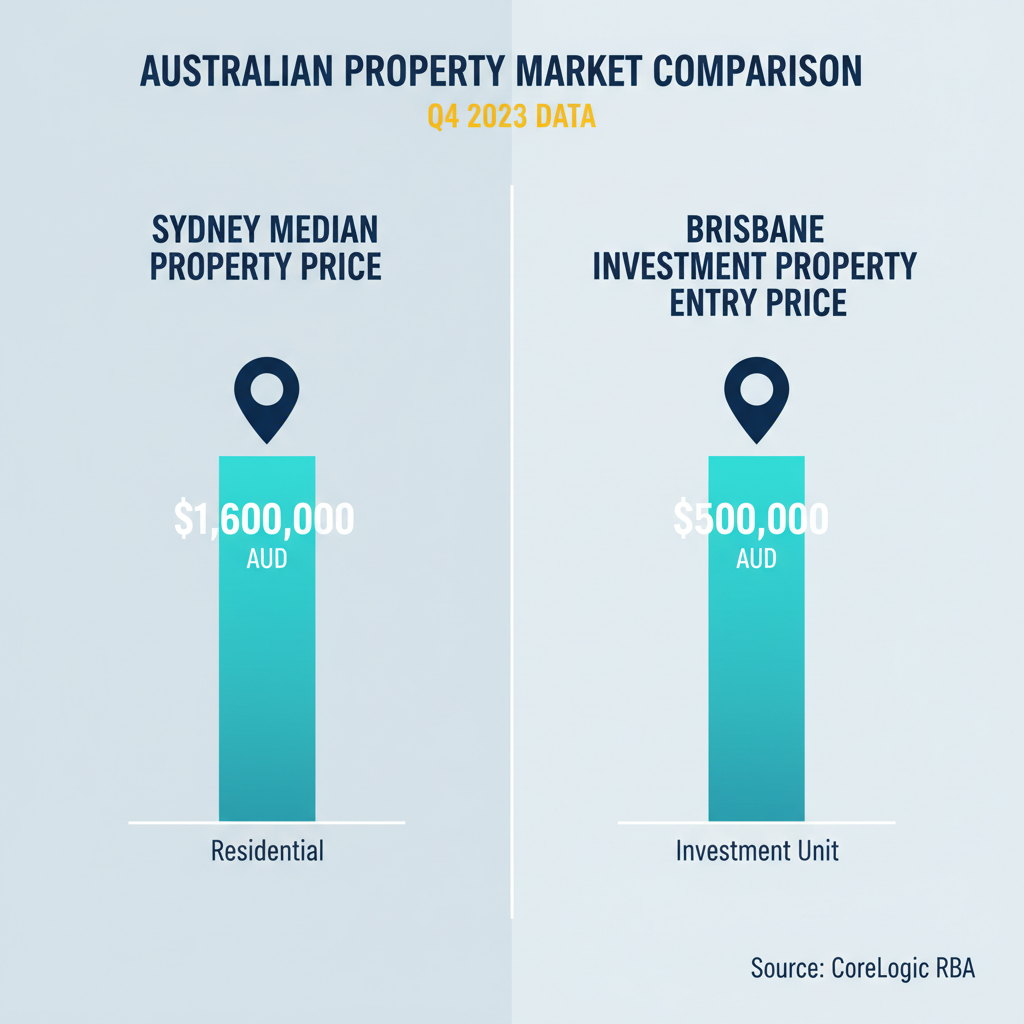
Why Australians Are Priced Out of Their Preferred Markets
The November 2025 Cotality Housing Affordability Report revealed that Australia's median house price in major cities is more than eight times the average household income. Saving a standard 20% deposit now takes more than a decade in most capital cities.
Since the 2020 COVID lockdowns, Australian home values have risen 47.3%. If you're a young professional renting in Bondi, Fitzroy, or New Farm, buying a property in these suburbs may feel impossible. The entry price for a two-bedroom apartment in inner Sydney often exceeds $1 million.
Meanwhile, rental payments are typically lower than mortgage repayments in expensive suburbs. This creates a financial paradox: you can afford to live in a premium area as a renter, but not as an owner.
The Traditional Home Ownership Model vs Modern Reality
The traditional Australian dream followed a linear path: save a deposit, buy a home where you live, and build equity over decades. This model worked when property prices grew steadily at 2-3 times average household income.
Today's reality is different. Young Australians face:
- Record-high property prices relative to wages
- Fierce competition from investors and upgraders with substantial equity
- Rising interest rates that reduce borrowing capacity
- Limited supply in desirable inner-city areas
Rentvesting emerged as a response to these pressures. Rather than delaying property ownership indefinitely, this strategy separates where you live from where you invest.
How Rentvesting Bridges the Gap
Rentvesting allows you to maintain your lifestyle in a location close to work, amenities, and social networks while purchasing an investment property in a high-growth, affordable area elsewhere.
For example, you might continue renting a two-bedroom apartment in Melbourne's inner east for $600 per week while purchasing a three-bedroom house in Brisbane's growth corridor for $650,000. Your tenant's rent covers most of your mortgage repayments, and you benefit from potential capital growth in a stronger market.
According to the Australian Bureau of Statistics, approximately 8,283 first-home buyers chose investment home loans in 2024, a 12% increase from 2023. This growth significantly outpaced the 5% rise in owner-occupier loan commitments over the same period.
How the Rentvesting Strategy Works
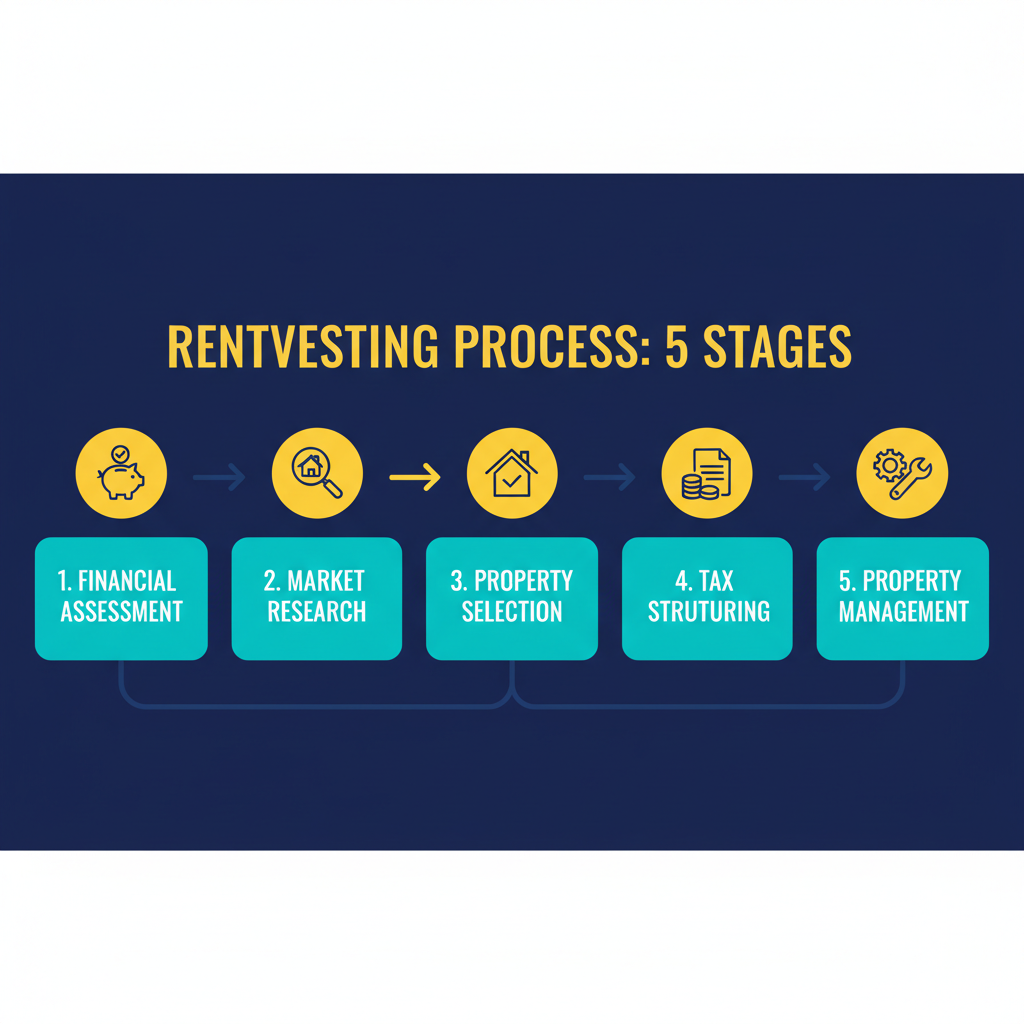
Step 1: Assess Your Financial Position
Before pursuing rentvesting, you need to understand your borrowing capacity. Lenders assess investment property loans differently from owner-occupier loans. Expect higher interest rates (typically 0.2-0.5% higher) and stricter serviceability tests.
Calculate these key metrics:
- Your deposit amount (typically 10-20% for investment properties)
- Stamp duty costs in your target state
- Ongoing holding costs (council rates, insurance, property management fees, maintenance)
- Your rental expenses for where you currently live
Working with a buyers agent who understands investment lending can save you time. Buyers Agency Australia offers a free strategy session to help investors structure their finances correctly from the start.
Step 2: Identify High-Growth Investment Markets
Successful rentvesting depends on buying in the right location. You're not looking for your dream home. You're looking for a property with strong fundamentals:
- Population growth and infrastructure investment
- Rental demand and low vacancy rates (below 2%)
- Entry prices that allow positive or neutral cash flow
- Capital growth potential over 7-10 years
As of 2026, Perth, Brisbane, and Adelaide continue to outperform Sydney and Melbourne. Perth jumped 2.3% in February 2026 alone, adding $22,500 to the median dwelling value. Regional markets like Geelong, Ballarat, and Newcastle also deliver strong rental yields (4.5-5.5%) with lower entry prices.
Dragan Dimovski, founder of Buyers Agency Australia, uses his 20+ years of experience and $10M+ personal portfolio to identify markets at the right point in the property cycle. This boots-on-the-ground research helps investors avoid overpaying in overheated markets.
Step 3: Select the Right Property Type
The property you buy matters as much as the location. Rentvestors typically prioritise:
- Broad tenant appeal (3-bedroom houses, 2-bedroom units near transport)
- Low maintenance requirements (newer properties with minimal defects)
- Strong rental yield (4-6% gross yield depending on market)
- Potential for long-term capital growth
Avoid niche properties that limit your tenant pool, such as studios, one-bedroom apartments in oversupplied areas, or properties with unusual layouts. Your investment property should appeal to families, professionals, or downsizers who form the stable rental market.
Step 4: Structure Your Finances for Tax Efficiency
Rentvesting offers significant tax advantages that owner-occupiers don't receive. When you borrow money to purchase an investment property, 100% of your loan interest is tax-deductible against your assessable income.
Other deductible expenses include:
- Property management fees (typically 7-8% of rental income)
- Council rates, water rates, and land tax
- Building and contents insurance
- Repairs and maintenance
- Depreciation on the building and fixtures
Depreciation is particularly valuable because it's a non-cash deduction. You can claim the declining value of your property and its contents as a tax deduction even though no money leaves your pocket. A depreciation schedule from a quantity surveyor typically identifies $10,000-$15,000 in annual deductions for newer properties.
Higher income earners receive greater tax benefits from the same investment expenses. If you're in the 37% tax bracket plus 2% Medicare levy, every $1,000 in deductible expenses saves you $390 in tax.
For detailed guidance on negative gearing and tax structuring, consult with a property tax specialist or explore resources from the Australian Taxation Office.
Step 5: Engage a Property Manager
Unless you live near your investment property, professional property management is essential. A good property manager handles:
- Tenant screening and lease agreements
- Rent collection and arrears management
- Routine inspections and maintenance coordination
- Compliance with state tenancy legislation
Property management fees typically range from 7-8% of rental income plus letting fees (equivalent to one to two weeks' rent when a new tenant moves in). This cost is tax-deductible and provides peace of mind, especially for interstate investors.
Key Benefits of Rentvesting
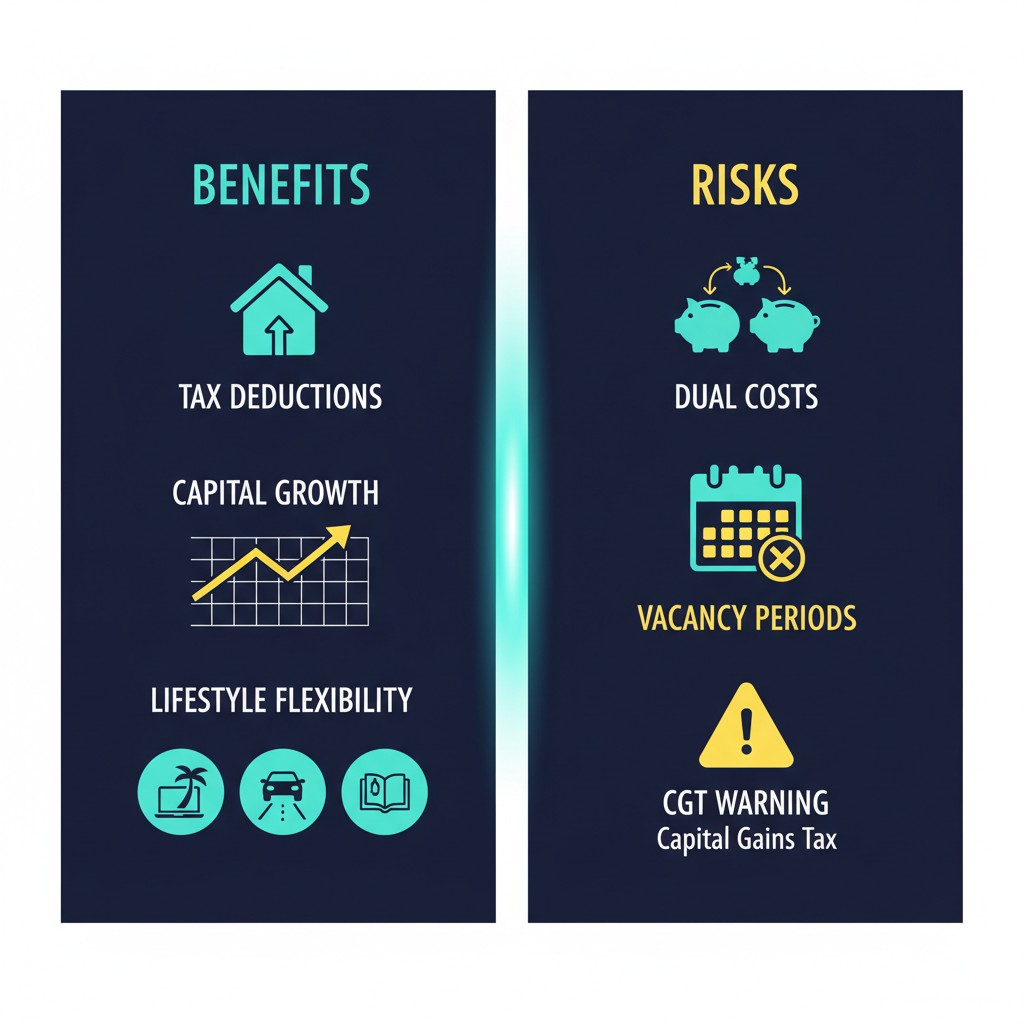
Enter the Property Market Sooner
Rentvesting removes the need to save a deposit for an expensive property in your preferred suburb. Instead of waiting 10-15 years to save $200,000 for a 20% deposit in inner Sydney, you can enter the market with $60,000-$80,000 in a high-growth regional or interstate area.
Time in the market beats timing the market. Starting your property investment journey earlier means you benefit from compound capital growth over a longer period. A property purchased today for $600,000 that grows at 6% annually will be worth approximately $1.07 million in 10 years.
Maintain Your Preferred Lifestyle
Rentvesting lets you live where you want now without financial compromise. You can rent an apartment near the beach, close to your workplace, or in a vibrant urban precinct while your investment property builds equity elsewhere.
This lifestyle flexibility is particularly valuable for young professionals, couples without children, or anyone whose location priorities may change over the next 5-10 years. Renting gives you mobility that ownership doesn't provide.
Build Wealth Through Capital Growth and Rental Income
Investment properties generate wealth through two channels: capital growth and rental income. Over a 10-year period, capital growth typically contributes 70-80% of total returns, with rental income providing 20-30%.
According to CoreLogic data, combined regional areas have experienced 54% growth over five years, while combined capital cities rose 36%. Top-performing regional markets delivered returns between 90-100% over the same period.
When selected correctly, your investment property's rental income should cover most or all of your mortgage repayments, council rates, and insurance. In some cases, rental income may exceed expenses, creating positive cash flow that supplements your income.
Tax Advantages Not Available to Owner-Occupiers
Owner-occupiers receive no tax deductions for mortgage interest, rates, or maintenance. Investment property owners can deduct all of these expenses.
Negative gearing makes property investment more affordable by allowing you to offset any loss against your other taxable income. While making a loss on an investment property might seem counterintuitive, many investors accept short-term negative cash flow expecting that capital gains when they sell will more than offset those losses.
A 50% capital gains tax (CGT) discount applies to investment properties held for more than 12 months. If you purchase a property for $600,000 and sell it 10 years later for $1 million, you'll pay CGT on only 50% of the $400,000 gain (less purchase and sale costs).
Diversification Beyond Your Principal Residence
Rentvesting allows you to spread your investments across different asset types and locations. Rather than having all your wealth tied up in one expensive property in one city, you can diversify your portfolio with properties in different states or regions.
This strategy reduces concentration risk. If your local market experiences a downturn due to economic changes, your investment property in another market may continue performing strongly.
Many experienced rentvestors limit their search to properties within a three-hour drive or one-hour flight of where they live. Brisbane is a one-hour flight from both Sydney and Melbourne, making it ideal for rentvestors in those cities who want periodic access to their investment.
Risks and Considerations of Rentvesting
Dual Housing Costs and Cash Flow Pressure
Rentvesting means paying rent and a mortgage simultaneously. While rental income from your investment property offsets some mortgage costs, you need sufficient cash flow to cover both obligations comfortably.
If your investment property experiences vacancy periods or requires unexpected repairs, you must cover the full mortgage repayment plus your own rent. Emergency funds equivalent to 3-6 months of combined housing costs are essential.
Interest rate rises also impact investment properties more severely. Lenders apply higher rates to investment loans, and when the Reserve Bank increases the cash rate, your holding costs increase accordingly.
Limited Control Over Your Living Situation
As a renter, you don't control the property you live in. Landlords may increase rent, refuse lease renewals, or decide to sell the property. Tenancy laws vary by state, but renters generally have less security than owners.
Rent increases have been significant in recent years. Premium suburbs in Melbourne and Sydney saw rent increases of up to 15% year-on-year in 2025, squeezing cash flow for rentvestors.
You also can't make major modifications to your rental property without landlord approval. This lack of control can feel frustrating, particularly if you're renting long-term.
Missing Out on First Home Buyer Incentives
When you purchase an investment property first, you may lose access to valuable first home buyer incentives in some states. These include:
- First Home Owner Grant (typically $10,000-$15,000 for new properties)
- Stamp duty concessions or exemptions
- First Home Guarantee Scheme (5% deposit with government guarantee)
However, recent changes to the First Home Guarantee now allow eligible buyers to purchase with a 5% deposit and government guarantee, reducing this disadvantage. The key is calculating whether the potential capital gains from starting your property journey earlier outweigh the value of first home buyer concessions.
For specific state-by-state incentives, check the First Home Buyers Assistance resource.
Capital Gains Tax When You Sell
Owner-occupiers pay no capital gains tax when they sell their principal residence. Investment property owners pay CGT on any profit made from the sale.
A 50% CGT discount applies for properties held longer than 12 months, but this still represents a significant tax liability. If you're in the 37% tax bracket and sell an investment property for a $400,000 gain, you'll pay approximately $74,000 in CGT (after the 50% discount).
Proper tax planning and consultation with an accountant can help minimise this liability through strategies like holding properties long-term or timing sales during lower-income years.
Market Risk and Property Selection
Not all investment properties perform equally. Buying in the wrong location, at the wrong price, or at the wrong time in the property cycle can result in poor returns or even capital losses.
Common mistakes include:
- Purchasing off-the-plan apartments in oversupplied areas
- Buying based on rental yield alone without considering capital growth potential
- Investing in resource-dependent towns without understanding economic cycles
- Overpaying in hot markets due to fear of missing out
Working with an experienced buyers agent helps avoid these pitfalls. Buyers Agency Australia conducts thorough due diligence on every property, including building and pest inspections, strata reports, and local market analysis.
The Emotional Challenge of Not Owning Your Home
For many Australians, the Great Australian Dream means owning the home you live in. Rentvesting can feel like you're not truly achieving homeownership, even though you're building equity through investment property.
Family and friends may question your decision, viewing renting as 'dead money' without understanding the financial strategy behind rentvesting. This social pressure can be emotionally challenging, particularly if you're comparing yourself to peers who have purchased their principal residence.
It's important to remember that rentvesting is a stepping stone, not a permanent state. Many rentvestors eventually transition to owner-occupied property once they've built sufficient equity, improved their borrowing capacity, or changed their lifestyle priorities.
Example of a Rentvesting Scenario in Australia
Meet Sarah: A Sydney-Based Marketing Manager
Sarah is 32, earns $120,000 annually, and has saved $80,000 for a property deposit. She currently rents a one-bedroom apartment in Surry Hills for $650 per week, close to her workplace and social network.
Buying in Surry Hills is impossible. Even a modest two-bedroom apartment costs $1.2 million, requiring a $240,000 deposit plus $50,000 in stamp duty and purchasing costs.
Sarah could compromise and buy a two-bedroom unit in Sydney's outer west for $750,000, but this would mean moving 45km from her workplace, adding 90 minutes to her daily commute, and leaving the lifestyle she values.
Sarah Chooses to Rentvest
After speaking with a buyers agent from Buyers Agency Australia, Sarah decides to pursue rentvesting. She continues renting in Surry Hills while purchasing an investment property in Brisbane's growth corridor.
She identifies a three-bedroom, two-bathroom house in Logan Reserve, Brisbane, for $650,000. Here's how the numbers work:
Purchase Details:
- Purchase price: $650,000
- Deposit (10%): $65,000
- Stamp duty and costs: $15,000
- Total upfront: $80,000
- Loan amount: $585,000
Monthly Cash Flow:
- Mortgage repayment (6.5% interest): $3,800
- Council rates, insurance, property management: $600
- Total monthly costs: $4,400
- Rental income: $3,200
- Monthly shortfall: $1,200
Tax Benefits:
- Annual interest deduction: ~$38,000
- Other deductible expenses: ~$7,200
- Depreciation: ~$12,000
- Total deductions: ~$57,200
- Tax saving (39% bracket): ~$22,300 annually
- Monthly tax benefit: ~$1,860
Net Position:
- Monthly shortfall: $1,200
- Monthly tax benefit: $1,860
- Net monthly position: +$660
Sarah's investment property is positively geared after tax. She maintains her Sydney lifestyle while building equity in a Brisbane property expected to grow 8-10% annually over the next decade.
Five Years Later
After five years, Sarah's Brisbane property has grown from $650,000 to approximately $950,000 (assuming 8% average annual growth). She's built $300,000 in equity plus reduced her loan by $50,000 through mortgage payments.
Sarah's total equity is now $350,000. She can either:
- Use this equity to purchase her Sydney home while keeping the investment property
- Sell the Brisbane property and use the proceeds as a deposit in Sydney
- Continue rentvesting and purchase a second investment property
Rentvesting gave Sarah a 5-year head start compared to waiting to save enough for a Sydney deposit. That time in the market generated substantial wealth that wouldn't exist if she'd continued renting without investing.
Who Rentvesting May Suit
First Home Buyers Priced Out of Preferred Markets
If you're earning good income but can't afford to buy where you want to live, rentvesting offers a practical entry point. This strategy is particularly suited to first home buyers in expensive markets like Sydney, Melbourne, and inner Brisbane.
You maintain your lifestyle and social connections while building equity in a more affordable market. Over time, that equity can become the deposit for your dream home.
Young Professionals with Career Mobility
If your career may require relocation over the next 5-10 years, rentvesting provides flexibility. You're not locked into living in the property you own, so job opportunities in different cities remain accessible.
Your investment property continues generating returns regardless of where you live. Professional property management handles day-to-day operations remotely.
High-Income Earners Seeking Tax Benefits
Rentvesting is particularly tax-effective for high-income earners in the 37% or 45% tax brackets. The ability to negatively gear an investment property and deduct all expenses against your income creates significant tax savings.
For doctors, IT professionals, business owners, and other high-net-worth individuals, rentvesting can be part of a broader wealth-building strategy that includes property, shares, and superannuation.
Investors Building a Property Portfolio
Experienced investors often use rentvesting to scale their property portfolios. Rather than being emotionally attached to living in the properties they own, they treat real estate as a wealth-building vehicle.
Dragan Dimovski focuses on purchasing properties in high-growth markets with strong fundamentals, rather than limiting himself to areas where he wants to live personally.
Rentvesting allows portfolio investors to acquire multiple properties over time, each selected for investment performance rather than lifestyle suitability.
Expats and Interstate Workers
Australians working overseas or interstate often rentvest by default. If you're based in Melbourne but work on a mining site in Western Australia, or if you're living abroad temporarily, owning an investment property in Australia builds equity while you're away.
Expats returning to Australia also benefit from having a buyers agent scout properties on the ground. Buyers Agency Australia provides remote property search services for expats who can't inspect properties in person.
Who Rentvesting May Not Suit
Rentvesting isn't right for everyone. Consider alternative strategies if you:
- Need the emotional security of owning your home
- Plan to start a family and want stability for children
- Lack sufficient cash flow to cover dual housing costs
- Don't have emergency savings for vacancy or repairs
- Prefer to invest in other asset classes like shares or ETFs
Property investment requires a long-term commitment (7-10 years minimum) to ride out market cycles and benefit from capital growth. If you're not comfortable with this timeframe or the responsibilities of being a landlord, rentvesting may not align with your goals.
How Buyers Agency Australia Helps Rentvestors Succeed
Expert Market Analysis and Property Selection
Dragan Dimovski and the Buyers Agency Australia team specialise in identifying investment-grade properties across Sydney, Melbourne, Brisbane, Perth, and Adelaide. They use data-driven research combined with boots-on-the-ground local knowledge to find properties at the right point in the property cycle.
Rather than chasing hot markets or relying on marketing hype, they focus on fundamentals:
- Population growth and infrastructure investment timelines
- Rental demand metrics and vacancy rate trends
- Supply constraints that support price growth
- Entry prices that align with your budget and cash flow requirements
This disciplined approach helps rentvestors avoid common pitfalls like buying off-the-plan in oversupplied areas or overpaying in peak markets.
Transparent Fixed-Fee Pricing
Unlike commission-based agents who benefit from higher sale prices, Buyers Agency Australia uses a transparent fixed-fee model. This removes the conflict of interest and ensures their recommendations align with your investment goals, not their commission targets.
Fixed fees also make budgeting easier. You know upfront exactly what the buyers agent service will cost, with no surprises at settlement.
End-to-End Property Search and Negotiation
For time-poor professionals, Buyers Agency Australia handles the entire property search process:
- Shortlisting properties that meet your investment criteria
- Conducting thorough due diligence (building and pest inspections, strata reports, title searches)
- Attending inspections and auctions on your behalf
- Negotiating purchase prices to ensure you don't overpay
- Managing the conveyancing and settlement process
This service is particularly valuable for interstate or overseas investors who can't inspect properties in person. You receive detailed property reports, photos, and video walkthroughs before making purchase decisions.
Long-Term Wealth Strategy and Portfolio Planning
Rentvesting is rarely a one-off decision. Most investors eventually transition to owning their principal residence or expand into a multi-property portfolio.
Buyers Agency Australia provides 10-year portfolio modelling to ensure each property purchase aligns with your long-term wealth creation goals. This strategic planning helps you understand:
- When to transition from rentvesting to owner-occupied property
- How to use equity from your first investment to purchase additional properties
- Tax structuring strategies to maximise after-tax returns
- Exit strategies and timing for selling investment properties
Dragan's 20+ years of experience means he's guided investors through multiple property cycles, understanding how markets behave in different economic conditions.
Ready to explore whether rentvesting suits your financial situation? Book a free strategy session with Buyers Agency Australia to discuss your goals, budget, and timeline.
Frequently Asked Questions About Rentvesting
Is rentvesting better than buying a home to live in?
It depends on your financial goals and lifestyle priorities. Rentvesting allows faster market entry and tax benefits, while owner-occupier purchase provides emotional security and no capital gains tax when you sell.
Can I claim tax deductions on my rental property if I'm rentvesting?
Yes. Investment properties qualify for deductions including loan interest, property management fees, council rates, insurance, repairs, maintenance, and depreciation. These deductions aren't available for owner-occupied homes.
Will I lose access to first home buyer grants if I rentvest?
Possibly, depending on your state. Some first home buyer incentives only apply to owner-occupied purchases. However, earlier market entry and capital growth often outweigh the value of these grants. Consult a property strategist to model both scenarios.
How much deposit do I need to start rentvesting?
Most lenders require 10-20% deposit for investment properties. A 10% deposit ($60,000-$80,000) is achievable for properties in the $600,000-$800,000 range in Brisbane, Adelaide, or regional markets. Higher deposits reduce lenders mortgage insurance costs.
What if my investment property has vacancy periods?
Vacancy is a normal part of property investment. Choose properties with broad tenant appeal in areas with low vacancy rates (below 2%) to minimise risk. Maintain an emergency fund covering 3-6 months of mortgage payments to manage vacancy periods comfortably.
Take the Next Step Toward Property Ownership
Rentvesting offers a practical path for Australians who refuse to let high property prices delay their wealth-building journey. By separating where you live from where you invest, you can maintain your lifestyle while building equity in high-growth markets.
The strategy isn't without risks. Dual housing costs, market selection, and emotional challenges require careful consideration. But for many first-home buyers and investors, rentvesting provides the flexibility and financial advantages that traditional home ownership can't match.
Success in rentvesting depends on buying the right property, in the right market, at the right price. That's where expert guidance makes the difference.
Buyers Agency Australia specialises in helping rentvestors identify investment-grade properties across Australia's major capital cities and high-growth regional areas. With Dragan Dimovski's 20+ years of experience, transparent fixed-fee pricing, and data-driven market analysis, you'll receive personalised advice aligned with your long-term financial goals.
Speak with a property investment strategist at Buyers Agency Australia for personalised advice on whether rentvesting suits your financial goals. Book your free strategy session today and take the first step toward property ownership on your terms.
 General
Rentvesting lets Australians rent where they want to live while buying investment property in affordable areas. Learn how...
For Australian property investors, the $700K strategy typically generates higher rental yields (4.5%-5.2%) and stronger cash flow, while the $1M strategy offers greater capital growth potential in established metro markets. The right choice depends on your borrowing capacity, income goals, and 10-year wealth target.
If you're weighing up your first investment property purchase—or planning to scale from one to five properties—the price point you choose matters more than most investors realise.
A $700,000 property in regional Queensland or outer Brisbane can deliver immediate cash flow and faster equity access. A $1 million property in inner Sydney or Melbourne typically compounds capital growth over the long term but demands higher serviceability and larger deposits.
This comparison breaks down rental yield, borrowing requirements, and projected wealth outcomes across both strategies, helping you decide which approach fits your income, risk appetite, and timeline.
Why Purchase Price Matters More Than Location Alone
Your property purchase price determines three critical investment levers: borrowing capacity, cash flow pressure, and growth trajectory.
Most investors focus on location first. That's important, but price dictates how many properties you can add to your portfolio and how quickly you can scale.
With APRA's 2026 debt-to-income cap limiting loans to six times your income for 80% of new lending, a $700K purchase keeps you within safer DTI thresholds. A $1M purchase requires higher income or larger deposits to meet serviceability tests.
Buying at $700K lets you enter the market sooner, hold more comfortably during rate rises, and potentially acquire a second property faster using equity. Buying at $1M gives you exposure to stronger infrastructure corridors and historically higher long-term growth, but slows your ability to scale.
Buyers Agency Australia helps investors model both scenarios before committing, ensuring your first purchase aligns with your 5- and 10-year portfolio targets.
The Real Cost Difference Between $700K and $1M Properties
Upfront and ongoing costs vary significantly between price points.
For a $700K property with a 10% deposit ($70K), you'll pay approximately $18,000 in stamp duty (QLD), $5,000-$7,000 in Lenders Mortgage Insurance, and $3,000 in legal and inspection fees. Total entry cost: around $96,000.
For a $1M property with the same 10% deposit ($100K), stamp duty climbs to $38,750 (NSW), LMI rises to $12,000-$18,000, and legal costs remain similar. Total entry cost: approximately $153,750.
Ongoing costs also differ. A $700K property with a $630K loan at 6.5% interest costs roughly $3,400 per month in repayments (principal and interest). A $1M property with a $900K loan costs $5,700 per month. That's $2,300 more each month—or $27,600 per year—before factoring in rent.
If your rental income doesn't cover the gap, you're funding the shortfall from your salary. This impacts serviceability for your next purchase and limits how quickly you can scale.
Borrowing Capacity and Debt-to-Income Limits in 2026
Borrowing capacity isn't just about income—it's about how lenders assess your total debt load.
Under APRA's February 2026 rules, banks can only approve 20% of new loans where total debt exceeds six times your household income.
If you earn $120,000 per year, your maximum borrowing under the cap is $720,000. That means a $700K property with a 10% deposit ($630K loan) fits comfortably within limits. A $1M property requires a $900K loan, pushing you over the threshold unless you increase your deposit to 20% or more.
This matters for portfolio growth. If your first loan maxes out your DTI, you'll struggle to get approval for a second property within 2-3 years. Buying at $700K preserves borrowing headroom and lets you add properties faster using equity from capital growth and loan paydown.
Lenders also assess net rental yield when calculating serviceability. Higher yields on $700K properties improve your borrowing position. Lower yields on $1M properties reduce it.
The $700K Property Investment Strategy Overview
A $700,000 investment property typically targets regional growth centres, outer metro suburbs, or emerging corridors with strong infrastructure pipelines.
Think Brisbane's outer suburbs like Griffin or Ripley, Ipswich fringe areas, or regional Queensland towns such as Toowoomba. These markets delivered annual growth of 18%-20% in 2025 and continue to show resilience in 2026.
Rental Yield and Cash Flow at the $700K Price Point
Gross rental yields in the $700K range typically sit between 4.5% and 5.2% across Queensland and regional NSW.
A $700,000 house in Ipswich or Logan renting for $550-$600 per week generates $28,600-$31,200 annually. That's a gross yield of 4.1%-4.5%. In higher-yield regional markets like Toowoomba or Gladstone, weekly rents can reach $650-$700, pushing yields above 5%.
After deducting council rates ($2,000), insurance ($1,500), property management fees (7% of rent = $2,000), and maintenance ($2,500), net yield typically lands around 3.5%-4.0%.
With a $630K loan at 6.5%, annual interest costs approximately $40,950. Rental income covers 70%-76% of interest costs, leaving a modest annual shortfall of $10,000-$12,000. This shortfall is tax-deductible through negative gearing, reducing your net out-of-pocket expense depending on your marginal tax rate.
Capital Growth Expectations for $700K Properties
Capital growth in the $700K segment has outperformed metro markets over the past 24 months but may moderate as affordability pressures ease.
Brisbane's median house price hit $1.15 million in early 2026, with outer suburbs like Ipswich recording 19.7% annual growth. Properties in the $700K range benefited from interstate migration, tight rental markets, and infrastructure spending tied to the 2032 Olympics.
Looking forward, consensus forecasts from SQM Research and Domain suggest Brisbane and regional Queensland will deliver 10%-15% growth in 2026, moderating to 5%-7% annually from 2027-2030 as supply catches up and interest rates stabilise.
A $700K property growing at 6% per annum reaches approximately $993,000 in 10 years. That's $293K in equity before loan paydown, plus additional equity from principal reduction (roughly $80K over 10 years on a standard 30-year P&I loan).
Total equity position after 10 years: around $373,000, assuming no renovations or value-add improvements.
Best Locations for $700K Investment Properties
The $700K strategy works best in locations with strong population growth, infrastructure investment, and undersupply.
South-East Queensland: Ipswich, Logan, Moreton Bay, and Sunshine Coast hinterland suburbs offer median prices between $650K-$750K with gross yields above 4.5%. Major projects like the Cross River Rail and Bruce Highway upgrades support long-term demand.
Regional Queensland: Toowoomba, Bundaberg, and Rockhampton sit comfortably within the $700K range and deliver higher yields (5%-6%) thanks to mining sector employment and government services.
Outer Metro NSW: Areas like Penrith, Campbelltown, and the Central Coast fringe offer opportunities at $700K-$800K, though yields are typically lower (3.5%-4.0%) due to higher land values.
Adelaide Growth Corridors: Northern suburbs like Munno Para and Salisbury deliver $600K-$700K entry points with 4.8%-5.2% yields and strong 12-month growth (15%+ in 2025).
Buyers Agency Australia focuses on supply-constrained suburbs with rental vacancy rates below 1.5%, ensuring your $700K purchase delivers both income and growth.
The $1M Property Investment Strategy Overview
A $1 million investment property targets established metro markets, inner-ring suburbs, or blue-chip locations with proven capital growth.
Think Sydney's western growth corridors, Melbourne's middle-ring suburbs, or Brisbane's inner-city precincts. These markets offer lower immediate yields but historically stronger compounding growth over 10+ years.
Rental Yield and Cash Flow at the $1M Price Point
Gross rental yields at $1 million typically range from 3.0% to 4.0% across Sydney, Melbourne, and inner Brisbane.
A $1M house in Sydney's outer west renting for $650-$700 per week generates $33,800-$36,400 annually. That's a gross yield of 3.4%-3.6%. In Melbourne's growth suburbs like Frankston or Seaford, rents may reach $700-$750 per week, delivering yields closer to 3.8%-4.0%.
After deducting council rates ($2,500), insurance ($2,000), strata fees (if applicable, $3,000-$5,000), property management (7% = $2,500), and maintenance ($3,500), net yield drops to approximately 2.5%-3.0%.
With a $900K loan at 6.5%, annual interest costs approximately $58,500. Rental income covers only 58%-62% of interest, leaving an annual shortfall of $22,000-$25,000. This larger shortfall increases reliance on salary income and reduces borrowing capacity for subsequent purchases.
Capital Growth Expectations for $1M Properties
Capital growth at the $1M level has historically been more consistent but slower in percentage terms compared to emerging markets.
Sydney's median house price reached $1.52 million in early 2026, with forecasts predicting 5.4%-6.5% growth through the year. Melbourne is expected to deliver 4.6%-5.5% as confidence returns post-election.
Over the past 30 years, well-located capital city properties have averaged 6.8%-7.0% annual growth, meaning properties double in value approximately every 10 years.
A $1M property growing at 6.5% per annum reaches approximately $1.88 million in 10 years. That's $880K in equity before loan paydown, plus roughly $120K in principal reduction over 10 years.
Total equity position after 10 years: around $1,000,000, significantly higher than the $700K strategy in dollar terms but requiring much higher serviceability throughout the hold period.
Best Locations for $1M Investment Properties
The $1M strategy works best in established suburbs with proven infrastructure, strong schools, and proximity to employment hubs.
Sydney Growth Corridors: Suburbs like Leppington, Box Hill, and Marsden Park sit within the $1M-$1.2M range and benefit from the Western Sydney Airport and metro rail expansion.
Melbourne Middle Ring: Frankston, Carrum Downs, and Seaford offer $900K-$1.1M entry points with good transport links and family appeal.
Inner Brisbane: Bowen Hills, South Brisbane, and Woolloongabba deliver $1M-$1.2M apartments with 5%-5.5% yields and strong tenant demand from professionals and students.
Perth Western Suburbs: Bateman, Wellard, and surrounding areas sit at $900K-$1.1M and delivered 24% growth in 2025, though yields remain modest (4.0%-4.5%).
These locations offer better long-term security but demand higher deposits and stronger income to service loans comfortably.
Comparing Rental Yield and Borrowing Power
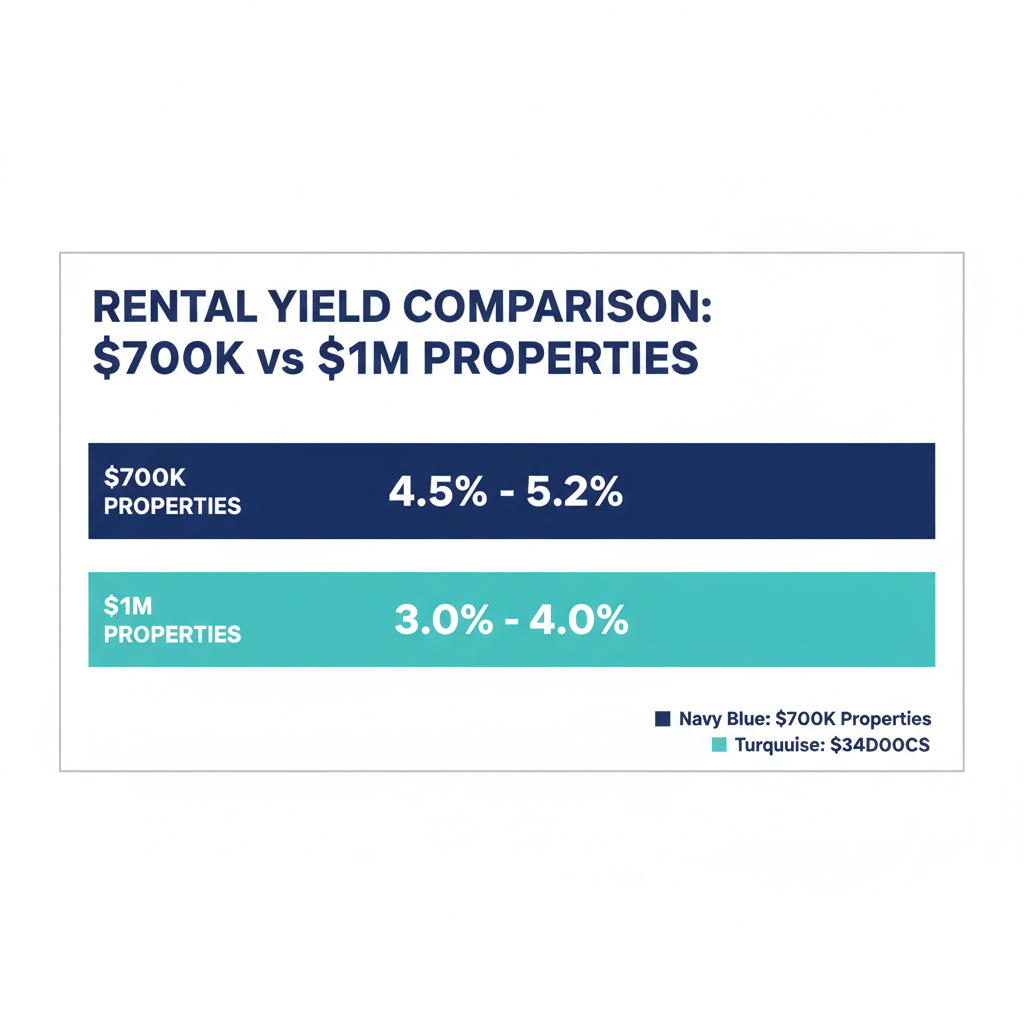
Rental yield and borrowing capacity are the two most critical factors determining which strategy suits your situation.
Rental Yield Comparison Table
| Metric |
$700K Property |
$1M Property |
| Gross Yield |
4.5%-5.2% |
3.0%-4.0% |
| Weekly Rent |
$550-$650 |
$650-$750 |
| Annual Rent |
$28,600-$33,800 |
$33,800-$39,000 |
| Net Yield (after costs) |
3.5%-4.0% |
2.5%-3.0% |
| Annual Shortfall (6.5% interest) |
$10,000-$12,000 |
$22,000-$25,000 |
Higher yields at $700K mean less reliance on your salary to fund the property, preserving borrowing capacity and cash flow for scaling.
Borrowing Capacity Comparison
Assume a household income of $150,000 per year (single or combined).
Under APRA's DTI cap, maximum borrowing is $900,000 (6x income).
For the $700K strategy with a 10% deposit, your loan is $630,000—well within limits. You retain $270K in unused borrowing capacity, allowing you to acquire a second property within 2-3 years as equity accumulates.
For the $1M strategy with a 10% deposit, your loan is $900,000—at the DTI limit. You have no remaining borrowing capacity unless you increase income, pay down debt, or wait for significant equity growth.
This difference determines whether you can scale to 2-3 properties within five years or remain locked into a single holding.
Which Strategy Suits Different Investor Profiles
The $700K strategy suits investors who prioritise cash flow, portfolio velocity, and lower serviceability pressure. It's ideal if you earn $100K-$150K per year, want to own 2-3 properties within five years, and prefer regional or outer metro markets with higher yields.
The $1M strategy suits investors who prioritise long-term capital growth, can comfortably service higher shortfalls, and prefer exposure to established metro markets. It's ideal if you earn $180K+, plan to hold for 10-15 years, and value blue-chip security over immediate cash flow.
First-time investors with moderate incomes should start at $700K to build confidence, learn the ropes, and preserve borrowing capacity. Experienced investors with strong income and existing equity can afford to stretch to $1M for compounding growth.
Example 10-Year Wealth Scenario
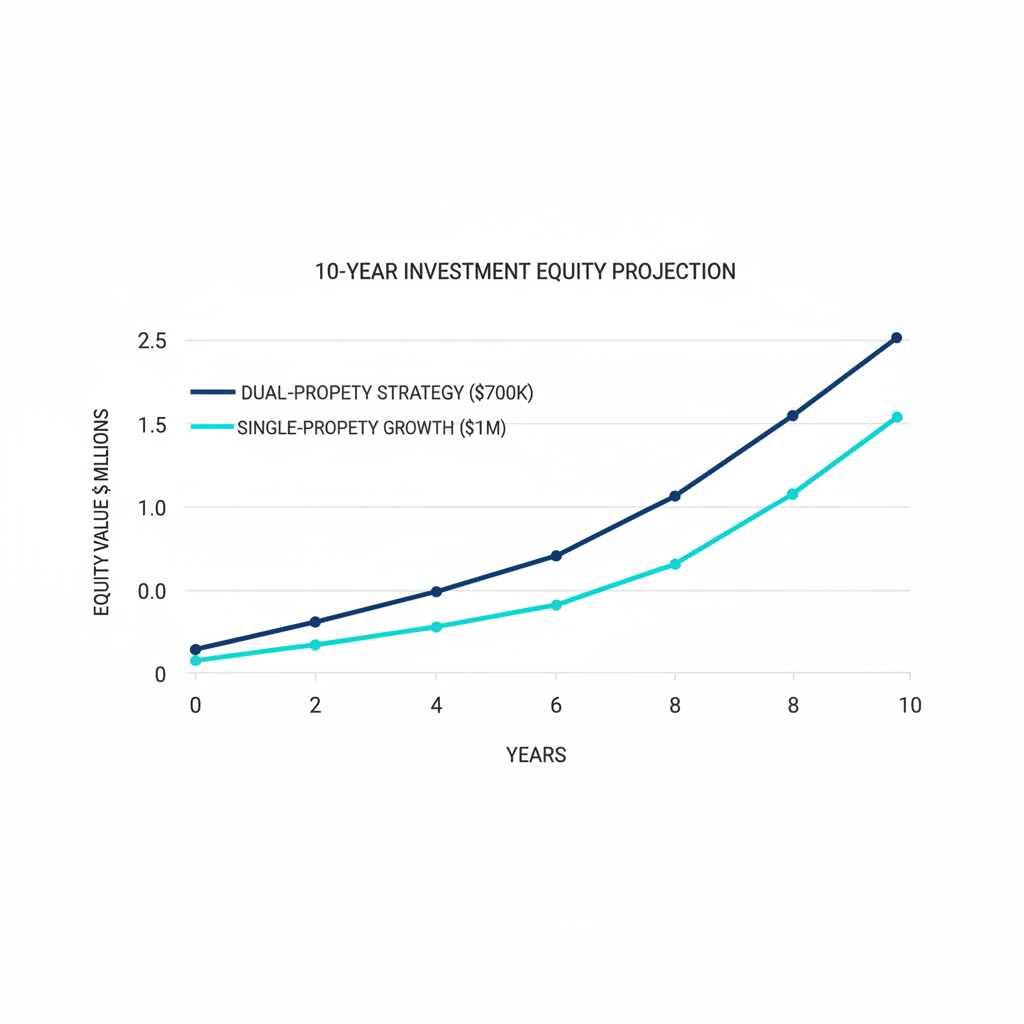
Let's model two investors starting with the same $100,000 deposit and $150,000 household income.
Investor A: $700K Strategy
Year 0: Buys a $700K property in Ipswich with $70K deposit. Loan: $630K. Annual shortfall: $11,000.
Year 3: Property grows to $835K (6% p.a.). Equity: $205K (value minus loan). Refinances to access $50K equity (80% LVR). Uses equity to buy second $700K property.
Year 6: Both properties now worth $995K each. Total portfolio value: $1.99M. Total debt: $1.26M. Equity: $730K.
Year 10: Both properties worth $1.18M each. Total portfolio value: $2.36M. Total debt: $1.16M (after paydown). Equity: $1.20M.
Total wealth outcome: $1.2 million in equity across two properties.
Investor B: $1M Strategy
Year 0: Buys a $1M property in Sydney's west with $100K deposit. Loan: $900K. Annual shortfall: $24,000.
Year 3: Property grows to $1.19M (6% p.a.). Equity: $290K. Cannot refinance for second property—DTI limit reached.
Year 6: Property worth $1.42M. Equity: $520K. Refinances to access $80K for second property deposit, but struggles with serviceability due to higher shortfall.
Year 10: Single property worth $1.88M. Loan: $780K (after paydown). Equity: $1.10M.
Total wealth outcome: $1.1 million in equity from one property.
Investor A built slightly more equity and gained diversification across two markets. Investor B achieved strong growth but remained constrained by serviceability and DTI limits.
The Role of Negative Gearing and Tax Benefits
Both strategies benefit from negative gearing, where rental losses offset taxable income.
Investor A with an $11,000 annual shortfall at a 32.5% marginal tax rate saves approximately $3,575 in tax, reducing net out-of-pocket cost to $7,425 per year.
Investor B with a $24,000 shortfall saves approximately $7,800 in tax, reducing net cost to $16,200 per year.
Higher shortfalls generate larger tax deductions, but only if you have sufficient taxable income to offset. Investors with lower incomes or multiple negatively geared properties may not fully utilise deductions.
Depreciation schedules add further deductions. A $700K property with 20% building value ($140K) and 2.5% annual depreciation generates $3,500 in annual deductions. A $1M property generates $5,000. These non-cash deductions reduce taxable income without affecting cash flow.
How Buyers Agency Australia Structures Investment Strategies
Choosing between $700K and $1M isn't a one-size-fits-all decision. It depends on your income, deposit, risk tolerance, and portfolio timeline.
Buyers Agency Australia uses a three-step framework to match clients with the right price point:
- Income and Serviceability Assessment: We model your borrowing capacity under current DTI limits and calculate maximum shortfall tolerance based on your after-tax income.
- 10-Year Portfolio Projection: We map out how many properties you can acquire within 5-10 years at different price points, factoring in equity access, capital growth, and loan paydown.
- Market Selection and Due Diligence: We identify suburbs within your price range that meet strict criteria: rental vacancy below 1.5%, 10-year infrastructure pipeline, and historical growth above 5% per annum.
Dragan Dimovski and the team at Buyers Agency Australia have over 20 years of experience helping investors build portfolios from zero to five properties, using data-driven strategies that balance yield, growth, and risk.
If you're unsure whether to start at $700K or stretch to $1M, book a free strategy session to compare scenarios tailored to your financial position.
Leveraging Equity to Scale Your Portfolio
The $700K strategy accelerates portfolio growth by preserving borrowing capacity and generating accessible equity faster.
Once your first property grows to $850K-$900K (typically 2-3 years at 6%-7% growth), you can refinance to 80% LVR and access $50K-$70K in equity for your next deposit. This lets you acquire a second property without saving from scratch.
The $1M strategy offers larger equity gains in dollar terms but takes longer to unlock due to higher DTI usage. You'll need to wait for significant growth or loan paydown before your serviceability allows a second purchase.
Investors using the $700K strategy typically own 2-3 properties within five years. Investors using the $1M strategy typically own 1-2 properties in the same timeframe.
Key Takeaways
The $700K property investment strategy delivers higher rental yields, lower shortfalls, and faster portfolio scaling. It suits investors with moderate incomes ($100K-$150K), limited deposits, and a goal of owning multiple properties within five years.
The $1M property investment strategy delivers stronger long-term capital growth, greater equity in dollar terms, and exposure to established metro markets. It suits high-income earners ($180K+), investors with larger deposits (15%-20%), and those prioritising security over velocity.
Both strategies can build $1 million+ in equity over 10 years. The $700K approach typically achieves this through multiple properties, while the $1M approach relies on a single high-growth asset.
Your choice should align with your borrowing capacity, cash flow tolerance, and portfolio timeline—not just location preferences or market hype.
If you're ready to model both scenarios with real numbers and access off-market opportunities at either price point, contact Buyers Agency Australia to discuss your investment strategy.
Frequently Asked Questions
Can I buy a $1M property on a $120K income?
Under 2026 DTI limits, $120K income supports up to $720K in borrowing. A $1M property requires a 20%-30% deposit to stay within limits.
Which strategy generates better cash flow?
The $700K strategy generates higher rental yields (4.5%-5.2%) and smaller shortfalls, improving cash flow and borrowing capacity for subsequent purchases.
How long does it take to buy a second property?
With the $700K strategy, 2-3 years is typical. With the $1M strategy, 4-6 years is more common due to DTI constraints and serviceability limits.
Are regional properties riskier than metro?
Regional properties offer higher yields but can experience sharper downturns. Diversification across 2-3 locations reduces single-market risk.
Should I use a buyers agent for investment properties?
Yes—buyers agents access off-market stock, negotiate better prices, and ensure due diligence meets investment-grade standards. Buyers Agency Australia specialises in investment property acquisition across all price points.
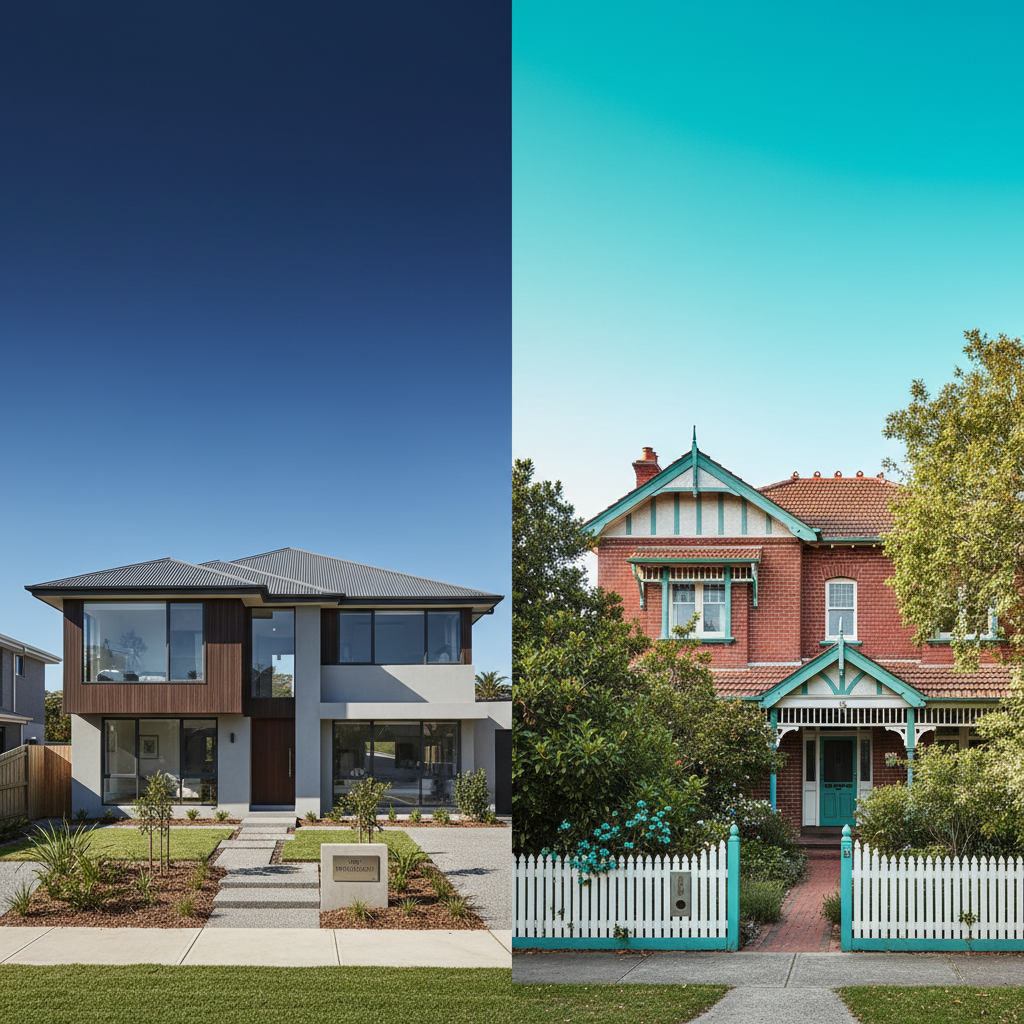 General
Compare $700K and $1M property strategies. Learn which investment price point delivers better rental yield, faster equity growth,...
Satellite suburbs within 25-45km of major CBDs are delivering rental yields above 5% and annual capital growth exceeding 10% in 2026, driven by multi-billion dollar infrastructure projects like Western Sydney Airport and Brisbane's Olympic upgrades. These outer-ring 'connector' zones offer beginner investors entry prices $200,000-$400,000 below inner-city equivalents while capturing the same employment and transport benefits within 5-10 years.
The old Australian dream of owning within 10km of the CBD is dead for most first-time investors. Median house prices in Sydney's inner ring now exceed $2.6 million, while Melbourne's established suburbs hover around $1.87 million. But here's the thing: the real money in 2026 isn't in the centre anymore. It's in the connectors.
Satellite suburbs are the outer-ring areas positioned near major infrastructure projects that will reshape how Australians live and work over the next decade. We're talking about places like Marsden Park (25km from Western Sydney Airport), Springwood (20km south-east of Brisbane CBD), and Wellard (40km south of Perth CBD). These aren't fringe speculative plays. They're data-backed growth corridors where smart money is quietly accumulating before the crowd catches on.
What is the Satellite Surge and Why Does It Matter in 2026
The Infrastructure Over Aesthetics Principle
A $10 billion rail project adds more value than a marble kitchen benchtop ever will. That's not opinion. It's observable market behaviour across every Australian capital over the past 30 years.
Western Sydney Airport is opening in late 2026 with a $5.3 billion price tag. The airport will create 28,000 permanent jobs by 2031 and over 200,000 jobs by 2050, according to Deloitte Access Economics. Suburbs within 25km of the airport site have already seen explosive growth. Bringelly median house prices surged from $935,000 to $2.4 million between 2019 and 2025, while Liverpool house prices grew 9.3% annually, outpacing Sydney's 5.7% average.
But the airport is just the anchor. Six new metro stations, upgraded arterial roads, and the $35 billion Aerotropolis plan will create a "30-minute city" model that integrates residential, commercial, and recreational spaces. This isn't a suburb. It's a new economic zone designed to accommodate 250,000 residents by 2050.
The Yield Shield: Why 5%+ Rental Returns Matter Now
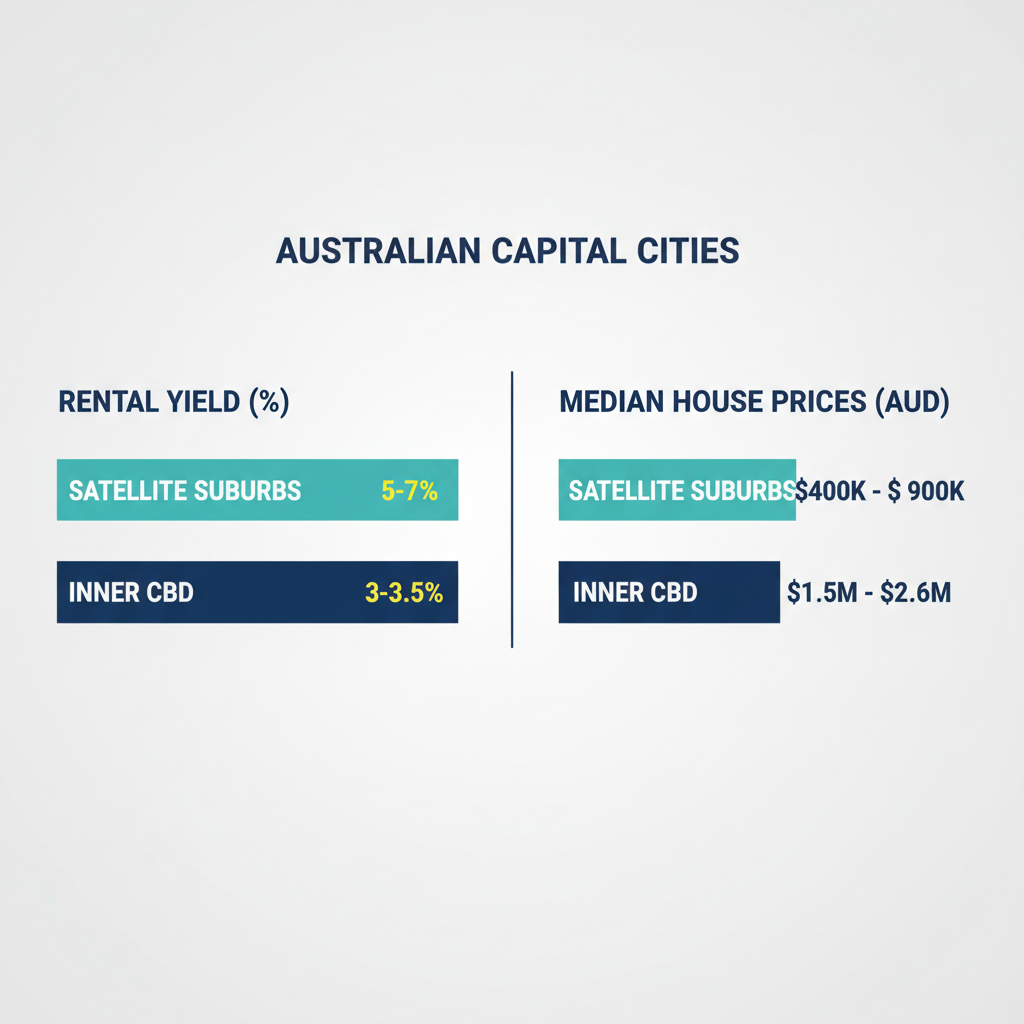
Beginner investors in 2026 face a harsh reality: interest rates are holding at 4.35% (RBA cash rate) and aren't expected to drop below 3.5% until late 2027. That means your property needs to generate cash flow to survive the hold period.
Satellite suburbs offer gross rental yields between 5% and 7% compared to 3-3.5% in established CBD areas. Spalding (regional WA) delivers 5.7% yields on a $395,000 median. Stapylton (outer Brisbane) offers 5.6% on $420,000. Even Marsden Park (Western Sydney) provides 4.8-5.2% yields on houses priced $880,000-$1.26 million.
Here's why that matters: a 5% yield on a $600,000 property generates $30,000 annual rent. After expenses (rates, insurance, maintenance), you're covering most of your mortgage interest. A 3% yield on a $1.2 million inner-city apartment? You're bleeding $15,000-$20,000 a year in negative cash flow. The yield shield isn't just nice to have. It's survival insurance in a high-rate environment.
Social Proof: Where the Smart Money Was Quietly Buying
While headlines obsessed over Perth's 2025 boom (7.5% dwelling value growth), savvy beginners were securing the outer rings of Brisbane, Western Sydney, and Adelaide's northern corridor.
REA's 2026 Hot 100 suburbs list identified Austral and Leppington (Western Sydney) as top picks, driven by rezoning and master-planning. Clyde North and Cranbourne East (Melbourne's south-east) are experiencing rapid population growth with new schools, sports facilities, and master-planned estates. Alkimos, Baldivis, and Ellenbrook (Perth's northern and southern corridors) combine transport upgrades and coastal lifestyle at prices 30-40% below inner Perth.
These suburbs share common traits: proximity to new transport hubs, median prices under $900,000, rental yields above 4.5%, and 10-year infrastructure pipelines already funded. They're not speculative. They're strategic.
The Five Satellite Zones Delivering Right Now
Western Sydney: The Airport Effect Zone
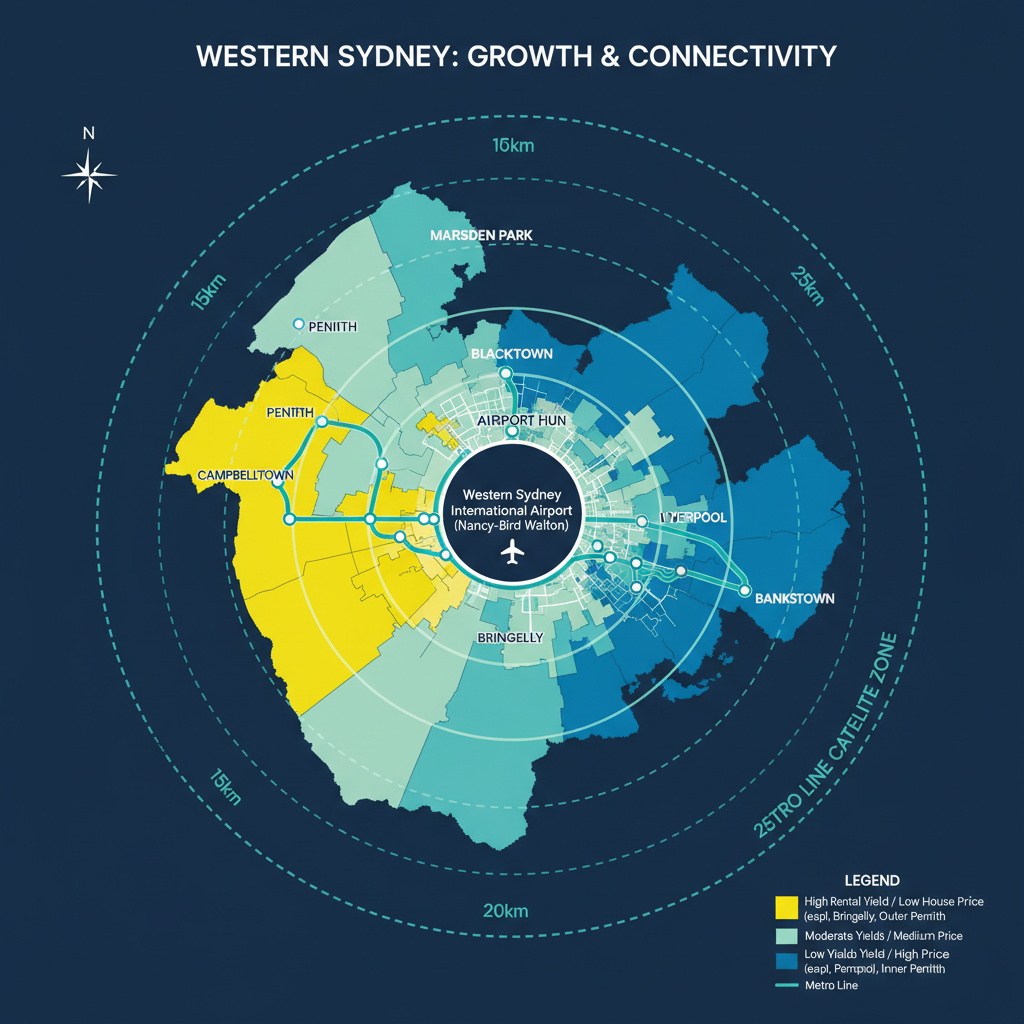
Western Sydney International Airport (Nancy-Bird Walton Airport) is the single largest infrastructure catalyst in Australia right now. The airport opens late 2026, but the surrounding suburbs have been appreciating since construction began in 2018.
Marsden Park (51km north-west of Sydney CBD) sits 25km from the airport. Median house prices reached $1.26 million in early 2025, up from $431,000 in 2019. That's 192.9% growth in 5 years. Gross rental yields hover around 3.5-3.6% ($680/week on a $1.26 million house), which is low compared to regional areas but exceptional for Greater Sydney.
The risk? Supply. Marsden Park is part of a massive land release area. New estates are flooding the market. Buyers need to target homes near future transport hubs (the planned metro extension) and established schools. Generic house-and-land packages 5km from any amenity will underperform.
Penrith (70km west of Sydney CBD, 25km from the airport) offers better affordability at $880,000 median house price. Historical growth averaged 7.4% annually over 5 years, with rental yields between 4.3-4.8%. The suburb benefits from existing rail connectivity (90-minute train to Sydney CBD) and proximity to the airport employment zone. Jordan Springs (sub-precinct of Penrith) recorded 9% growth in 2025 at a $920,000 median. Kingswood (another Penrith sub-precinct) offers $750,000 entry with 8.2% growth and 4.8% yields.
Penrith is a 15-20 year play. If you need results in 3-5 years, look elsewhere. But for patient investors targeting total returns (capital growth + rental income), Penrith offers one of the best risk-adjusted profiles in Greater Sydney.
Brisbane's Olympic Corridor: The 2032 Infrastructure Wave
Brisbane's 2032 Olympics isn't just a two-week event. It's a decade-long infrastructure boom that's reshaping the city's outer suburbs. SQM Research forecasts Brisbane dwelling values will surge 10-15% by 2026, fuelled by population growth and Olympics-related transport upgrades.
Springwood (20km south-east of Brisbane CBD) is the standout. Median house prices reached $982,000 in 2025, up 6% annually. But the real story is units: median unit prices hit $595,000, up 22.7% in 12 months. Rental yields sit at 3.7% for houses ($680/week) and 4.3% for units ($480/week). Days on market? 22 days for houses, 11 days for units. That's strong buyer and tenant demand.
Springwood benefits from easy access to the M1 motorway, public transport, shopping centres, and schools. It's designated a "Principal Activity Centre" in the South East Queensland Regional Plan, meaning long-term government commitment to infrastructure and employment hubs.
Greater Flagstone (south-east QLD) is Australia's biggest growth corridor by design. Planned to accommodate 50,000 new homes and 120,000 population over 30 years, it offers investors affordability ($747,500 median) and near double-digit growth (9.9% annual). Gross rental yields sit at 4.2% ($590/week). The risk? It's a greenfield site. Infrastructure delivery is staged over decades. Early buyers win. Late buyers inherit oversupply.
Perth's Supply-Constrained Boom: The Western Fringe
Perth led Australia's property market in 2025 with 7.5% dwelling value growth and median values reaching $855,267. Vacancy rates hover near 1%, rental yields average 4.8%, and supply remains chronically tight.
Wellard (40km south of Perth CBD) offers affordability at $690,000 median with 8.67% annual growth and 5% rental yields. That's rare: double-digit-adjacent capital growth plus positive cash flow. Bateman (8km south of Perth CBD) delivered 24.27% annual growth in 2025, but the median price ($1.365 million) prices out most beginners.
The Perth fringe play is simple: buy where supply is constrained, rental demand is structural (not cyclical), and transport upgrades are funded. Alkimos, Baldivis, and Ellenbrook all recorded double-digit annual gains in 2025 and sit within 30-40km of Perth CBD. They combine coastal lifestyle, new estates, and relative value compared to inner-Perth suburbs like Cottesloe ($1.4 million+ medians).
Regional WA offers even higher yields. Spalding (Greater Geraldton, 424km north of Perth) recorded 38.6% annual growth with a $395,000 median and 5.7% yields ($460/week rent). Geraldton itself delivered 24.47% annual growth on a $473,000 median. These are resource-exposed towns. They boom and bust. But for investors targeting short-term cash flow and willing to exit within 5-7 years, they're exceptional.
Adelaide's Northern Growth Corridor: The Undersupplied Play
Adelaide remains one of Australia's most balanced markets for investors: steady capital growth, reliable rental returns, and undersupply across metro and regional areas. Vacancy rates often hit 0.4%, the lowest in Australia.
Davoren Park (25km north of Adelaide CBD) recorded 28% house price growth in 2024. Neighbouring suburbs grew 27%. The median remains affordable (sub-$500,000), and yields exceed 5.5%. Adelaide's ultra-low vacancy means yield is safe. Capital growth? It's slower than Perth or Brisbane but more predictable.
Inner and near-city suburbs like Brooklyn Park, Brompton, Ovingham, and Port Adelaide benefit from proximity to the CBD and major renewal projects. They're positioned for long-term gentrification as Adelaide's population grows and affordability pressures spread from Melbourne and Sydney.
Melbourne's Outer Growth Corridors: The Comeback Play
Melbourne was the weakest performer among major capitals in 2025, but KPMG forecasts house prices will rise 6.6% and unit prices 7.1% in 2026, one of the strongest nationwide projections.
Clyde North (south-east growth corridor) offers exceptional affordability and long-term growth potential. Large master-planned communities, new schools, and shopping centres attract young families. Investors see strong demand from first-home buyers and renters, coupled with ongoing infrastructure delivery (upgraded arterial roads and planned rail extensions).
Cranbourne East (neighbouring Clyde North) is one of Australia's fastest-growing population areas, underpinned by large master-planned estates, new schools, and emerging retail hubs. Pakenham (through-running endpoint of the new Metro Tunnel opening February 2026) benefits from direct CBD access. Apartment rents are forecast to rise 24% by 2030 as vacancy drops from 1.8% to 1.1%.
The Melbourne play is contrarian. Prices are still below 2017 peaks in many middle-ring suburbs. Oversupply has been absorbed. Demand is catching up. Outer-growth corridors like Tarneit, Werribee, and Melton offer family homes, solid yields (4.5-5%), and relative affordability within commuting distance of Melbourne CBD.
How to Identify the Next Satellite Surge Suburb Before Prices Spike
The Infrastructure Checklist: What to Look For

Not all outer suburbs are created equal. Infrastructure pipelines separate winners from losers. Here's the checklist:
- Funded transport projects within 5-10 years: New metro stations, upgraded highways, or rail extensions. Check Infrastructure Australia's Priority List and state government transport plans.
- Employment anchors: Airports, business parks, hospitals, or universities within 15km. These create structural rental demand, not cyclical tourism or mining booms.
- Master-planned estates with staged delivery: Avoid suburbs where 5,000 lots hit the market simultaneously. Look for 10-15 year rollout plans with amenities delivered in stages.
- Median prices $200,000-$400,000 below inner-ring equivalents: This gap narrows as infrastructure delivers. Marsden Park closed the gap from $900,000 in 2019 to near-parity with parts of Greater Western Sydney by 2025.
- Rental yields above 4.5%: This is your insurance policy. If capital growth stalls, rental income covers holding costs.
The Data Sources Every Beginner Investor Should Bookmark
Use CoreLogic's Hedonic Home Value Index for median values and quarterly growth trends. CoreLogic tracks dwelling values by suburb, property type, and price bracket.
SQM Research's Rental Yield Calculator provides gross rental yields by suburb and postcode. Filter by houses vs units and compare across capital cities.
REA's PropTrack Home Price Index publishes quarterly forecasts and annual Property Market Outlook reports. Their 2026 Hot 100 suburbs list is curated by industry experts using PropTrack data.
Infrastructure Australia's Priority List identifies nationally significant infrastructure projects, timelines, and funding status. This is your early-warning system for the next satellite surge zone.
Local council development applications (DAs) reveal upcoming master-planned estates, shopping centres, and transport hubs. Check council websites quarterly. When you see 10+ DAs for townhouses or medium-density housing near a future metro station, that's your signal.
The Timing Question: Is It Too Late for Western Sydney?
The airport opens late 2026. Suburbs within 10km of the airport site (Bringelly, Badgerys Creek, Luddenham) have already priced in 5-10 years of growth. Bringelly went from $935,000 to $2.4 million. That ship has sailed.
But suburbs 20-30km from the airport? They're mid-cycle. Penrith, Liverpool, Campbelltown, and Camden will feel the airport's impact as employment zones mature and transport links improve. The real benefits kick in 2030-2040, not 2026. Patient investors who can hold 10-15 years will capture the full uplift.
The next wave? Look north and west. Rouse Hill, Box Hill, and Schofields sit 35-45km from the airport but benefit from existing metro connectivity (Sydney Metro Northwest line). As Western Sydney urbanises, these middle-ring suburbs will gentrify. Current medians ($1.1-$1.4 million) are still 20-30% below inner-west equivalents.
How Dragan Dimovski and Buyers Agency Australia Navigate the Satellite Surge
Dragan Dimovski has spent 20+ years identifying infrastructure-driven growth corridors before they hit mainstream media. His $10M+ personal portfolio includes multiple satellite suburb holdings acquired during previous cycles: Western Sydney in the early 2010s, Brisbane's outer south-east in 2016-2018, and Perth's northern corridor in 2020-2022.
The Buyers Agency Australia methodology focuses on three pillars: infrastructure over aesthetics, yield-shield protection, and 10-year portfolio modelling. Here's how it works in practice.
The 10-Year Portfolio Modelling Approach
Most beginner investors ask: "What suburb should I buy in?" Dragan flips the question: "What does your portfolio need to look like in 10 years, and what suburbs get you there?"
A typical beginner portfolio might target $500,000 in equity growth over 10 years. That requires holding 2-3 properties in suburbs averaging 6-8% annual capital growth. At 7% compound growth, a $600,000 property reaches $1.18 million in 10 years. That's $580,000 in equity gain. Two properties? You're at $1.16 million in equity.
But that assumes you survive the hold period. High interest rates, cost-of-living pressures, and rental vacancies can force early exits. The yield shield protects you. A 5% gross yield on $600,000 generates $30,000 annual rent. After $8,000 in holding costs (rates, insurance, maintenance), you're netting $22,000. That offsets $22,000 of mortgage interest. On a $480,000 loan (80% LVR) at 6.5% interest, you're paying $31,200 annually. Your out-of-pocket cost? $9,200/year, or $767/month.
Compare that to a 3% yield inner-city apartment. $600,000 property, $18,000 annual rent, $8,000 holding costs, $10,000 net rent. Same $480,000 loan, same $31,200 interest. Your out-of-pocket? $21,200/year, or $1,767/month. That's $12,000 more annual cash burn. Over 10 years? $120,000. Most beginners can't afford that.
Buyers Agency Australia models this upfront. The satellite surge strategy prioritises suburbs where rental income covers 60-80% of holding costs, allowing investors to survive rate cycles and hold long enough to capture capital growth.
The Due Diligence Process: What Gets Rejected
Dragan's team rejects 80% of satellite suburbs due to supply risk, single-industry dependence, or poor transport connectivity. Here are three red flags:
Red Flag 1: Mining-dependent towns with no economic diversification. Moranbah (QLD) offers 10%+ rental yields but relies entirely on coal mining. When commodity prices drop, vacancy rates spike and property values collapse. Dragan's rule: avoid single-industry towns unless you're a sophisticated investor with a 3-5 year exit plan.
Red Flag 2: Greenfield estates 10km+ from any transport hub. Satellite suburbs work when they're connectors. If the suburb is 10km from the nearest train station, 15km from the nearest hospital, and 20km from major employment, it's not a satellite. It's a speculative land bank. Reject.
Red Flag 3: Suburbs with 5+ years of negative capital growth and rising vacancy rates. Some outer suburbs never gentrify. They stay low-socioeconomic, high-crime, and low-demand. Elizabeth North (Adelaide's northern fringe) recorded 28% growth in 2024, but vacancy rates remain elevated and days on market are twice the Adelaide average. Approach with caution.
The FastTrack Event: How Dragan Teaches the Satellite Surge Strategy
Dragan runs quarterly FastTrack Property Investment Events where he breaks down current satellite surge zones, reviews case studies, and walks through live suburb comparisons.
Recent events covered Penrith vs Ipswich (Western Sydney vs Brisbane outer south-west), Alkimos vs Baldivis (Perth northern vs southern corridor), and Cranbourne East vs Pakenham (Melbourne south-east growth corridor).
Attendees receive access to Buyers Agency Australia's proprietary suburb scorecard, which ranks 500+ Australian suburbs on infrastructure pipeline, rental yield, affordability gap, and supply risk. The scorecard updates quarterly based on new transport announcements, council development approvals, and CoreLogic data.
If you're serious about the satellite surge strategy, attending a FastTrack event is the fastest way to compress 5 years of learning into a single day.
The Satellite Surge Risks: What Can Go Wrong
Satellite suburbs aren't risk-free. Here are the three biggest traps and how to avoid them.
Risk 1: Infrastructure Delays and Funding Cuts
Governments delay or cancel projects. Melbourne's East West Link was cancelled in 2014 after $1.1 billion was spent. Suburbs banking on the link (Parkville, Clifton Hill) saw slower growth for 5 years.
Western Sydney Airport is federally funded and construction is 70%+ complete. The risk of cancellation is near zero. But suburban rail extensions (Penrith metro, Leppington upgrades) are state-funded. Budget blowouts can push delivery dates 3-5 years.
Mitigation: Buy suburbs where the anchor infrastructure (airport, hospital, university) is already funded and under construction. Treat suburban rail extensions as bonus upside, not base case.
Risk 2: Oversupply from Concurrent Land Releases
Greenfield estates can flood the market with identical house-and-land packages. Melonba (Western Sydney) has exploded from 3,000 people in 2016 to 7,000 in 2021, with 17,000+ homes planned. Supply risk is high.
When 2,000 lots hit the market simultaneously, developers undercut each other. Prices stagnate. Renters have dozens of identical properties to choose from, pushing vacancy rates up and rents down.
Mitigation: Target suburbs with staged land releases over 10-15 years. Check council DAs for total lot approvals and compare to current dwelling stock. If approved lots exceed current stock by 50%+, supply risk is elevated. Also, buy established homes (5+ years old) rather than house-and-land packages. Established homes near schools and transport hubs outperform cookie-cutter estates.
Risk 3: Demographic Mismatch (Young Families Can't Afford Forever)
Satellite suburbs attract young families priced out of inner suburbs. But affordability constraints are worsening.
Mitigation: Prioritise suburbs where median household incomes are rising faster than city averages. Western Sydney's airport employment zone will create 28,000 high-wage jobs by 2031. That's structural income growth, not just population growth. Target suburbs within 30-minute commutes of these employment zones.
Why 2026 is the Last 'Early' Window for Satellite Suburbs
Western Sydney Airport opens late 2026. Brisbane's Olympics infrastructure accelerates 2026-2032. Perth's supply constraints persist through 2027. Adelaide's northern corridor rezoning is 80% complete.
If you buy in 2026, you're early-to-mid cycle. Prices have risen 20-40% from 2020 lows, but the infrastructure benefits won't fully materialise for 5-10 years. That's the window.
By 2028-2029, media will be covering the "Western Sydney property boom" and "Brisbane's Olympic property surge." Beginner investors will pile in. Prices will spike another 30-50%. Yields will compress. The risk-reward will flip.
Right now, in early 2026, satellite suburbs offer the rare combination of affordability, yield, and infrastructure-backed growth. It's not a get-rich-quick play. It's a 10-15 year wealth-building strategy for investors who understand that infrastructure beats aesthetics, every time.
Frequently Asked Questions
What is a satellite suburb in property investment?
A satellite suburb is an outer-ring area within 25-45km of a major CBD, positioned near significant infrastructure projects like airports, metro lines, or business parks. These suburbs offer lower entry prices than inner-city areas while benefiting from future infrastructure-driven employment and transport connectivity, typically delivering higher rental yields (5%+) and long-term capital growth.
Is it too late to invest in Western Sydney near the airport?
Suburbs within 10km of Western Sydney Airport (Bringelly, Badgerys Creek) have already priced in significant growth, with some medians tripling since 2019. However, suburbs 20-30km away (Penrith, Liverpool, Campbelltown) remain mid-cycle opportunities as employment zones and transport links develop through 2030-2040. Patient investors with 10-15 year hold periods can still capture substantial infrastructure-driven uplift.
What rental yield should beginner investors target in 2026?
Beginner investors should target gross rental yields above 5% in outer suburbs and 4.5%+ in middle-ring satellite areas. This "yield shield" helps cover mortgage interest and holding costs during high interest rate periods, allowing investors to survive the hold period and capture long-term capital growth. Yields below 4% often result in negative cash flow exceeding $1,500/month for most beginners.
Which Australian cities offer the best satellite suburb opportunities in 2026?
Brisbane, Perth, and Western Sydney offer the strongest satellite suburb opportunities in 2026. Brisbane benefits from Olympics infrastructure and population growth (10-15% forecast price growth). Perth delivers the highest yields (4.8-6%) with chronic supply constraints. Western Sydney provides the largest long-term infrastructure catalyst (airport + Aerotropolis), though early-stage suburbs have already appreciated significantly. Melbourne's outer corridors are mid-recovery with forecast 6.6% house price growth.
How do I identify oversupply risk in satellite suburbs?
Check council development applications (DAs) for total approved lots and compare to current dwelling stock. If approved lots exceed existing stock by 50%+, oversupply risk is elevated. Also review land release staging: suburbs with 10-15 year rollout plans are safer than areas releasing 2,000+ lots simultaneously. Buy established homes (5+ years old) near schools and transport hubs rather than house-and-land packages in new estates. Monitor days on market and vacancy rates quarterly via CoreLogic and SQM Research.
Ready to Find Your Satellite Suburb Before the Crowd?
The satellite surge is real. Infrastructure over aesthetics isn't a slogan. It's observable market behaviour backed by $35 billion in government investment, 200,000+ future jobs, and rental yields that actually cover your holding costs.
But identifying the right suburb requires local expertise, data access, and due diligence most beginners don't have time to execute. That's where Buyers Agency Australia comes in.
Dragan Dimovski and his team have been buying in satellite suburbs since before they were called satellite suburbs. His personal portfolio proves the strategy works. His track record across Western Sydney, Brisbane's outer south-east, and Perth's northern corridor demonstrates deep market knowledge and contrarian timing.
Whether you're a first-home buyer trying to break into the market or an investor building a high-yield portfolio, the free strategy session will give you clarity on which satellite suburbs match your budget, risk tolerance, and 10-year wealth goals. You'll walk away with a shortlist of 3-5 suburbs, rental yield projections, and infrastructure timelines.
The early window is closing. Western Sydney Airport opens in months. Brisbane's Olympics ramp-up accelerates through 2027. Perth's supply constraints persist for 18-24 months. By 2028, satellite suburbs will be mainstream. Prices will reflect that.
Book your free strategy session today at 52.65.74.228/free or attend the next FastTrack event at events.buyersagencyaustralia.com.au/fasttrack. The satellite surge waits for no one.
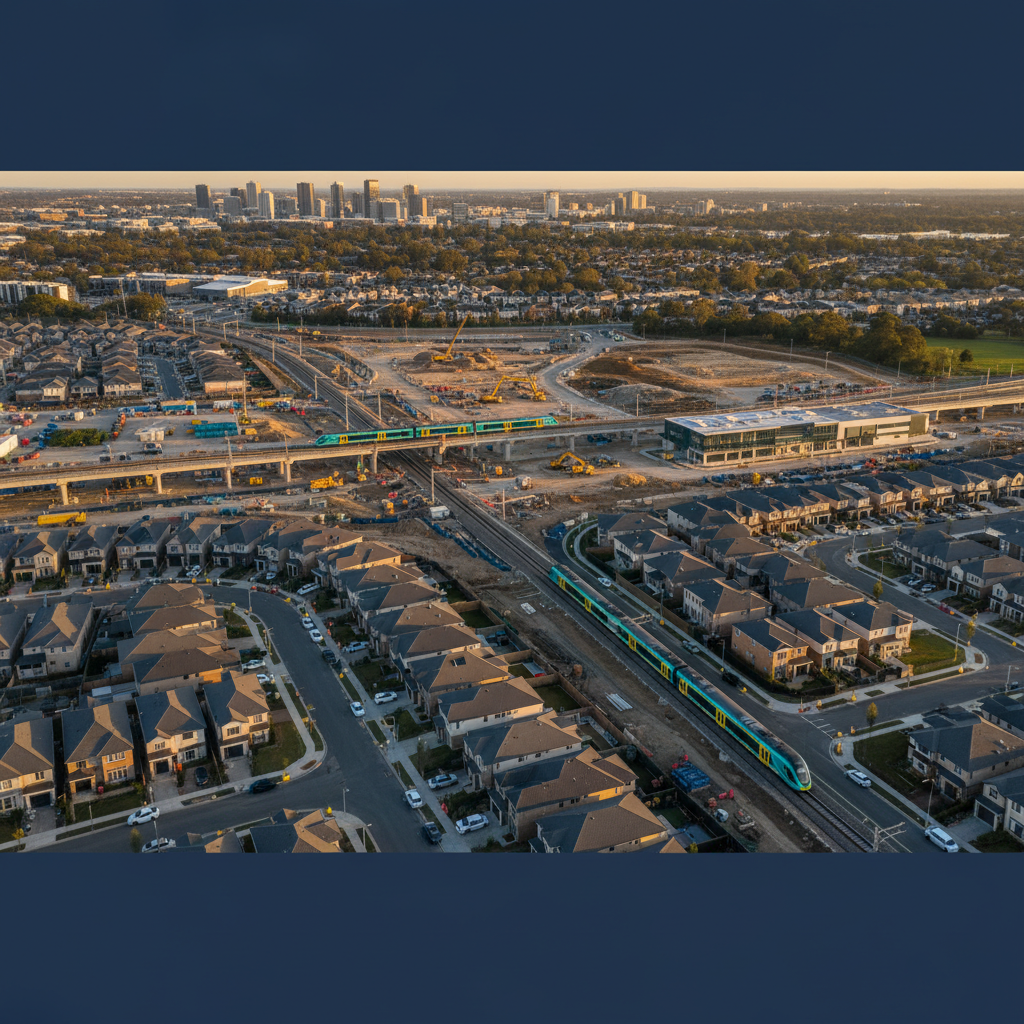 General
Satellite suburbs near airports and rail hubs are delivering 5%+ yields and double-digit growth while CBD properties lag....